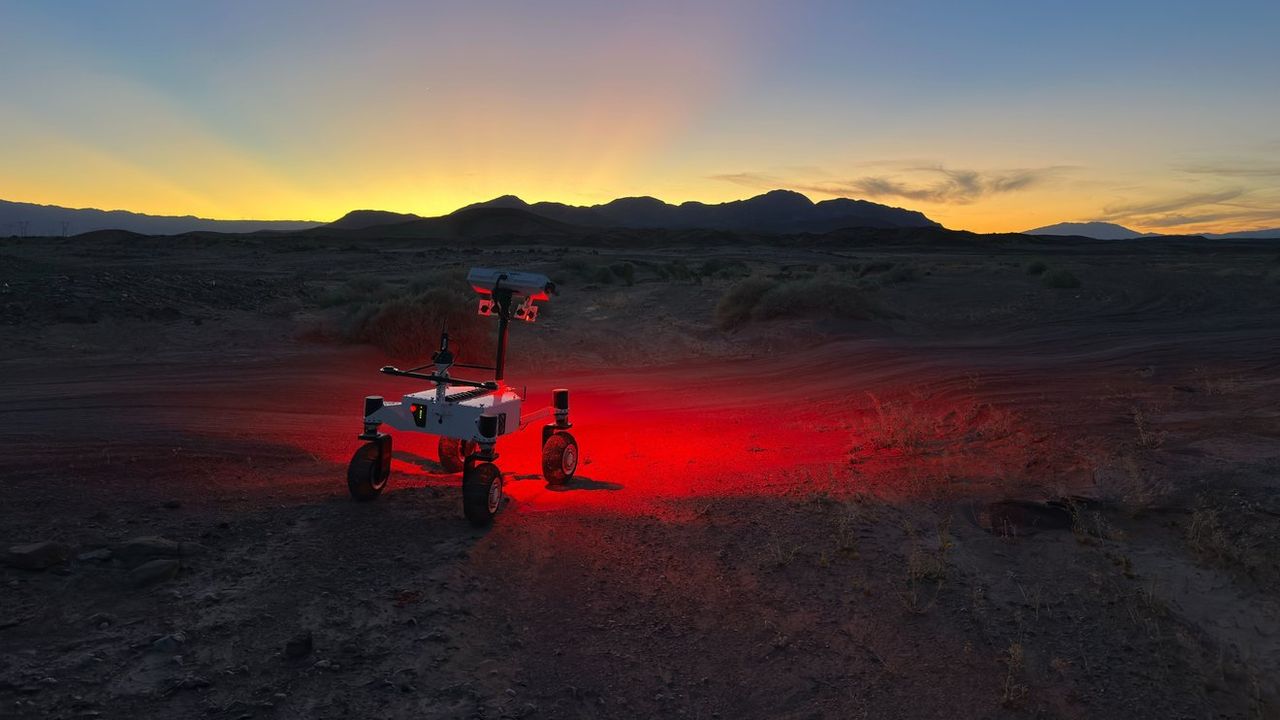
NASA researchers are testing an advanced rover prototype in California's desert terrain designed to operate autonomously on Mars and the Moon. The new vehicle represents a significant departure from previous rover designs by incorporating self-directed decision-making capabilities that allow it to navigate challenging terrain without constant human guidance.
The prototype demonstrates enhanced autonomous navigation systems that enable the rover to assess obstacles, evaluate terrain conditions, and adjust its path in real time. This technology addresses a fundamental limitation of earlier rovers, which relied heavily on ground-based commands transmitted across vast distances. The communication delay between Earth and Mars, often exceeding 20 minutes one way, makes real-time remote control impractical for rovers operating on the Red Planet.
The California desert testing environment mimics Martian and lunar conditions, providing researchers the opportunity to evaluate the rover's performance across soft sand, rocky outcrops, and steep slopes that previously posed navigation hazards. The prototype's artificial intelligence systems allow it to recognize terrain types and make autonomous decisions about optimal routes, reducing the risk of immobilization in soft dust or regolith.
This development reflects NASA's broader strategy to deploy more capable robotic systems for future exploration missions. As the space agency plans extended lunar surface operations through the Artemis program and pursues eventual human Mars missions, rovers equipped with advanced autonomous capabilities become essential. These systems reduce operational overhead and enable rovers to conduct more complex scientific investigations across greater distances.
The testing phase provides critical data about software reliability, sensor performance, and decision-making algorithms in realistic terrain. Researchers gather information about failure modes and system limitations before committing hardware to actual space missions, where repairs remain impossible or extraordinarily expensive.
This prototype represents collaboration between NASA engineers and roboticists focused on advancing planetary exploration technology. Success in these terrestrial trials directly informs designs for rovers intended to operate in extreme extraterrestrial environments where human operators cannot intervene quickly if problems emerge.