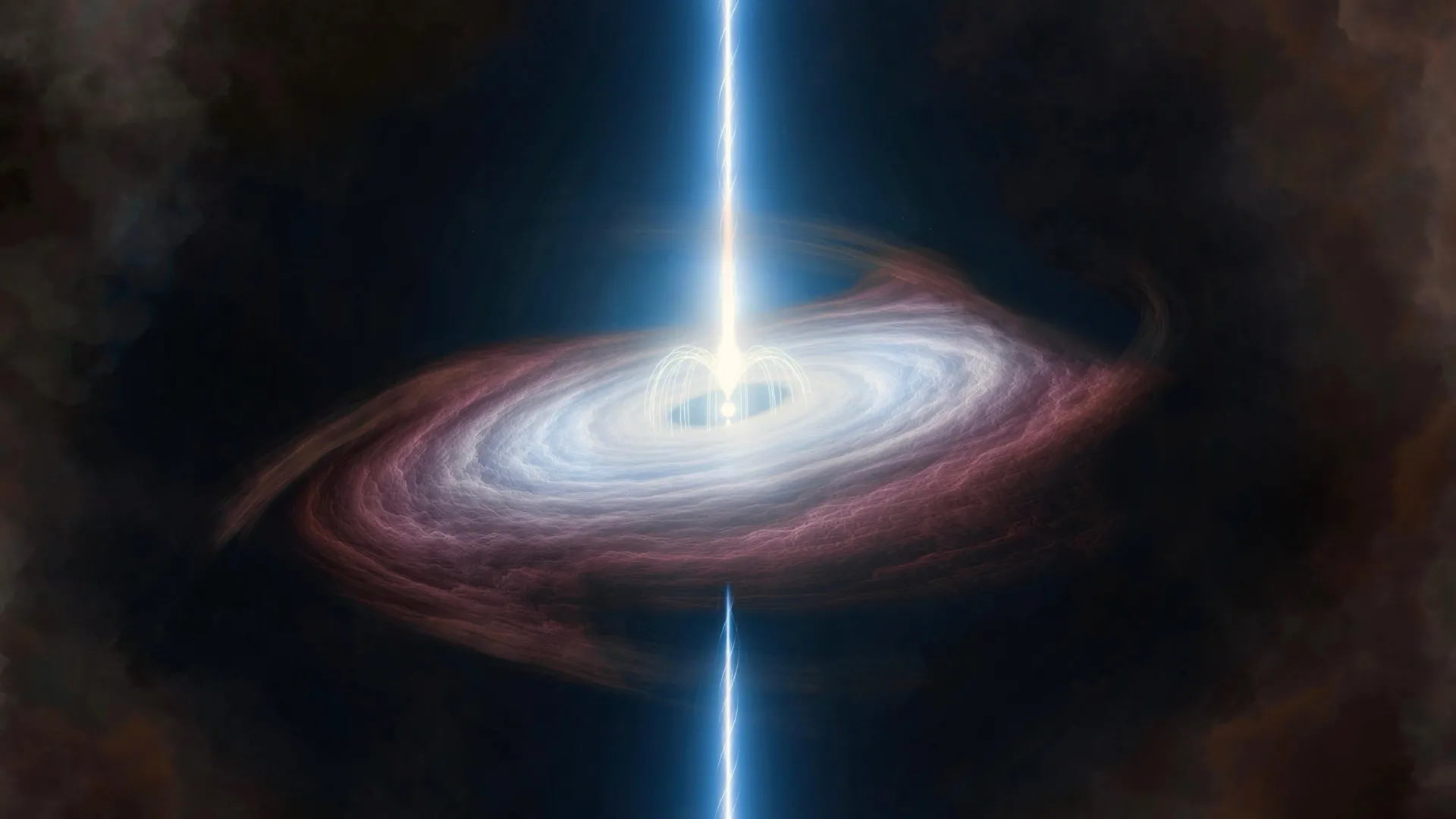
Astronomers have detected the birth of a magnetar for the first time, using a peculiar "chirping" signal from a distant supernova to confirm the event. The discovery represents a watershed moment in understanding how the universe's most luminous stellar explosions occur.
Magnetars are neutron stars with magnetic fields billions of times stronger than Earth's. The research team identified the newborn magnetar through radio and X-ray observations of the supernova, where the characteristic chirping pattern revealed the star's rapid spin and extreme magnetic properties. This marks the first direct evidence that magnetars can power superluminous supernovae, the brightest explosions known to astronomy.
The finding also demonstrates a novel application of Einstein's general relativity. Researchers used the theory to model how the magnetar's intense magnetic field and rotation interact with the surrounding material ejected during the explosion. The relativistic calculations proved essential for explaining the observed light curve and energy dynamics of the event.
Previous theoretical work predicted magnetars could produce superluminous supernovae, but observational confirmation remained elusive. The team's detection provides the smoking gun. The chirping signal itself arises from the magnetar's rotating magnetic field interacting with the surrounding plasma, creating periodic variations in radiation that stand out distinctly in the data.
The discovery has implications for understanding stellar death and the origin of these extreme objects. Magnetars form when massive stars collapse, and their formation channels remain poorly understood. This observation constrains the physical processes occurring during core collapse and the initial moments after a neutron star's birth.
The research also opens new avenues for studying general relativity in extreme environments. Future observations of similar events could refine models of how gravity, magnetism, and rotation combine in the universe's most violent phenomena. As more supernova surveys come online, astronomers expect additional magnetar births to emerge from the data, transforming these