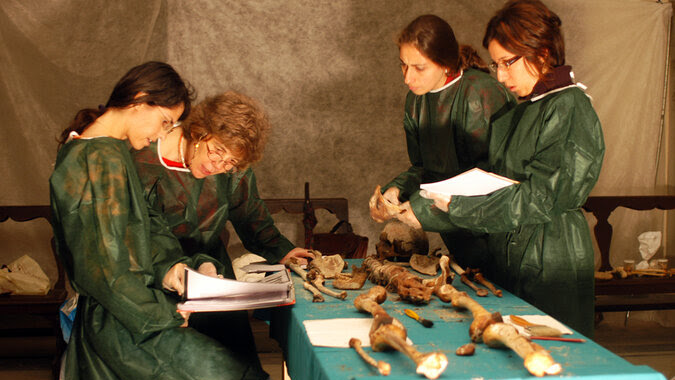
Researchers using ancient-DNA analysis have identified malaria as the cause of death for two Renaissance-era members of the Medici family, solving a 500-year-old mystery surrounding the brothers' deaths.
Scientists extracted and sequenced DNA from the skeletal remains of the two Medici brothers, identifying genetic material from *Plasmodium*, the parasite responsible for malaria. The analysis provides direct molecular evidence of the infection at the time of their deaths, bypassing the limitations of historical records and autopsy findings that had remained inconclusive for centuries.
The Medici family dominated Florence during the Renaissance, wielding immense political and cultural influence across Europe. Yet basic facts about the deaths of these two family members had eluded historians and physicians for half a millennium. Ancient-DNA techniques have now provided a definitive answer where traditional historical inquiry had failed.
This finding exemplifies how biomolecular archaeology can resolve historical questions that survive only in fragmentary written sources or skeletal remains. By recovering pathogenic DNA preserved in bone tissue over five centuries, researchers can diagnose infections from centuries past with precision impossible through conventional autopsy or historical documentation alone.
The identification also reflects malaria's historical prevalence in Renaissance Italy. The disease was endemic across Mediterranean regions during this period, claiming countless lives across all social classes. The Medici brothers' deaths illustrate how even wealth and political power offered no protection against infectious disease in the pre-modern world.
This work underscores the growing role of genomic analysis in historical research. As sequencing technologies become more sensitive and affordable, scientists increasingly recover pathogenic DNA from archaeological contexts, enabling them to reconstruct disease landscapes of ancient and medieval populations. Future applications of this approach could clarify causes of death for other historically significant individuals or help epidemiologists understand how pathogens have evolved across centuries.
The analysis reinforces that malaria shaped Renaissance Europe's demographic and