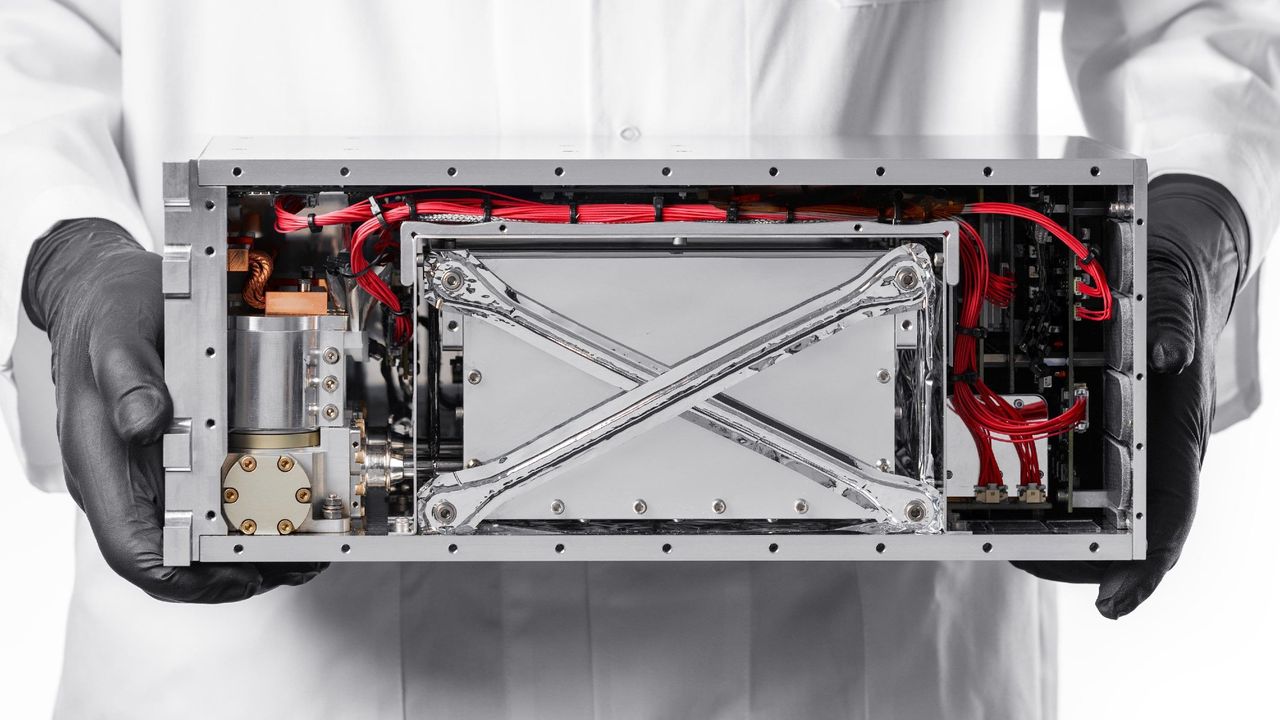
A superconducting thruster completed its first orbital demonstration, marking a milestone for a propulsion system that exploits Earth's magnetic field rather than expelling propellant. The device uses powerful superconducting magnets to generate electromagnetic interactions with the planet's magnetosphere, pushing spacecraft forward without consuming fuel in the traditional sense.
This approach differs fundamentally from conventional ion drives and chemical rockets that eject mass to generate thrust. Instead, the thruster relies on the Lorentz force, which occurs when a charged plasma interacts with a magnetic field. By harnessing Earth's natural magnetosphere, the technology promises "acceleration without fuel," enabling continuous thrust throughout a spacecraft's orbital lifetime.
The first orbital test validates years of theoretical work and ground-based experiments. Researchers have proposed using solar panels to power the superconducting magnets, making this a renewable energy system for space travel. The concept eliminates the need to carry massive quantities of propellant, dramatically reducing launch mass and costs.
However, the technology faces real limitations. The thruster works effectively only in low Earth orbit where the magnetosphere remains strong enough to interact with the spacecraft. Beyond this region, the magnetic field weakens significantly, reducing thrust efficiency. The system also requires maintaining superconductors at extremely cold temperatures, adding engineering complexity.
Current demonstrations show proof of concept, but scaling the technology for practical missions requires solving thermal management, power generation, and reliability challenges. Engineers must also optimize the magnet designs to maximize electromagnetic coupling while minimizing energy requirements.
The development attracts interest from space agencies and commercial operators seeking cost-effective alternatives to chemical propulsion for satellite station-keeping and orbital transfers. If fully realized, superconducting thrusters could transform deep-space logistics by extending mission durations and reducing operational costs. The orbital test represents a critical step toward demonstrating that this physics-based approach can work in the unforgiving space