In 1776, humanity's understanding of space was fundamentally different from today. Astronomers of that era knew the solar system existed and understood basic planetary motions, but lacked telescopes powerful enough to resolve surface details on distant worlds or detect objects beyond Saturn.
The intervening 250 years brought revolutionary advances. In the 1800s, spectroscopy revealed the chemical composition of stars. The early 1900s brought Einstein's theories of relativity, reshaping our understanding of gravity, time, and space itself. Edwin Hubble's observations in the 1920s proved other galaxies existed beyond the Milky Way, expanding the known universe billions of times over.
The space age accelerated discoveries dramatically. Sputnik's 1957 launch initiated satellite technology. Yuri Gagarin's 1961 orbital flight proved human spaceflight was possible. The Apollo program landed humans on the Moon in 1969. Robotic probes reached Venus, Mars, the outer planets, and beyond the solar system entirely.
Modern space science relies on capabilities unimaginable to 18th-century observers. The Hubble Space Telescope peers back nearly 13.8 billion years to the universe's infancy. The James Webb Space Telescope detects infrared light from the earliest galaxies. Ground-based observatories map exoplanets around distant stars. Gravitational wave detectors confirm predictions Einstein made a century ago.
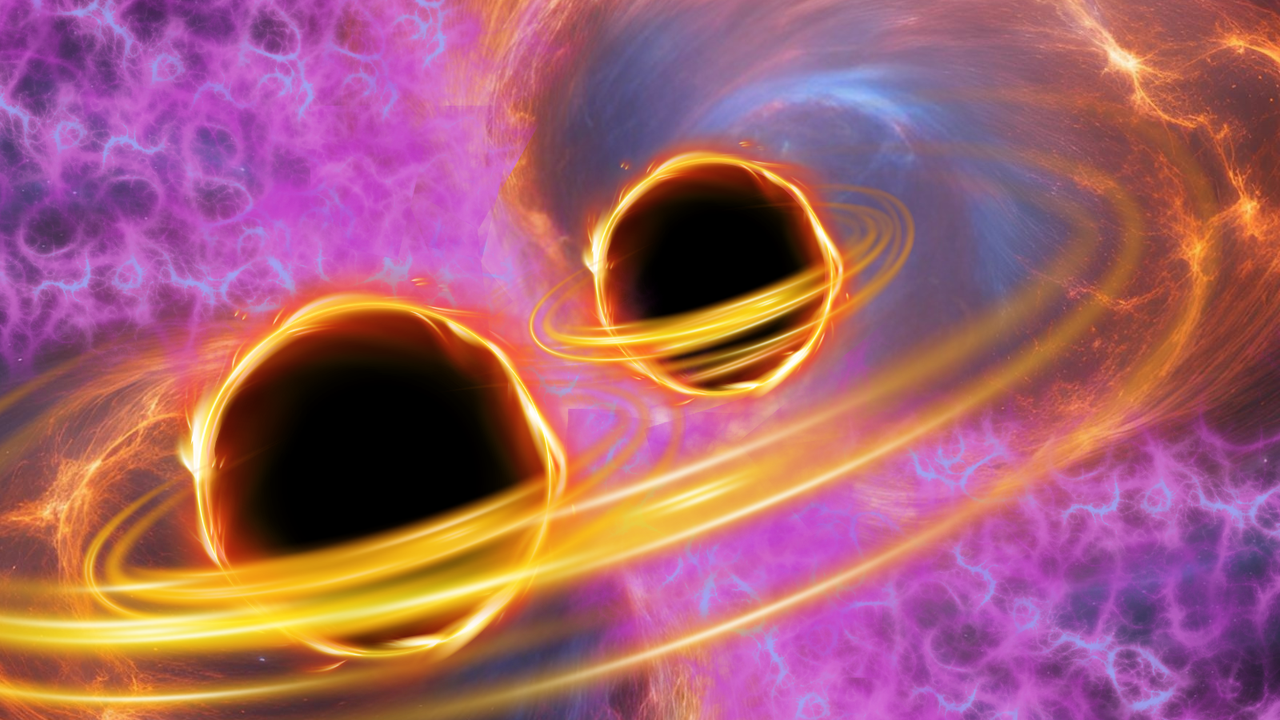
Today's scientists understand space contains dark matter and dark energy, phenomena completely unknown before the late 20th century. Black holes transitioned from theoretical curiosities to observed objects. The cosmic microwave background radiation provides a snapshot of the universe's first moments.
What began as naked-eye stargazing and geometric speculation evolved into a discipline combining physics, chemistry, geology, and biology. Space exploration now involves international cooperation, private companies,