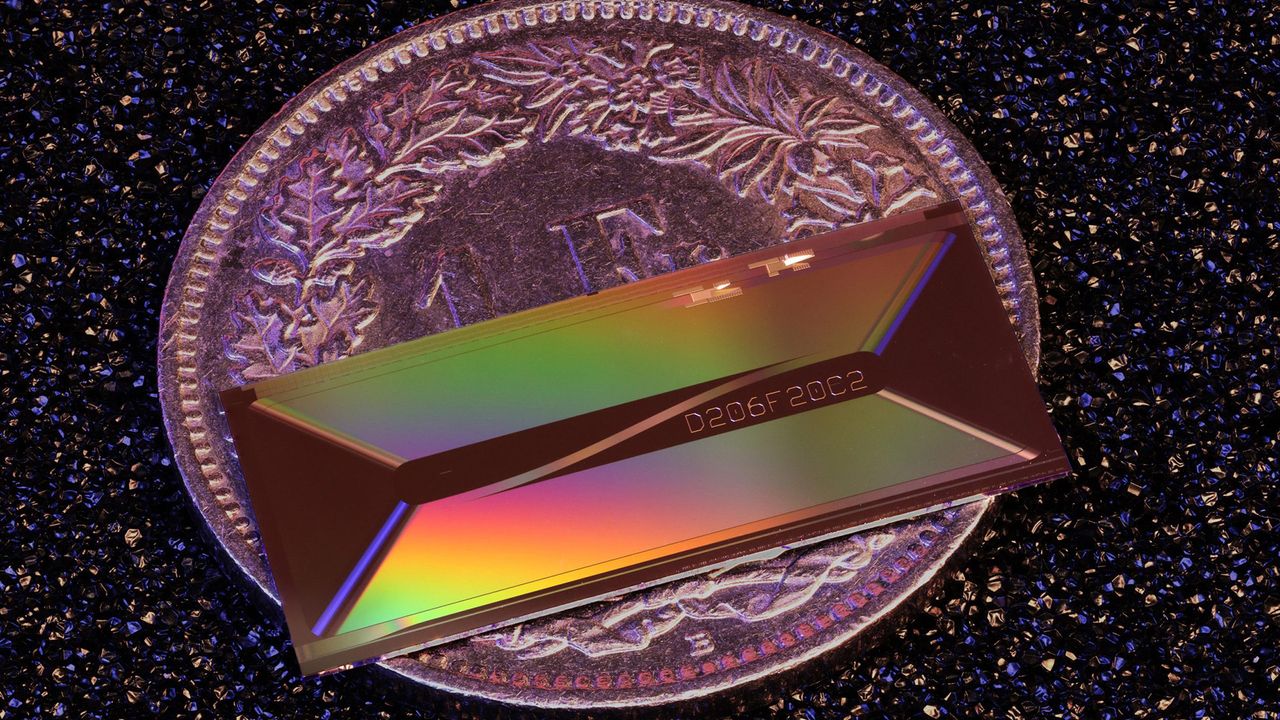
Researchers have successfully integrated ultrafast lasers onto microchips, a breakthrough that researchers describe as the field's "holy grail." The advancement enables creation of compact, high-powered diagnostic devices previously impossible with room-sized equipment.
Ultrafast lasers produce pulses lasting femtoseconds or picoseconds, enabling applications in medical imaging, materials processing, and scientific research. Traditionally, these systems require large laboratory setups costing hundreds of thousands of dollars. Miniaturizing them onto chips removes those barriers.
The work represents a convergence of photonics and semiconductor engineering. Scientists solved the core challenge of maintaining the precise optical conditions needed for ultrafast pulse generation within the tight spatial constraints of integrated circuits. Doing so required advances in nonlinear optics and cavity design optimized for chip-scale manufacturing.
This development unlocks practical applications currently restricted to specialized research facilities. Portable ultrafast laser systems could enable point-of-care medical diagnostics, allowing clinicians to perform high-resolution imaging at patient bedside rather than sending samples to central laboratories. Materials scientists gain access to precision micromachining tools suitable for workshop or factory floors. The technology also supports emerging fields like ultrafast spectroscopy, which studies how molecules respond to intense light pulses on timescales shorter than chemical reactions.
The miniaturization addresses both cost and accessibility. Chip-based lasers manufacture through established semiconductor fabrication processes, reducing production expenses compared to building systems from discrete optical components. Scaling production becomes straightforward once designs are validated.
Limitations remain. Current chip-based systems still lag behind their laboratory counterparts in some metrics like peak power and pulse duration precision. Integration with supporting electronics and optical components requires further refinement. Reliability testing over extended operational periods continues.
Despite these challenges, the achievement opens new research directions. Scientists now focus on expanding wavelength ranges available from chip-based systems and improving beam