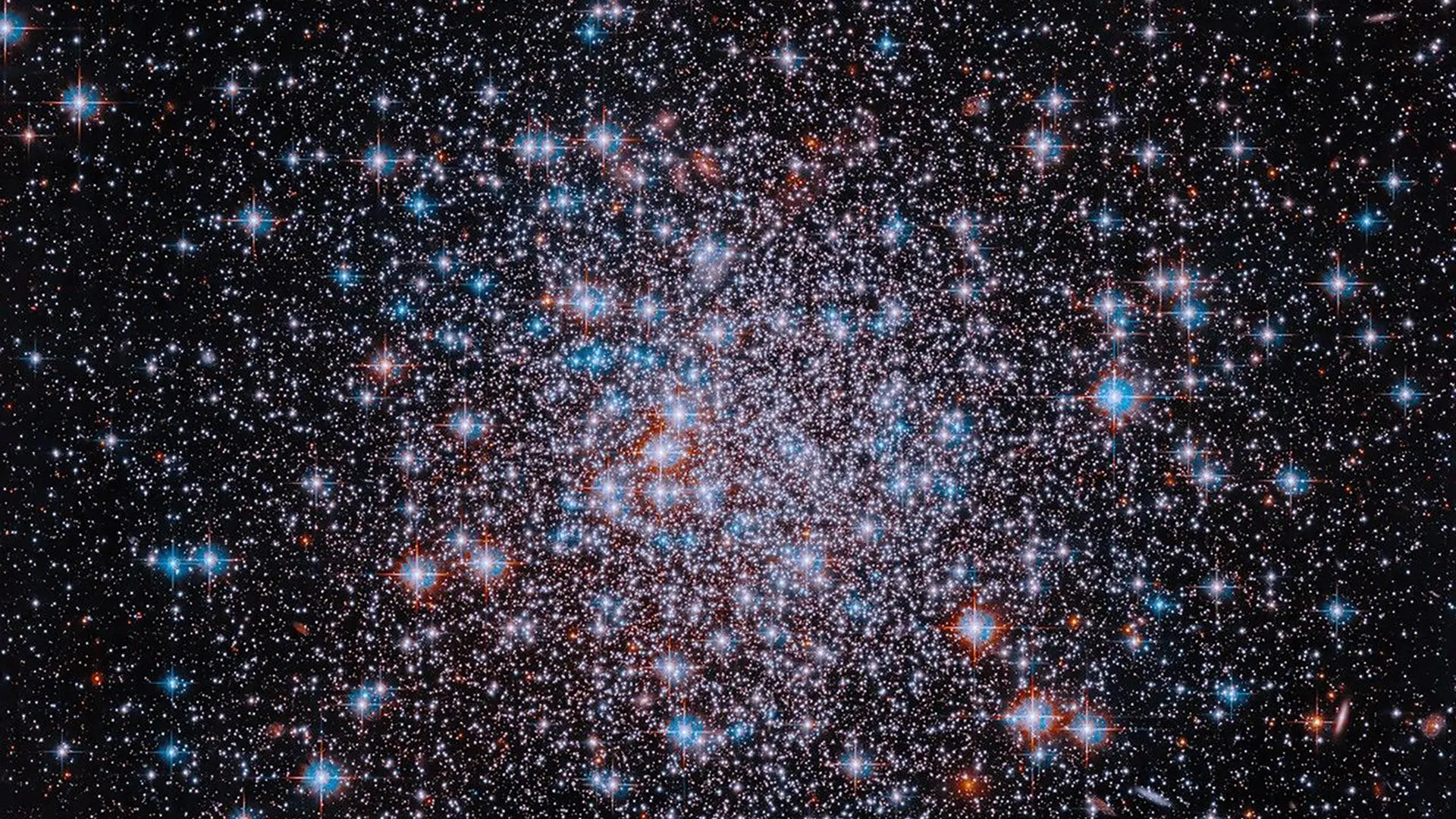
NASA's Hubble Space Telescope has captured a striking image of an ancient star cluster within the Milky Way, timed to mark America's 250th anniversary. The image displays the characteristic red, white, and blue hues that make the observation both scientifically compelling and patriotically resonant.
The cluster contains some of the galaxy's oldest stars, offering astronomers a window into the early universe's composition and evolution. Within these densely packed stellar systems lie clues about how supernovae, or exploding stars, seeded the cosmos with heavy elements essential for planet formation and the emergence of life itself.
When massive stars reach the end of their lives, they detonate catastrophically, ejecting elements like iron, nickel, and carbon into surrounding space. These enriched materials eventually coalesce into new stars and planetary systems. By studying ancient clusters like this one, astronomers can trace how successive generations of stellar explosions gradually transformed a universe composed almost entirely of hydrogen and helium into one capable of sustaining rocky worlds.
Hubble's observations reveal distinct color signatures corresponding to different stellar populations and compositions within the cluster. The red hues typically indicate older, cooler stars, while blue light comes from younger, hotter ones. This color palette provides direct evidence of stellar age and temperature variations within the system.
The timing of this Hubble observation reflects NASA's effort to engage the public in space exploration during a milestone year for the United States. Such imagery demonstrates how astronomical research intersects with broader human narratives while advancing our understanding of cosmic origins.
The work underscores Hubble's continued value despite its age. Launched in 1990, the space telescope remains one of humanity's most productive observatories, regularly delivering discoveries about stellar evolution, galactic structure, and the universe's fundamental composition. Images like this one help illustrate why sustained investment in space-based astronomy yields insights that