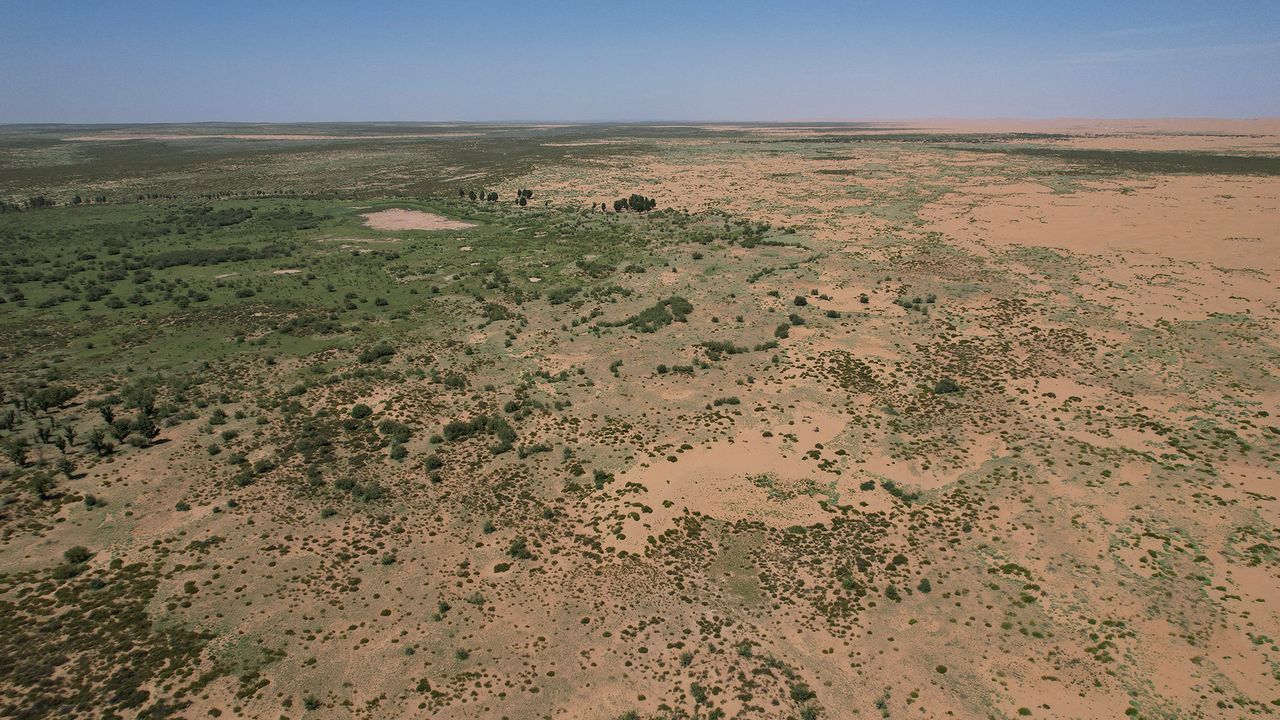
China's massive tree-planting initiative, known as the Great Green Wall, has successfully established 66 billion trees that are growing faster than natural forests in the same regions, according to new research.
The study examined both planted and natural forests across China to understand what drives growth rates. Researchers found that age, species composition, and carbon dioxide sensitivity all influence how quickly trees develop foliage and expand.
The Great Green Wall project, launched in 1978, aims to combat desertification and soil erosion across northern China by establishing forest cover in previously degraded areas. The scale is enormous. The newly planted forests now cover roughly 32 million hectares.
The faster growth rates in planted forests compared to natural ones offers several explanations. Planted forests often feature species selected for rapid growth and climate adaptation. Their younger age structure means most trees remain in vigorous growth phases, whereas natural forests contain a larger proportion of mature, slower-growing trees. Additionally, the planted forests appear more responsive to elevated atmospheric CO2 levels, potentially benefiting from increased carbon availability for photosynthesis.
This research carries implications for carbon sequestration strategies. Faster-growing forests capture atmospheric carbon more rapidly, potentially strengthening China's climate commitments. However, scientists note limitations. Planted monocultures lack the biodiversity of natural forests, reducing habitat value for wildlife. Long-term sustainability remains uncertain, as these young forests face future pest pressures, climate variability, and changing water availability.
The findings demonstrate that strategic reforestation can accelerate tree growth beyond natural rates. Whether this advantage persists as planted forests mature requires continued monitoring. The research underscores both the promise and complexity of using large-scale afforestation to address environmental degradation and climate change simultaneously.