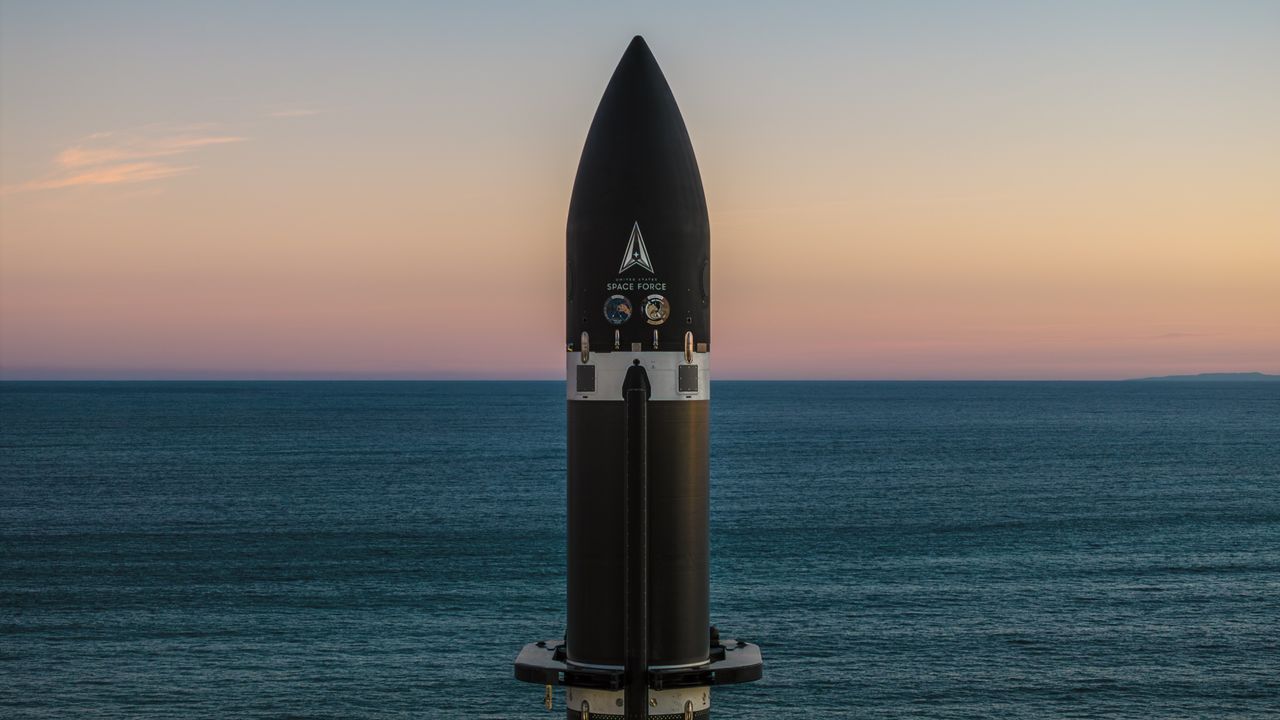
The U.S. Space Force completed its first tactical satellite intercept during a groundbreaking mission called "Victus Haze," demonstrating new capabilities in orbital operations. A private spacecraft successfully approached and maneuvered near another satellite in space, marking a watershed moment for military space operations.
The mission tested technologies and procedures for on-orbit servicing and proximity operations, skills essential for future space defense and maintenance activities. Rather than a destructive collision, the intercept involved careful rendezvous and station-keeping near the target satellite, showcasing precise control and navigation in the orbital environment.
The Space Force contracted with a private aerospace company to conduct this demonstration, reflecting the military branch's increasing reliance on commercial partners for advanced space capabilities. The successful intercept validates techniques that could support multiple future applications: satellite repair, debris removal, and rapid response to emerging threats in space.
This mission carries strategic weight as space becomes an increasingly contested domain. The ability to approach and interact with objects in orbit, whether friendly or potentially hostile, represents a critical capability for space superiority. Military strategists consider on-orbit servicing skills directly applicable to defensive and offensive space operations.
The intercept required solving complex problems in real-time: calculating precise orbital mechanics, managing fuel constraints, and executing maneuvers with minimal margin for error. The success indicates both the maturity of commercial space technology and the military's growing competence in tactical space operations.
Victus Haze builds on earlier space experiments and advances a doctrine of flexible, rapid space operations. The Space Force has prioritized developing its ability to operate effectively in contested space environments, where adversaries might attempt to disable or destroy U.S. satellites.
The mission demonstrates that America's space capabilities extend beyond traditional satellite communications and surveillance into active orbital maneuvering. This capability places new tools in the hands of military planners and raises the technical bar for competitors developing counter-