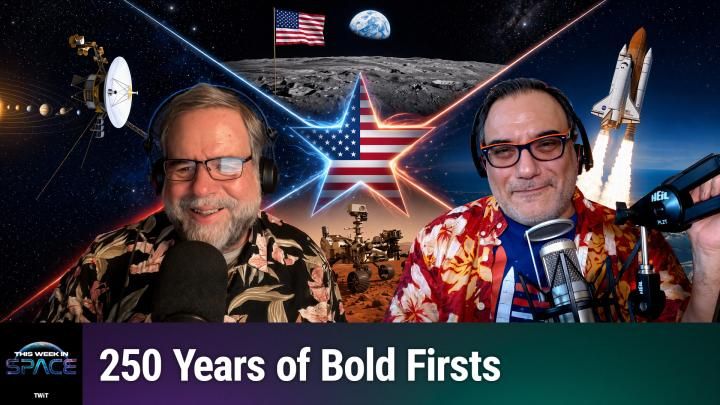
Rod Pyle and Tariq Malik examine the trajectory of American space exploration on Episode 217 of the This Week In Space podcast. The discussion covers how the United States has evolved its approach to spaceflight, from early programs through contemporary initiatives.
The podcast explores the milestones that have defined American space efforts, including shifts in policy, technological advancement, and the role of both government agencies and private companies. Malik, Space.com's managing editor, and Pyle, a space historian and author, bring complementary expertise to the conversation. Pyle has written extensively on space history and policy, while Malik covers current developments in the industry.
The episode traces how American space activities have transformed over decades. Early programs like Mercury, Gemini, and Apollo established human spaceflight capabilities. The Space Shuttle era introduced reusable spacecraft concepts. More recently, commercial partnerships with companies like SpaceX and Blue Origin have reshaped how the United States approaches orbital missions and deep space exploration.
The discussion likely addresses ongoing challenges facing American space ambitions. Budget constraints, workforce development, and competition from other spacefaring nations influence current priorities. The podcast format allows Pyle and Malik to provide context on how decisions made in previous eras continue affecting present-day programs.
This Week In Space releases new episodes regularly on Space.com, covering developments across NASA, commercial spaceflight, international space agencies, and emerging space technology. The podcast reaches audiences interested in understanding both the historical context and forward momentum of spaceflight.