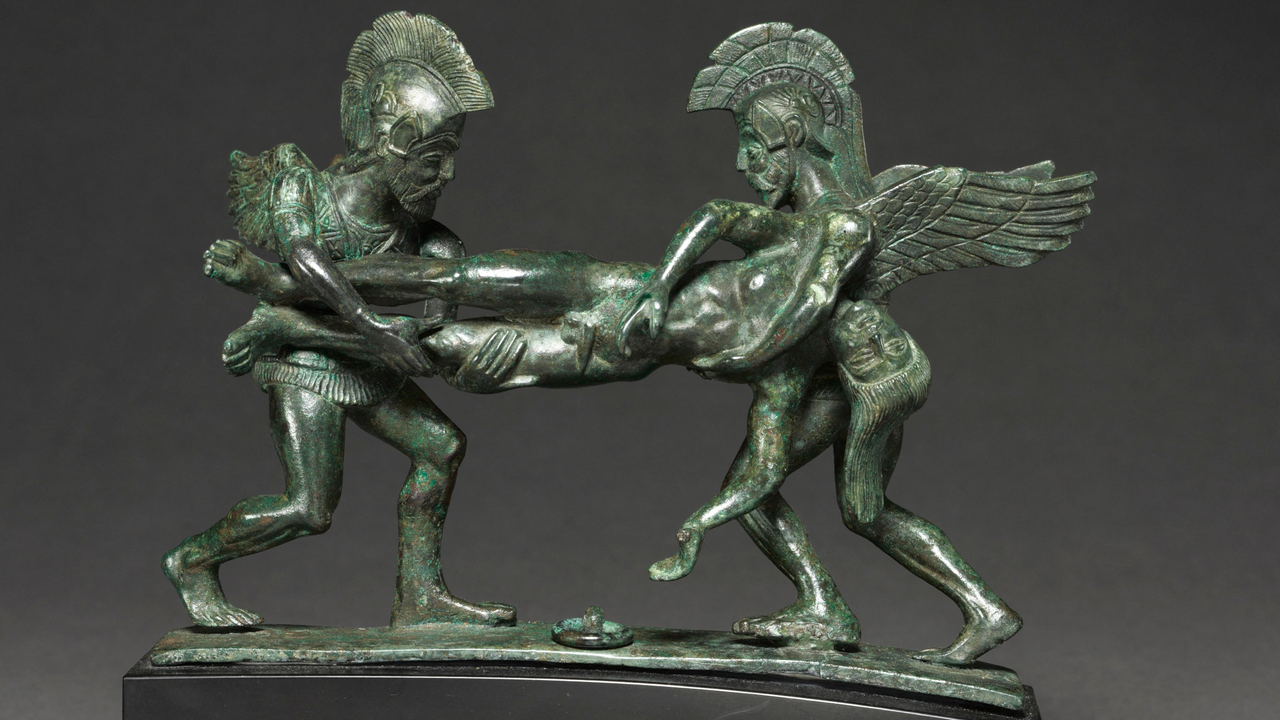
A 2,400-year-old Etruscan bronze sculpture reveals how ancient artisans portrayed death and divine intervention during the Trojan War. The small sculpture, which originally decorated a cista (a cylindrical container), depicts gods carrying away the body of Sarpedon, the son of Zeus, after he fell in battle.
The artifact demonstrates the Etruscans' sophisticated understanding of Greek mythology and their artistic skill in translating complex narratives into miniature bronze work. Cistaes were luxury items, often given as wedding gifts or used to store jewelry and cosmetics. The placement of this mythological scene on such an intimate object suggests the owner valued both aesthetic refinement and knowledge of classical narratives.
Sarpedon's death holds particular weight in Homeric tradition. In the Iliad, the young warrior fights alongside the Trojans despite his divine heritage. His death at the hands of the Greek hero Patroclus prompts Zeus to request that the god Hypnos (Sleep) and Thanatos (Death) carry his son's body home to Lycia for proper burial. The Etruscans, who occupied what is now central Italy between roughly 900 and 27 BCE, adopted and adapted Greek mythological scenes extensively.
This bronze cista handle exemplifies the cultural exchange between the Greek Mediterranean world and Etruscan civilization. The Etruscans imported Greek pottery, hired Greek craftsmen, and incorporated Greek religious imagery into their own artistic traditions. Yet they maintained distinct stylistic elements, as visible in their approach to depicting divine figures and compositional choices.
The sculpture's survival over two millennia speaks to the durability of bronze and the reverence ancient societies held for such objects. Cistaes frequently ended up in tombs as grave goods, ensuring their preservation in archaeological contexts. Museums and collectors have documented hundreds of