Researchers have discovered how iron and hydrogen peroxide combine to trigger ferroptosis, a form of cell death that spreads rapidly through algae populations and causes mass die-offs. The cascade mechanism involves killer molecules propagating from cell to cell, amplifying the effect across entire colonies.
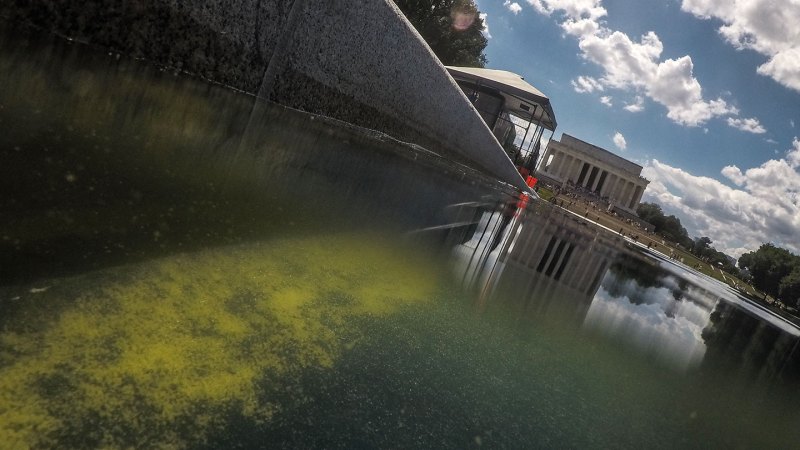
This finding explains the mechanics behind harmful algal blooms that devastate aquatic ecosystems. The Washington Monument's Reflecting Pool, which has battled persistent algae problems, serves as a real-world example of where this knowledge arrives too late to prevent environmental damage.
Ferroptosis operates differently from other cell death pathways. Iron accumulates in cells and reacts with hydrogen peroxide through the Fenton reaction, generating reactive oxygen species that destroy cellular machinery. What makes this process particularly destructive to algae populations is its cascading nature. As cells die, they release more iron and hydrogen peroxide into surrounding water, triggering ferroptosis in neighboring cells. This amplification effect creates a domino collapse that wipes out massive swaths of algae in relatively short timeframes.
The research emerged from work examining how aquatic systems naturally regulate algal growth. Scientists found that modest concentrations of both iron and hydrogen peroxide suffice to initiate the die-off chain reaction. The presence of certain water conditions can activate this mechanism without external intervention.
Understanding ferroptosis in algae offers potential applications for controlling harmful blooms. Rather than using broad herbicides or mechanical removal, targeted approaches might exploit this natural cell death pathway. However, the findings also highlight a limitation of science responding to ecological crises. The Reflecting Pool's algae problems persist because solutions require years of research to develop, validate, and implement. By the time effective treatments emerge from laboratory studies, algal blooms have already damaged tourism, aesthetics, and water quality.
The discovery underscores a broader challenge in environmental management. Understanding ecological mechanisms matters little without