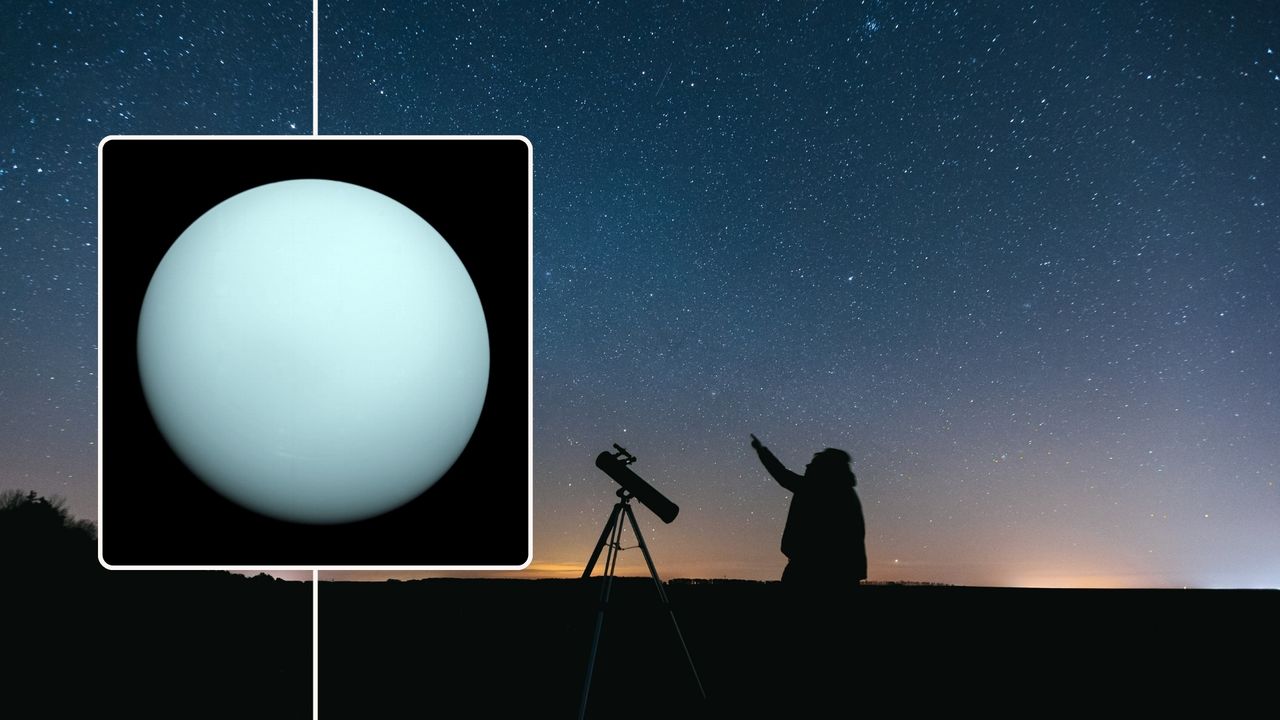
Finding Uranus ranks among astronomy's toughest observational challenges, but this week offers an ideal opportunity for amateur skywatchers. Mars will pass near Uranus, creating a rare celestial alignment that serves as a guide for locating the ice giant.
Uranus remains difficult to spot because it ranks as the second-faintest planet visible without optical aid. Its extreme distance from Earth, averaging 1.8 billion miles, renders it invisible to the naked eye under most conditions. Even through binoculars, Uranus appears merely as a faint dot indistinguishable from background stars. Most casual observers require a telescope with at least moderate magnification to confirm they have actually located the planet rather than a nearby star.
This week's conjunction with Mars solves the visibility problem. Mars shines far brighter than Uranus and appears distinctly reddish, making it easily recognizable to any observer. As Mars slides past Uranus in the night sky, the brighter planet acts as a celestial signpost. Skywatchers can first locate Mars with their naked eyes or binoculars, then use it as a reference point to find Uranus through a telescope or binoculars with sufficient power.
The timing makes this conjunction exceptional for amateur astronomers seeking to observe all eight major planets. Completing a "planet grand slam," where observers spot every planet in a single year, requires finding Uranus and Neptune, the two most elusive targets. Without Mars's help, many skywatchers abandon the search after failing to distinguish Uranus from background stars.
Weather permitting, the optimal viewing window occurs after sunset in the western sky during early evening hours. Dark skies away from light pollution significantly improve detection odds. Observers should consult planetarium software or astronomy apps to pinpoint the exact location of Mars and Uranus from their specific latitude