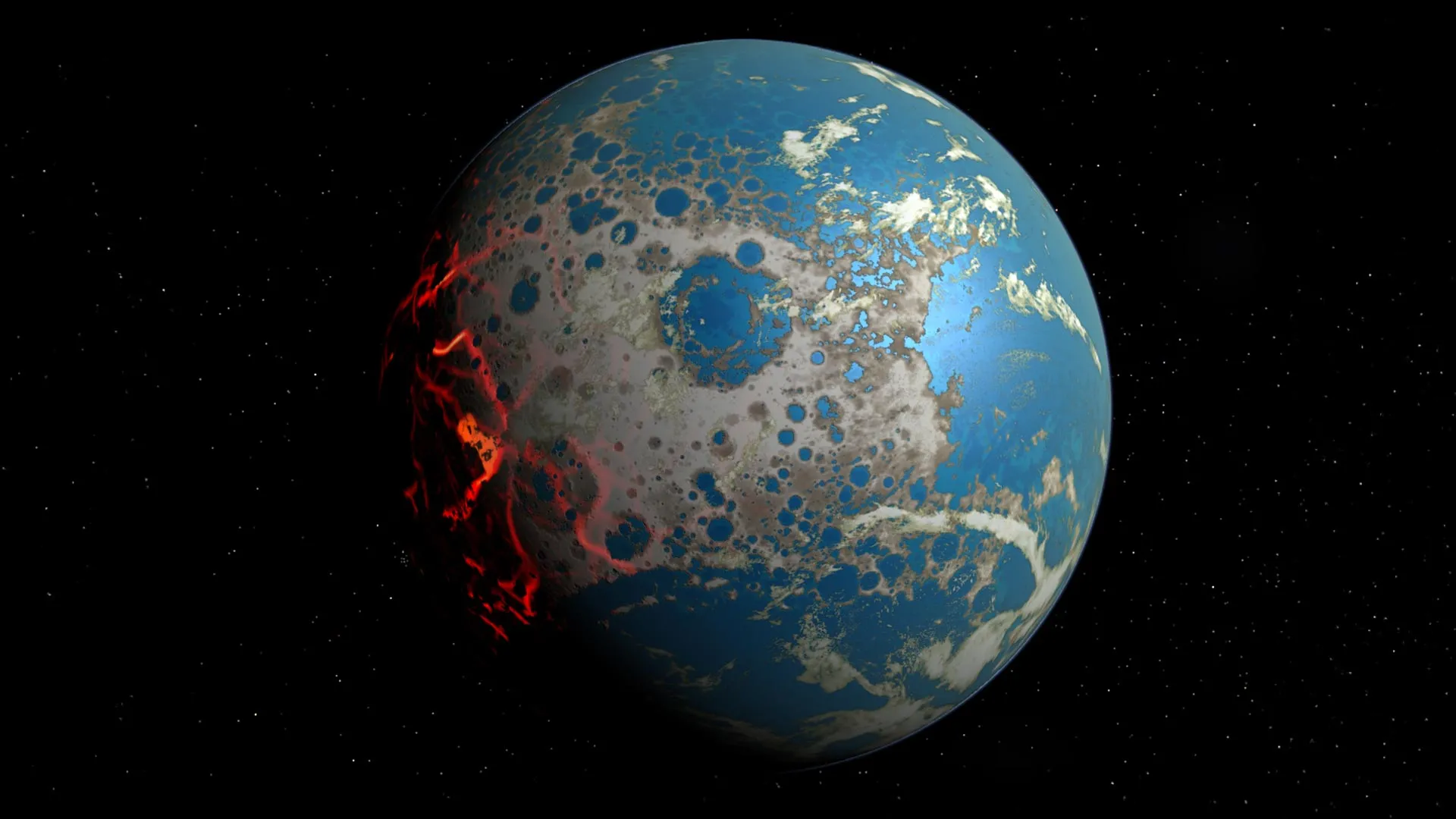
Asteroid impacts during Earth's early history may have inadvertently created the conditions necessary for life to emerge, according to new computer modeling research. The collisions fractured the planet's crust and generated extensive underground hydrothermal systems where hot water circulated through newly created fissures. These subsurface environments persisted for long periods and provided the chemical and thermal conditions suitable for prebiotic chemistry, the processes that preceded biological life.
The research suggests such impact-generated hydrothermal zones covered substantial portions of the early Earth. The simulations demonstrate how the violent energy of asteroid strikes could have penetrated deep into the crust, creating networks of interconnected fractures. These networks allowed superheated water rich in dissolved minerals to flow continuously through rock layers, establishing what scientists call "impact hydrothermal systems."
Scientists recognize hydrothermal environments as promising locations where life's building blocks could have assembled. These zones offer chemical gradients, energy sources, and mineral surfaces that catalyze reactions. The heat and mineral-laden water provide both the thermodynamic driving force and the raw materials for organic chemistry. Underground settings also shield developing biochemistry from ultraviolet radiation and impact-related radiation that would damage fragile molecules on the surface.
The timing of this research adds perspective to Earth's early history. The Late Heavy Bombardment period, roughly 4.1 to 3.8 billion years ago, saw intense asteroid activity. If the modeling holds, these devastating collisions paradoxically generated habitable zones at precisely the moment when life appears to have begun, according to fossil evidence.
The study does not prove life originated in impact hydrothermal systems, only that such environments existed and possessed properties conducive to prebiotic chemistry. Other proposed origin sites include shallow ocean vents, deep-sea hydrothermal vents, and terrestrial hot springs. The mechanisms responsible for assembling life