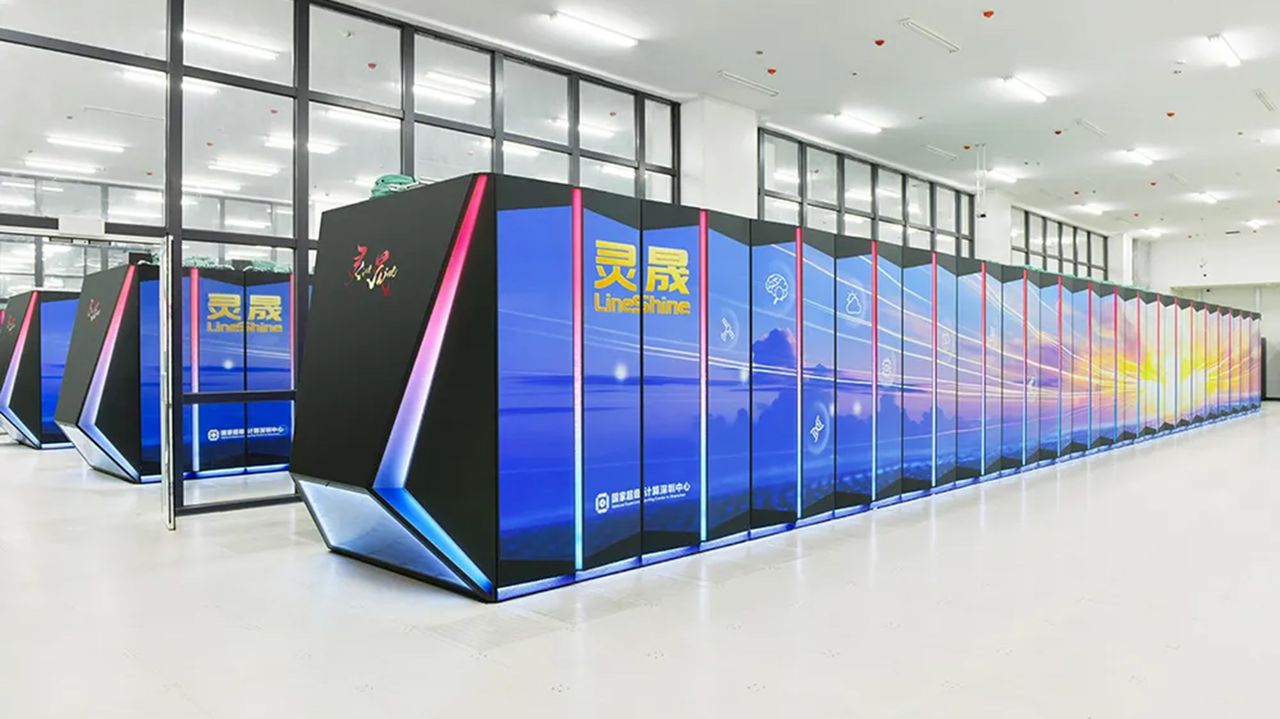
China's Line Shine supercomputer has claimed the top position in global computing rankings, marking the first time a Chinese machine has held the world's fastest title since 2017. The system surpasses all current United States supercomputers in processing power.
The Line Shine supercomputer represents a major shift in the global race for computational dominance. Supercomputers rank among the most strategically important tools in modern science and technology, enabling research in climate modeling, drug discovery, artificial intelligence, and nuclear simulations. The rankings themselves come from the Top500 list, which tracks the world's most powerful computers twice annually.
China's return to the top spot after a seven-year gap underscores the country's substantial investment in high-performance computing infrastructure. The previous Chinese leader, Sunway TaihuLight, held the number one ranking from 2016 to 2017 before US systems took over. That gap reflected American dominance in supercomputing over the past several years, driven by facilities operated by the Department of Energy and corporations like Nvidia and Intel.
The United States has maintained leadership through systems like Frontier at Oak Ridge National Laboratory and Aurora at Argonne National Laboratory. These machines have powered research across physics, materials science, and climate projections. However, the Line Shine supercomputer's performance reestablishes China as a serious contender in computational capabilities.
The implications extend beyond bragging rights. Nations with the fastest supercomputers gain advantages in cryptography, materials science, and artificial intelligence development. Competition between the US and China for computing supremacy reflects broader technological rivalries, including efforts to control semiconductor manufacturing and advanced chip design.
Experts note that supercomputer rankings depend heavily on Linpack benchmarks, which measure floating-point operations per second. Real-world applications require different metrics, meaning rankings do not necessarily reflect which system performs best for all tasks. Nevertheless