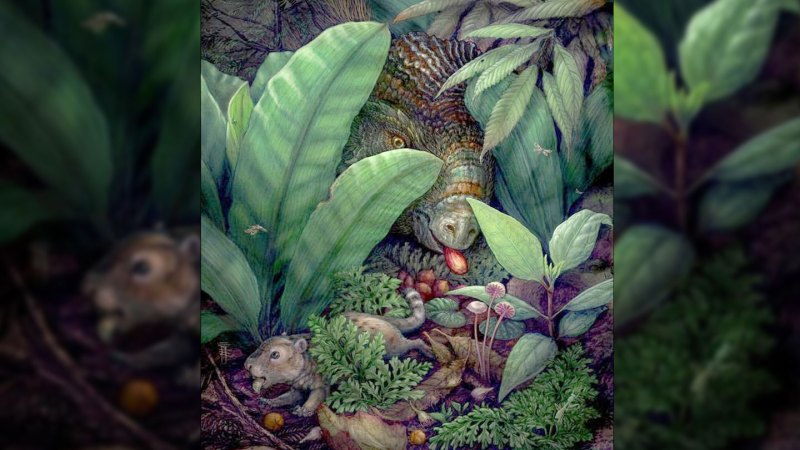
Researchers have discovered fossilized fruits from ancient flowering plants that suggest dinosaurs may have dispersed seeds during the Cretaceous Period, upending the conventional timeline for animal-mediated seed dispersal.
The findings challenge the long-held assumption that angiosperms relied exclusively on wind or water to spread seeds until after dinosaurs went extinct 66 million years ago. Scientists examining preserved fruits with characteristics suited for animal consumption now propose that dinosaurs played an active role in seed distribution alongside the flowering plants that were diversifying during this era.
Fossilized fruits bearing fleshy tissues and structures that appear designed for consumption indicate adaptations matching those of modern fruits dispersed by animals. These specimens provide direct paleontological evidence that flowering plants developed animal-attracting features while giant reptiles still roamed the planet. The discovery suggests a co-evolutionary relationship between early angiosperms and herbivorous dinosaurs, similar to the partnerships between modern plants and mammals or birds today.
This research revises understanding of how flowering plants successfully colonized new environments during their rapid radiation in the mid-Cretaceous. Rather than waiting millions of years after the dinosaur extinction event, angiosperms appear to have capitalized on an existing animal dispersal system already present in Cretaceous ecosystems. Large herbivorous dinosaurs provided a ready mechanism for transporting seeds across vast distances, potentially accelerating the geographic spread of these emerging plant groups.
The findings rest on morphological analysis of fossilized fruit structures, which represent indirect but compelling evidence. Direct fossil evidence of dinosaur consumption remains elusive. Researchers cannot definitively establish whether specific dinosaur species actually consumed these fruits, only that the physical characteristics suggest such interactions were plausible.
This discovery opens new questions about plant-dinosaur interactions during the late Mesozoic and adds complexity to our understanding of how modern ecosystems developed. The work demonstrates how