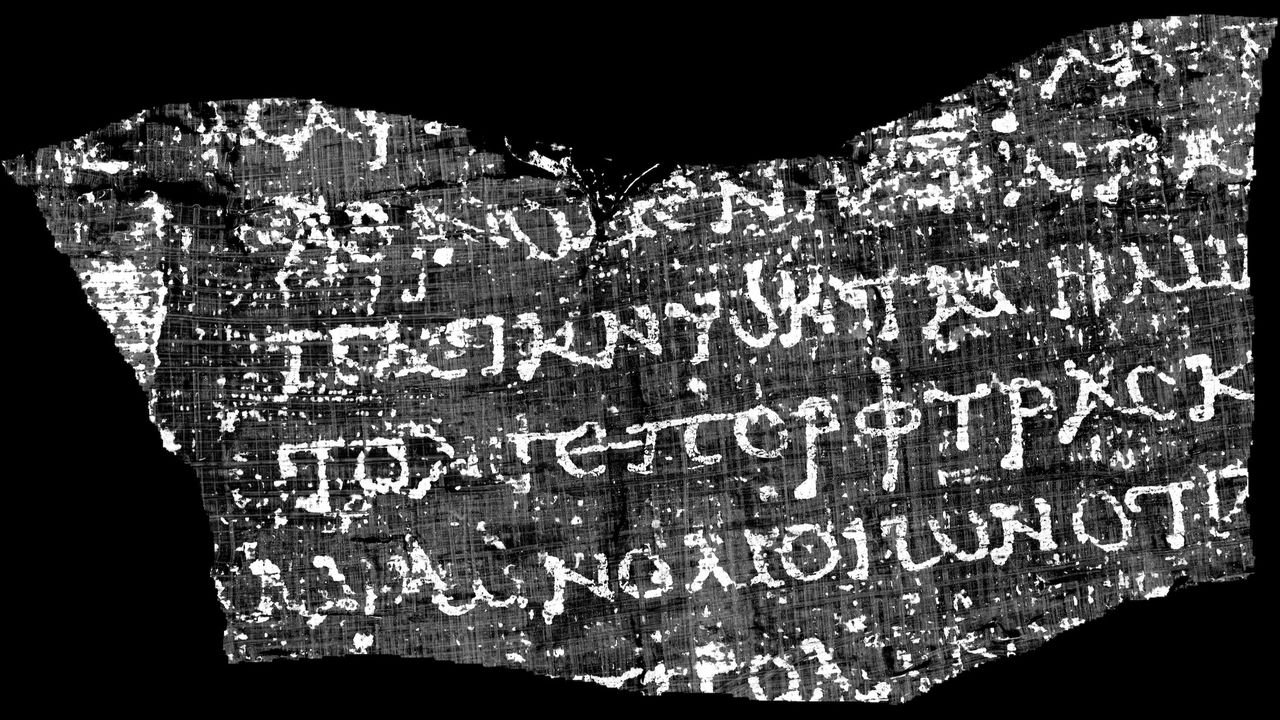
Researchers using artificial intelligence have decoded previously illegible text from two carbonized scrolls buried by Mount Vesuvius nearly 2,000 years ago in Herculaneum. The breakthrough reveals what may be a previously unknown philosophical work by a Stoic thinker.
The scrolls were entombed when the volcano erupted in 79 AD, preserving hundreds of papyri in a charred but intact state. The extreme heat carbonized the documents, making them impossible to open or read with traditional methods for centuries. Their blackened, brittle condition rendered standard optical imaging useless.
Researchers applied advanced AI algorithms to X-ray and multispectral imaging data collected from the scrolls. The computational approach identified subtle variations in ink density and surface texture invisible to the human eye, effectively revealing letters and words hidden within the carbonized material. This technique has proven far more effective than any previous attempt to read the Herculaneum collection.
The deciphered text includes substantial philosophical content. One scroll appears to contain passages from a previously unknown work, possibly by a Stoic philosopher, though researchers have not yet confirmed the author's identity. The second scroll yielded additional readable passages that scholars are still analyzing for complete translation.
This discovery expands knowledge of ancient Stoic philosophy and the intellectual life of Roman Herculaneum. The city was buried alongside Pompeii but remained better preserved due to a different type of volcanic material that sealed buildings more effectively. The scrolls represent one of the few surviving libraries from antiquity, offering rare windows into daily life, commerce, and thought in the Roman Empire.
The AI-assisted approach opens possibilities for reading hundreds of other carbonized scrolls in museum collections worldwide that have resisted conventional decipherment. Researchers continue refining the algorithms to improve accuracy and speed, potentially unlocking centuries of lost ancient texts. The combination of computational analysis