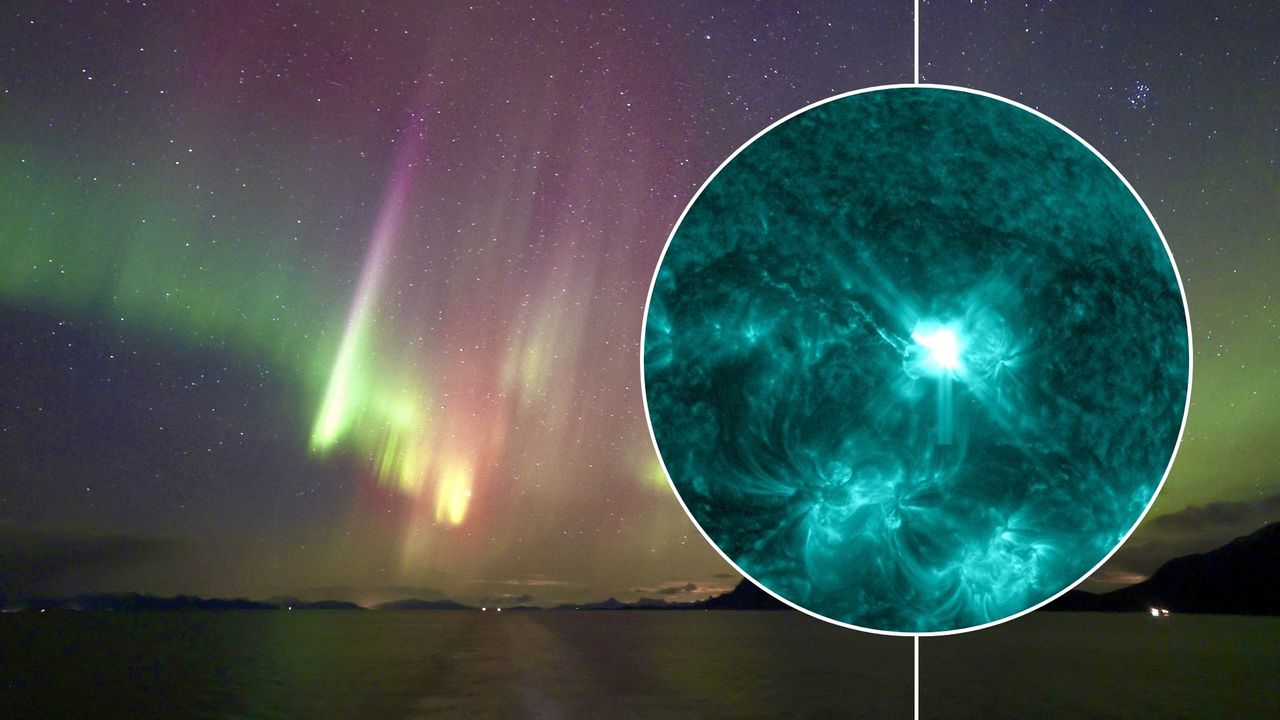
The sun discharged 10 solar flares within a single 24-hour period, triggering multiple coronal mass ejections heading toward Earth. These CMEs set the stage for potential G1 to G2 geomagnetic storm conditions over the July 4 weekend, creating favorable circumstances for northern lights displays across higher latitudes.
Solar flares occur when magnetic energy accumulated in the sun's atmosphere releases suddenly, often accompanied by CMEs that propel billions of tons of plasma into space. When these ejections reach Earth's magnetosphere, they compress and destabilize the magnetic field, triggering geomagnetic storms. The storm classification system ranks events from G1 (minor) to G5 (extreme), with G1-G2 representing minor to moderate intensity.
The timing of this solar activity coincides with the sun's current phase of heightened activity. The star operates on an 11-year cycle, and solar maximum approaches in 2024 and 2025, bringing increased flare frequency and CME production. This uptick in activity explains why viewers have documented more aurora sightings in recent months.
G1 and G2 geomagnetic storms can brighten auroras visible from mid-northern latitudes including the northern United States, southern Canada, and Scandinavia. Viewers in these regions during clear, dark nights may observe green or red curtains of light dancing across the sky. Further south, the aurora typically remains confined to polar regions during lower-intensity storms.
Geomagnetic storms do carry minor operational impacts. Power grid operators monitor conditions closely, and satellite operators adjust spacecraft orientation to minimize drag from increased atmospheric expansion. High-frequency radio communications may experience disruptions. However, G1-G2 events pose no threat to public infrastructure or human health.
Aurora forecasting remains uncertain due to CME trajectory prediction limits. Space weather