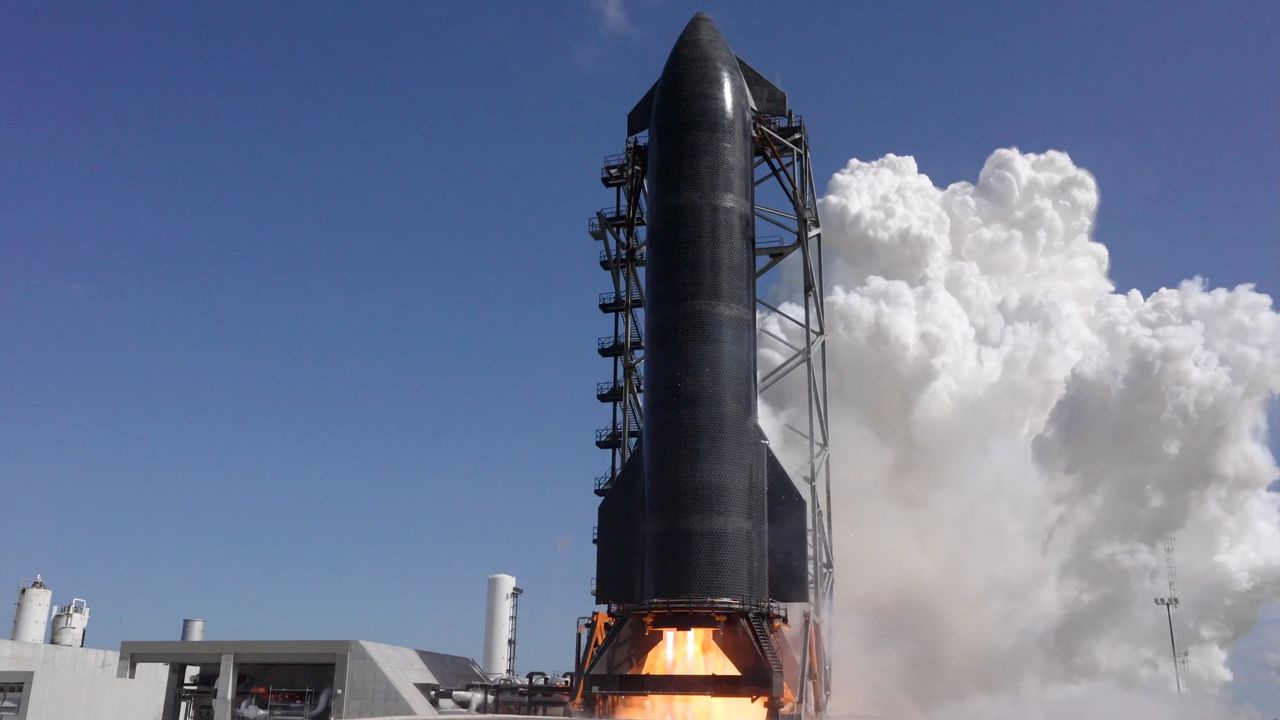
SpaceX has successfully conducted a static fire test of Starship's six Raptor 3 engines at its Starbase facility in Boca Chica, Texas. The test ignited all engines simultaneously for a full minute, demonstrating the vehicle's propulsion system ahead of the upcoming 13th integrated flight test.
Static fire tests serve as critical validation milestones before orbital test flights. They allow engineers to verify engine performance, verify fuel flow systems, and confirm that all six engines can operate in concert without anomalies. For Starship, this full-engine ignition test represents one of the final preparation steps before the next launch attempt.
Starship represents SpaceX's fully reusable super-heavy launch vehicle intended for missions to the moon, Mars, and beyond. The vehicle stands 120 meters tall and combines the Starship upper stage with the Super Heavy booster. Each Raptor 3 engine generates roughly 510,000 pounds of thrust at sea level, making the combined system one of the most powerful rockets ever built.
Previous Starship test flights have achieved incremental progress. The program recovered the Super Heavy booster in previous attempts and demonstrated rapid turnaround capabilities between flights. The 13th test flight will continue this iterative testing approach, likely targeting additional vehicle milestones such as reboost burns, thermal protection validation, or splashdown recovery procedures.
SpaceX conducts these tests at Starbase, its private facility located in South Texas near Brownsville. The company maintains several test stands capable of handling Starship's massive engines and fuel requirements. Multiple static fire tests precede each flight test to ensure all systems function correctly.
The pace of Starship development has accelerated significantly since the program's inception. SpaceX aims to demonstrate full reusability and rapid relaunch capability, which would fundamentally alter