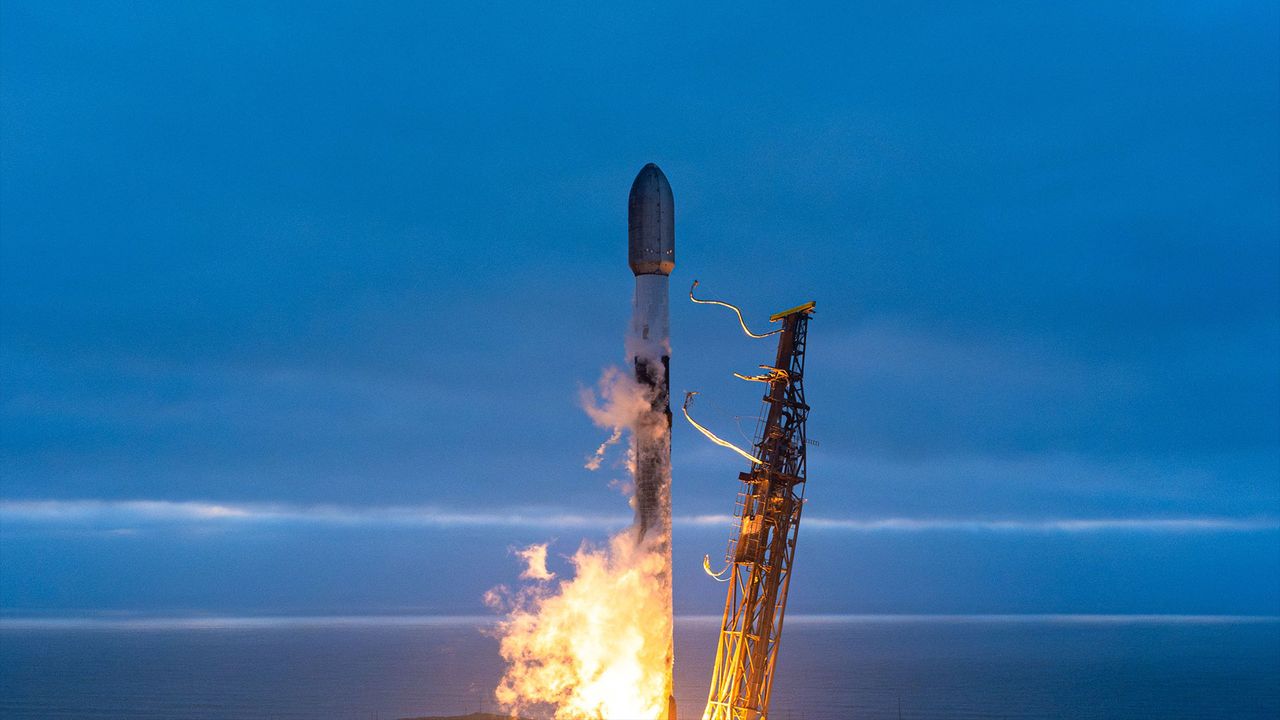
SpaceX launched a Falcon 9 rocket from Vandenberg Space Force Base in California on Wednesday, July 1, 2026, deploying 24 Starlink internet satellites into orbit.
The mission marks another routine addition to SpaceX's growing constellation of low-Earth orbit satellites. Starlink aims to provide global broadband coverage, particularly in remote regions underserved by traditional internet infrastructure. The constellation now numbers in the thousands of operational satellites following years of regular launches from both Vandenberg and Kennedy Space Center.
Vandenberg hosts frequent SpaceX launches due to its position on the California coast, which provides ideal geography for reaching polar and near-polar orbits. These trajectories allow Starlink satellites to cover higher latitudes more effectively than equatorial launch sites can achieve.
The Falcon 9 first stage likely returned to Earth for landing and reuse, consistent with SpaceX's established recovery operations. The company has successfully landed and reflown first stages hundreds of times, substantially reducing launch costs compared to expendable rockets.
Starlink's constellation expansion continues as the company pursues its goal of offering worldwide internet service. The network already provides connectivity to customers across dozens of countries, competing with traditional satellite internet providers and terrestrial broadband networks. SpaceX plans thousands more launches to maintain and expand the constellation over coming years.
The launch reflects the increasing cadence of commercial spaceflight. SpaceX regularly conducts multiple Starlink deployment missions monthly, demonstrating the operational maturity of its launch infrastructure. Each mission validates the reusability and reliability of the Falcon 9 platform.