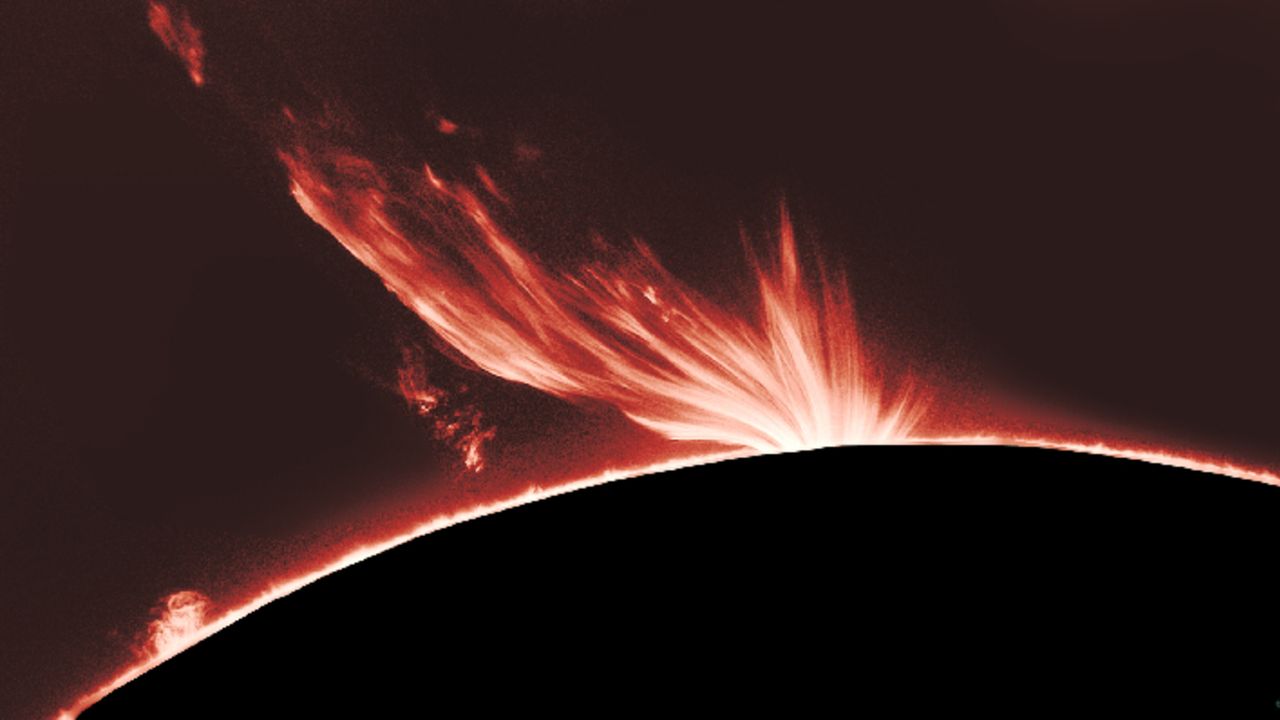
The sun entered a burst of intense activity this week, firing 10 M-class solar flares within 24 hours. Space weather forecasters warn that additional flares remain possible, setting the stage for aurora displays across more than a dozen US states during the Independence Day weekend.
M-class flares rank as moderate-strength solar eruptions. They occur when magnetic energy builds up on the sun's surface and suddenly releases, accelerating particles into space. The current wave of activity stems from a particularly active sunspot region on the solar disk.
When these flares erupt, they expel plasma and energetic particles toward Earth. Those particles interact with Earth's magnetosphere, the magnetic bubble surrounding our planet. As the particles cascade toward the poles, they collide with oxygen and nitrogen in the upper atmosphere, producing the green, red, and purple lights characteristic of auroras.
The National Oceanic and Atmospheric Administration's Space Weather Prediction Center upgraded its aurora forecast, predicting geomagnetic storm conditions. Such conditions expand the visibility zone for aurora watchers well south of the Arctic Circle, where auroras typically remain confined.
States from the upper Midwest and Northern Plains down through portions of the Northeast could experience visible auroras during the weekend. Observers in states like Montana, North Dakota, Minnesota, Wisconsin, Michigan, and New York have the strongest chances. Even observers in more southern latitudes might catch a glimpse if conditions peak overnight.
This activity arrives as the sun approaches solar maximum, the peak of its 11-year cycle of activity. Solar maximum typically produces more frequent flares and coronal mass ejections, the most dramatic solar explosions. Forecasters expect this solar cycle to reach its climax in 2024 and 2025.
Skywatchers should seek locations with minimal light pollution and clear skies. Auroras often appear brightest between 10 p.