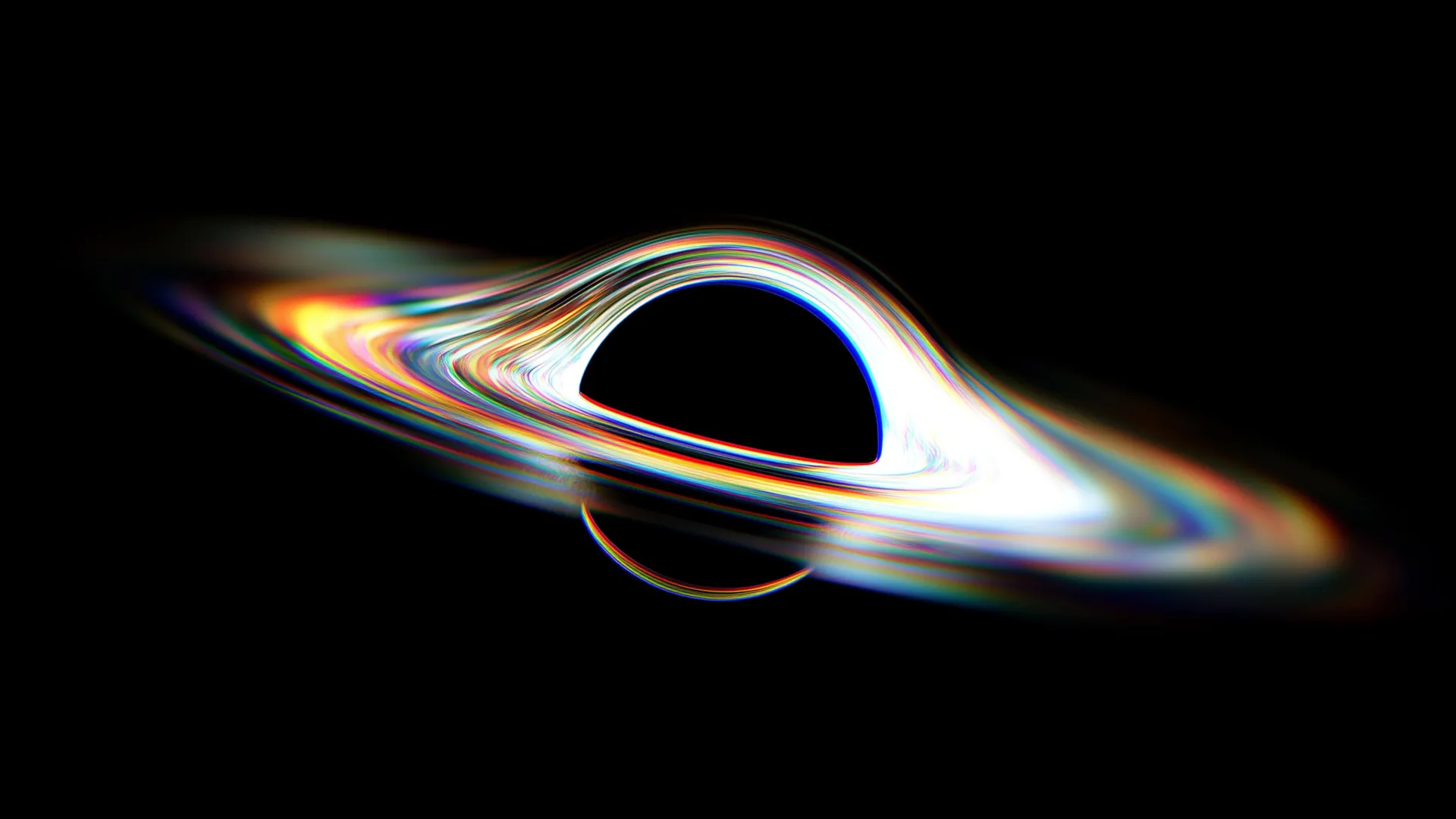
Astronomers have released a catalog of 390 gravitational wave detections, the largest collection compiled to date. The new dataset includes 161 previously unknown black hole collisions discovered through advanced analysis of data from the LIGO and Virgo gravitational wave observatories.
The catalog reveals several record-setting observations. Researchers identified the clearest gravitational wave signal ever recorded and pinpointed the most precise location of a black hole merger to date. These detections expose a hidden population of black holes and their collision patterns across the universe.
One finding stands out: evidence that some black holes originate from mergers of smaller black holes. This layered formation process suggests black holes can build up through successive collisions, challenging simpler models of how these objects form. The data provides astronomers with a more complete picture of black hole demographics and their evolutionary pathways.
The pace of discovery has accelerated dramatically. Gravitational wave detections now arrive several times per week, compared to individual events per year during the earliest stages of this field. This acceleration reflects improvements in detector sensitivity and analysis techniques developed by the LIGO-Virgo collaboration over the past decade.
Gravitational waves themselves are ripples in spacetime caused by violent cosmic events. When two black holes orbit and collide, they create waves that propagate across the universe at the speed of light. LIGO's twin detectors in the United States and Virgo's detector in Italy can sense these minuscule distortions, allowing astronomers to study black hole mergers billions of light-years away.
The expanding catalog enables statistical analysis impossible with smaller samples. Researchers can now determine how black hole masses are distributed, how frequently mergers occur in different regions of space, and whether population models match observations. Each new detection refines these understanding.
The field enters what researchers describe as an exciting new era. As detectors continue improving