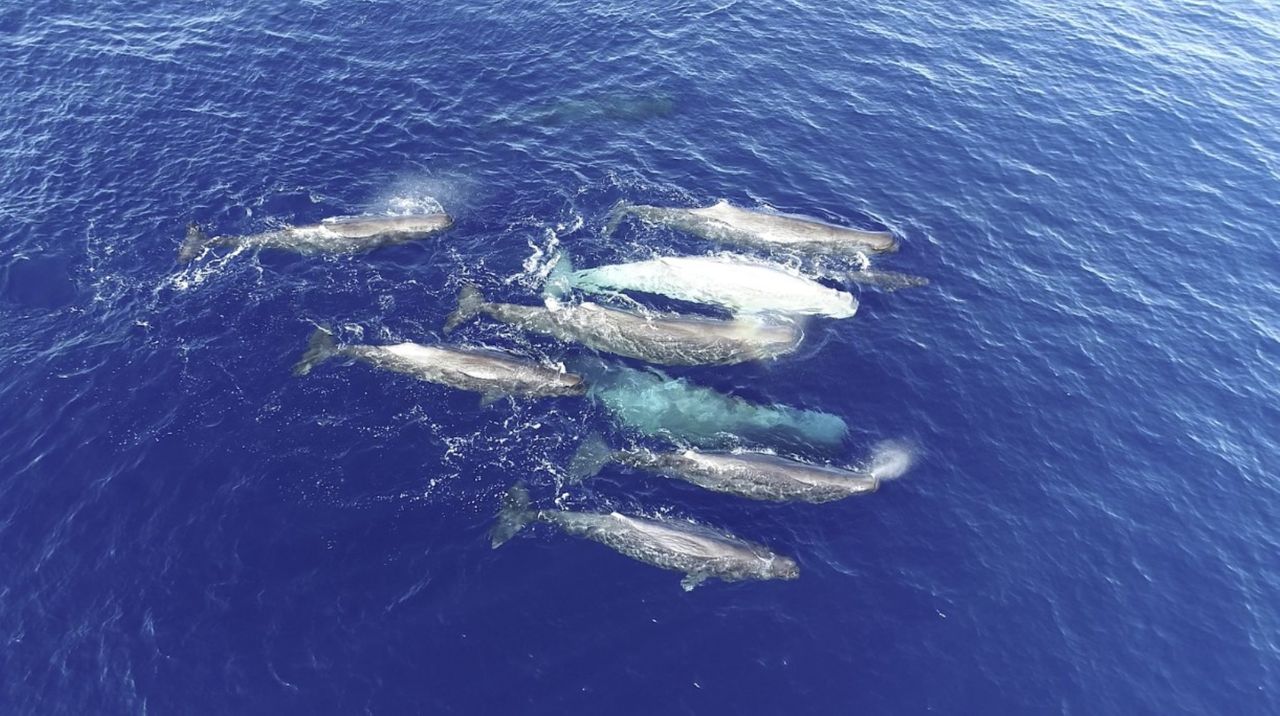
Sperm whales in the Mediterranean Sea appear to be evolving distinct dialects, according to analysis of thousands of audio recordings. Researchers documented communication patterns suggesting the population is splitting into two separate groups, each with its own acoustic signature.
The study examined recordings of sperm whale clicks and codas, the patterned sequences they use to communicate with one another. These underwater vocalizations carry social and identifying information across vast ocean distances. The research team identified systematic differences in how various whale pods produce and structure their codas, indicating the emergence of separate dialects within the Mediterranean population.
"Weirdos of the sperm whale world" is how researchers colloquially describe pods that deviate from typical communication patterns. The Mediterranean whales appear to be developing regional variations in their acoustic behavior, similar to how human populations develop distinct accents and dialects across geographic regions.
This dialect divergence could reflect several processes. Different pods may be adapting their communication to specific acoustic environments within the Mediterranean. Extended social separation between groups can also drive linguistic drift, where isolated populations gradually modify their vocalizations over generations. The findings align with observations in other cetacean species, including killer whales and humpback whales, which maintain population-specific dialects.
The research carries implications for understanding how animal cultures evolve and persist across generations. Sperm whales demonstrate cultural transmission of learned behaviors, passing communication patterns to offspring and new group members. If dialect divergence continues, it could eventually result in distinct cultural identities that identify whales as belonging to specific populations.
The Mediterranean study contributes to broader research on cetacean communication and cognition. Sperm whales possess among the largest brains in the animal kingdom and display complex social structures. Understanding their acoustic diversity offers insights into how cetaceans maintain social cohesion while potentially developing unique group identities.
The recordings provide a natural archive of whale communication without experimental