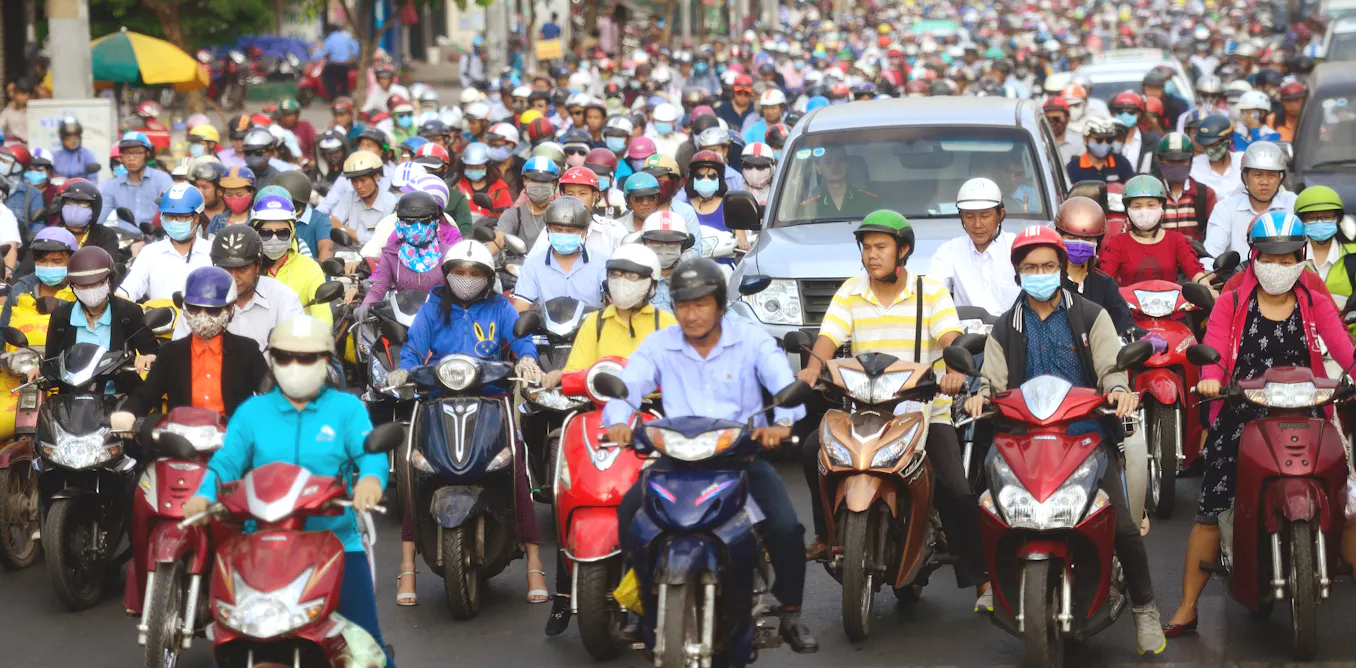
Vietnam reached 100 million people in 2024, marking a demographic milestone for the Southeast Asian nation. However, population growth will decelerate sharply over the next several decades before entering decline by mid-century, according to demographic projections.
The country's fertility rate has dropped dramatically. Vietnamese women now average 2.0 children each, down from 4.0 in the 1980s. This decline reflects urbanization, rising education levels particularly among women, expanded access to contraception, and delayed marriage ages. Urban areas show even lower fertility, with some cities averaging under 1.5 children per woman.
Vietnam's aging population presents economic challenges ahead. The working-age population will peak within the next decade, then contract. By 2050, roughly 20 percent of the population will exceed age 65, compared to 9 percent today. This demographic shift strains pension systems and healthcare infrastructure while reducing the labor force available for economic growth.
The government faces policy decisions on immigration and retirement age. Currently, Vietnam restricts immigration, limiting inflows of younger workers who could offset aging. Raising the retirement age remains politically sensitive but increasingly necessary as life expectancy climbs and the dependent elderly population grows.
This demographic transition mirrors patterns seen across East Asia. Japan, South Korea, and China all experienced rapid fertility declines and now grapple with aging societies. Vietnam's transition compressed into a shorter timeframe, giving policymakers less time to adapt institutions and social programs.
Economic implications include slower growth rates and pressure on healthcare and pension spending. Labor-intensive manufacturing, Vietnam's economic engine, may face workforce constraints. However, some economists note that slower population growth reduces environmental pressures and could support more sustainable development if policies shift accordingly.
Vietnam's path forward requires balancing aging concerns with environmental sustainability, adapting social safety nets, and potentially reconsidering immigration policies to maintain economic dynamism