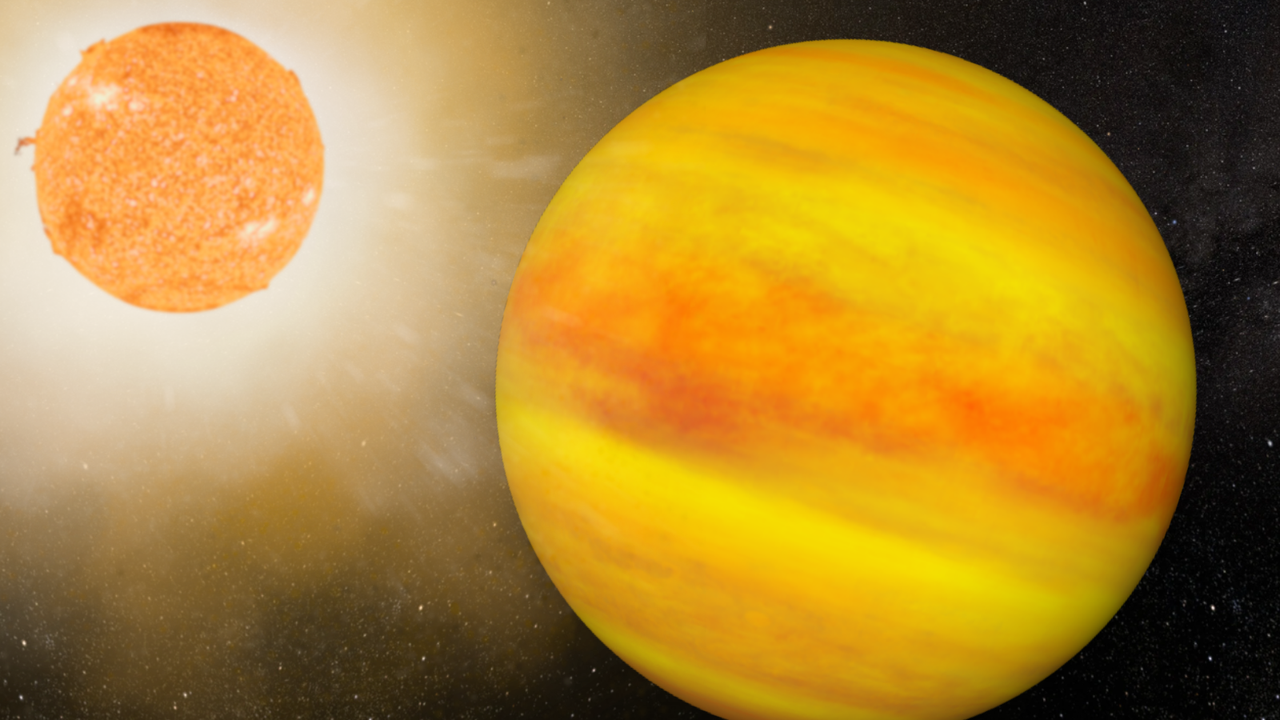
Astronomers using data from NASA's Spitzer Space Telescope have identified an unusual hot Jupiter exoplanet with an asymmetrical heat distribution that defies conventional planetary models. The hottest point on the planet appears offset from where it should be directly facing its star, puzzling researchers about the atmospheric dynamics at play.
Hot Jupiters represent gas giants orbiting extremely close to their host stars, experiencing scorching temperatures exceeding 1,200 Kelvin. Their proximity to stars means they should exhibit a pronounced hot spot directly aligned with stellar radiation. This newly discovered exoplanet breaks that pattern, with its thermal peak displaced from the subsolar point—the location facing directly toward its star.
The offset hotspot suggests powerful atmospheric winds or circulation patterns redistribute heat across the planet's surface in unexpected ways. Atmospheric models typically assume relatively straightforward heat transport on hot Jupiters, but this observation indicates the actual mechanisms remain incompletely understood. The finding raises questions about how atmospheric chemistry, cloud formation, and wind speeds interact on these extreme worlds.
Data from Spitzer's infrared observations captured the planet's thermal emission at different wavelengths, allowing researchers to map temperature variations across its surface. The asymmetry points toward either unusually strong jet streams that carry heat away from the subsolar region or atmospheric absorption patterns that differ from current predictions.
This discovery underscores limitations in existing models of exoplanet atmospheres. Hot Jupiters serve as laboratories for understanding extreme planetary physics since their intense stellar irradiation creates conditions absent in our solar system. Explaining the mechanisms behind this hotspot displacement requires refining atmospheric circulation theories and potentially accounting for magnetic field interactions or tidal heating effects not previously emphasized.
The finding opens new avenues for studying how stellar radiation couples with planetary atmospheric dynamics. Future observations from the James Webb Space Telescope promise higher-resolution thermal mapping that could reveal additional details