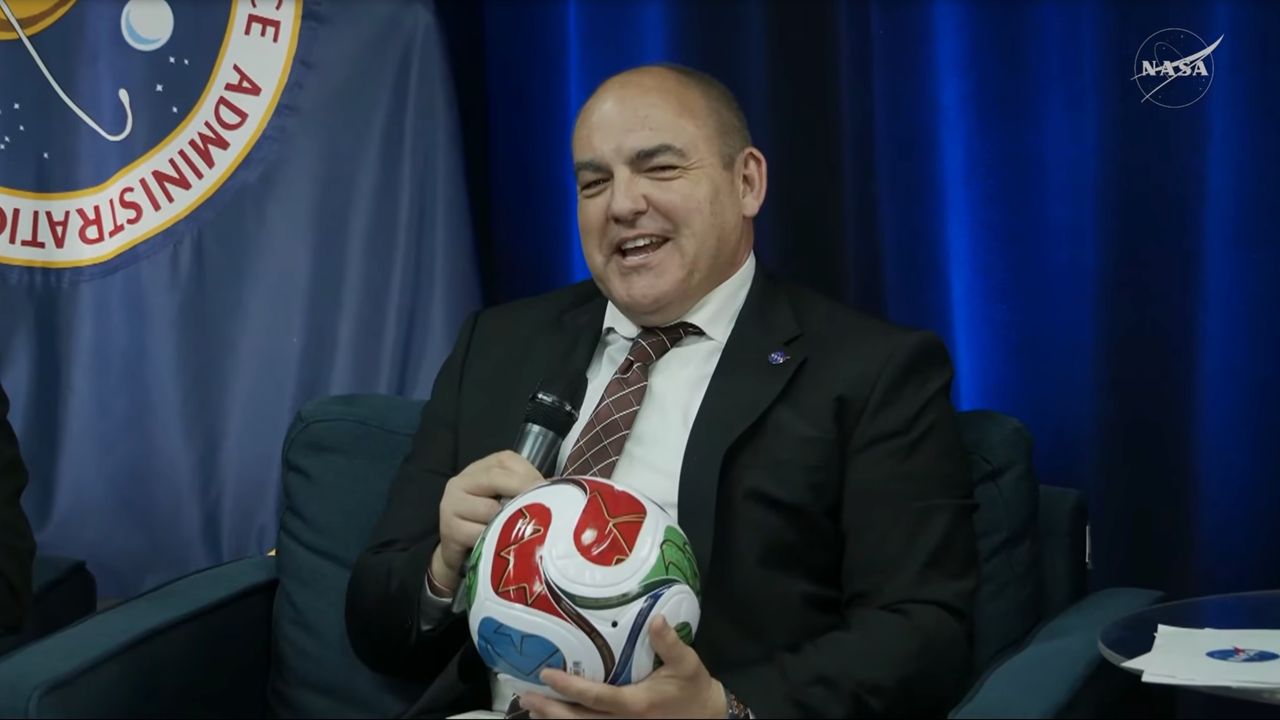
NASA administrator Jared Isaacman announced Tuesday that the agency will send a soccer ball to the moon if the United States wins the FIFA World Cup. Isaacman made the pledge without specifying a timeline or which lunar mission would carry the ball.
The announcement represents a symbolic gesture linking space exploration to a global sporting event. It remains unclear whether this commitment binds NASA to a specific World Cup tournament or applies more broadly to any future US victory.
NASA has a history of sending objects beyond Earth as cultural artifacts. The Apollo 14 mission in 1971 carried two golf balls hit by astronaut Alan Shepard on the lunar surface. The agency has also transported Olympic flags, medals, and other items on space missions.
The feasibility of Isaacman's pledge depends on several factors. The US national team would need to win a World Cup tournament first. NASA would then need to coordinate the soccer ball's inclusion on a crewed lunar mission, such as those planned under the Artemis program. The agency has committed to returning humans to the moon, with Artemis II targeting a crewed lunar flyby and later missions aiming for surface landings.
Isaacman previously served as commander of SpaceX's Inspiration4 private orbital mission in 2021. His current leadership at NASA began in 2023. His commitment on soccer reflects broader NASA efforts to connect space exploration with public culture and international interest.
The practical challenges remain substantial. NASA schedules lunar missions years in advance based on technical and scientific priorities. Adding a soccer ball to a mission would require approval through the agency's protocols for payload selection and integration. The symbolic weight of carrying a sports artifact to the moon, however, aligns with NASA's tradition of including culturally meaningful items on exploration missions.
Whether the US advances far enough in future World Cup tournaments to trigger this pledge remains unknown. The next FIFA World Cup occurs in