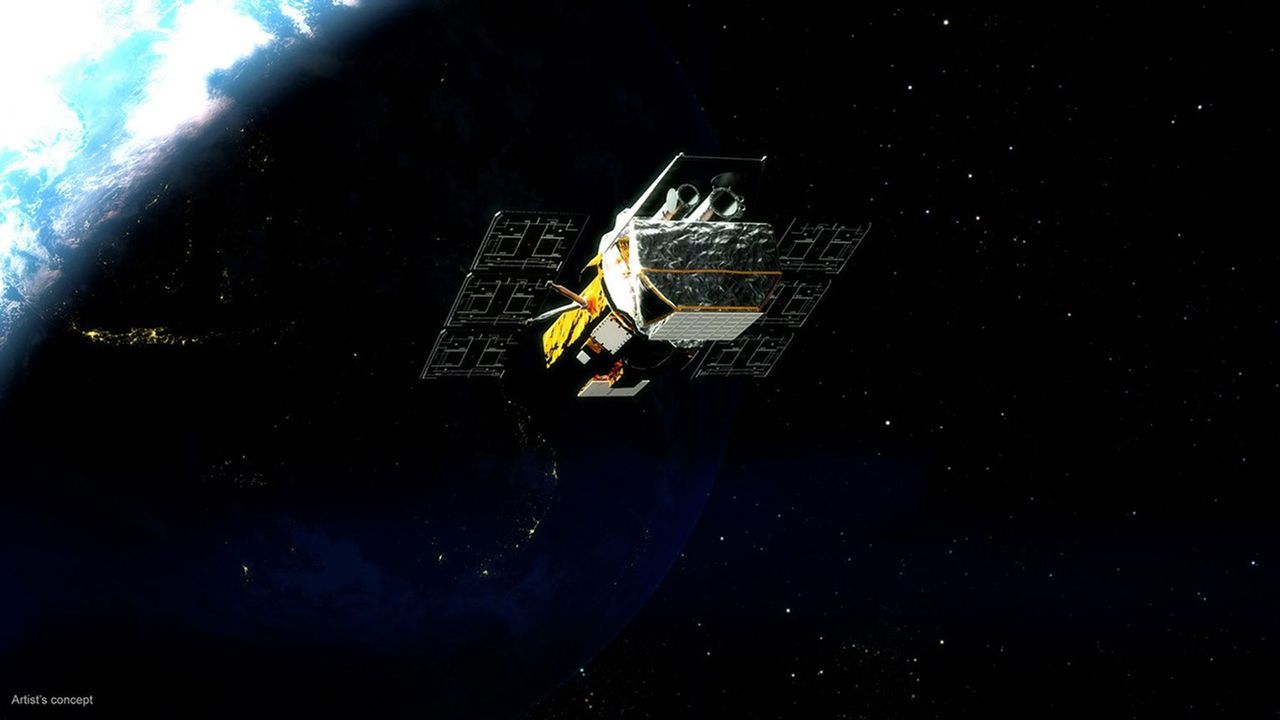
NASA has postponed its effort to rescue the Swift Observatory, a space telescope that scientists launched in 2004 to detect gamma-ray bursts across the cosmos. The aging satellite will crash back to Earth this year without intervention.
The space agency contracted Katalyst Space to conduct the rescue operation. The company plans to launch a spacecraft this summer that will dock with Swift and fire engines to push the telescope into a higher, stable orbit. This maneuver would extend the satellite's operational life and prevent an uncontrolled reentry that could scatter debris across populated regions.
Swift has already exceeded its original mission timeline by nearly two decades. The telescope made major discoveries about short gamma-ray bursts, which occur when massive stars explode or neutron stars collide. These observations advanced astrophysics and helped scientists understand some of the universe's most violent events.
The mission faces practical challenges. Swift orbits Earth at roughly 17,500 miles per hour at an altitude of around 600 miles. Katalyst must achieve precise orbital mechanics to rendezvous with the moving target, dock safely, and execute a burn powerful enough to raise the orbit but gentle enough to avoid damaging the telescope's instruments.
NASA has not yet announced a new launch date. The delay stems from technical issues the agency did not specify in public statements. Space launches frequently encounter scheduling setbacks due to weather, hardware problems, or payload verification procedures.
If the rescue succeeds, Swift could continue operating for years. If it fails or does not launch, the telescope will burn up during atmospheric reentry later this year. Most debris will vaporize, but some pieces might survive to reach Earth's surface, posing a small risk to populated areas.
The Swift Observatory represents an investment of over $300 million. Its data on gamma-ray bursts refined astronomers' understanding of stellar death and compact object mergers. Preserving the