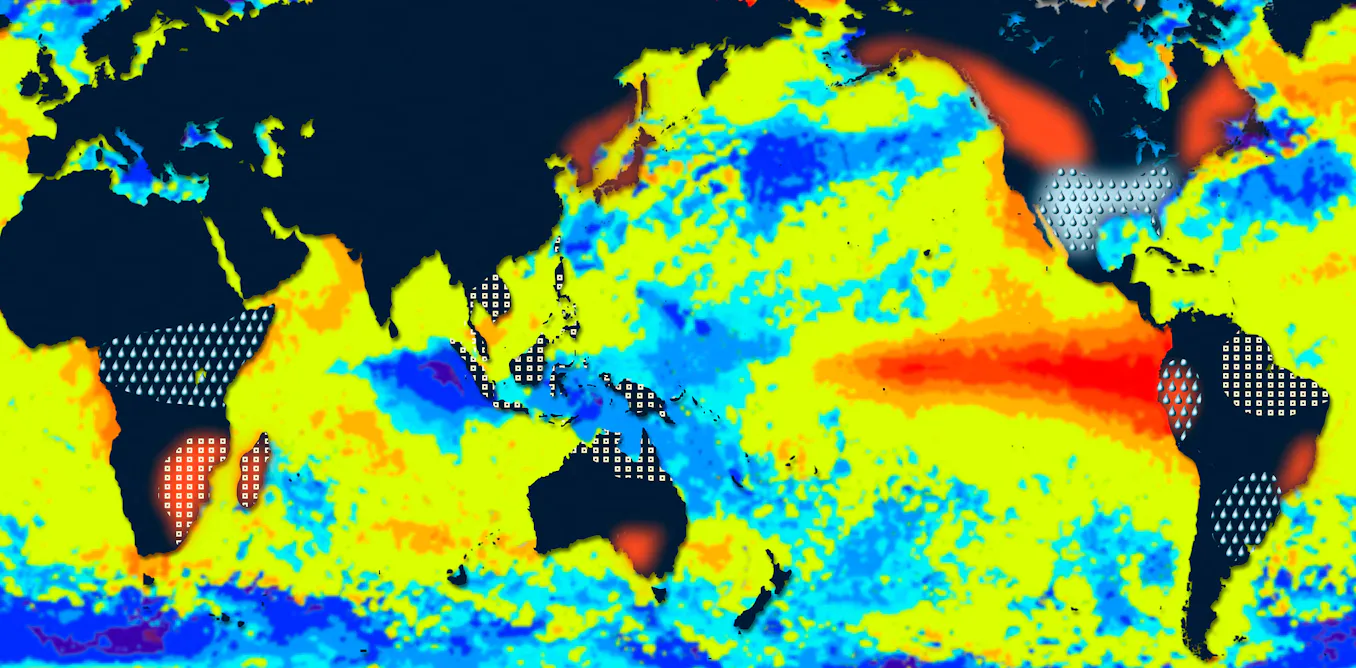
# How an El Niño becomes a super El Niño
Climate scientist Ioana Colfescu explains the mechanisms that transform a standard El Niño into an exceptionally powerful event in a new podcast appearance on The Conversation Weekly.
El Niño occurs when warm water in the Pacific Ocean spreads eastward from the western Pacific, disrupting global weather patterns and affecting rainfall, temperature, and storm activity across continents. A "super" El Niño represents an extreme version of this phenomenon, with stronger than typical ocean warming and more pronounced atmospheric consequences.
Colfescu discusses how atmospheric and oceanic feedback loops amplify El Niño conditions. As warm water spreads, it reduces the temperature difference between ocean surface and atmosphere, which normally drives trade winds. Weaker trade winds allow more warm water to flow eastward, creating a self-reinforcing cycle that intensifies the event. Additionally, changes in cloud patterns and heat radiation from the ocean surface can either dampen or enhance warming.
The timing and location of initial ocean temperature anomalies also influence whether an El Niño develops into a super event. Events that begin earlier in the year and develop in specific regions of the Pacific tend to reach greater intensities. Colfescu notes that predicting which El Niños will become super El Niños remains challenging for climate models, though scientists continue improving forecast accuracy by refining how they represent ocean-atmosphere interactions.
Understanding super El Niño formation carries practical implications. These events disrupt agricultural production, affect water availability, trigger flooding or droughts in different regions, and influence global energy demand. Better predictions help governments and communities prepare for extreme weather impacts.
Colfescu's work contributes to ongoing efforts to decode the Pacific Ocean's behavior and anticipate climate disruptions. While scientists cannot prevent El Niño events, improved understanding of their intensification mechanisms enables better preparation