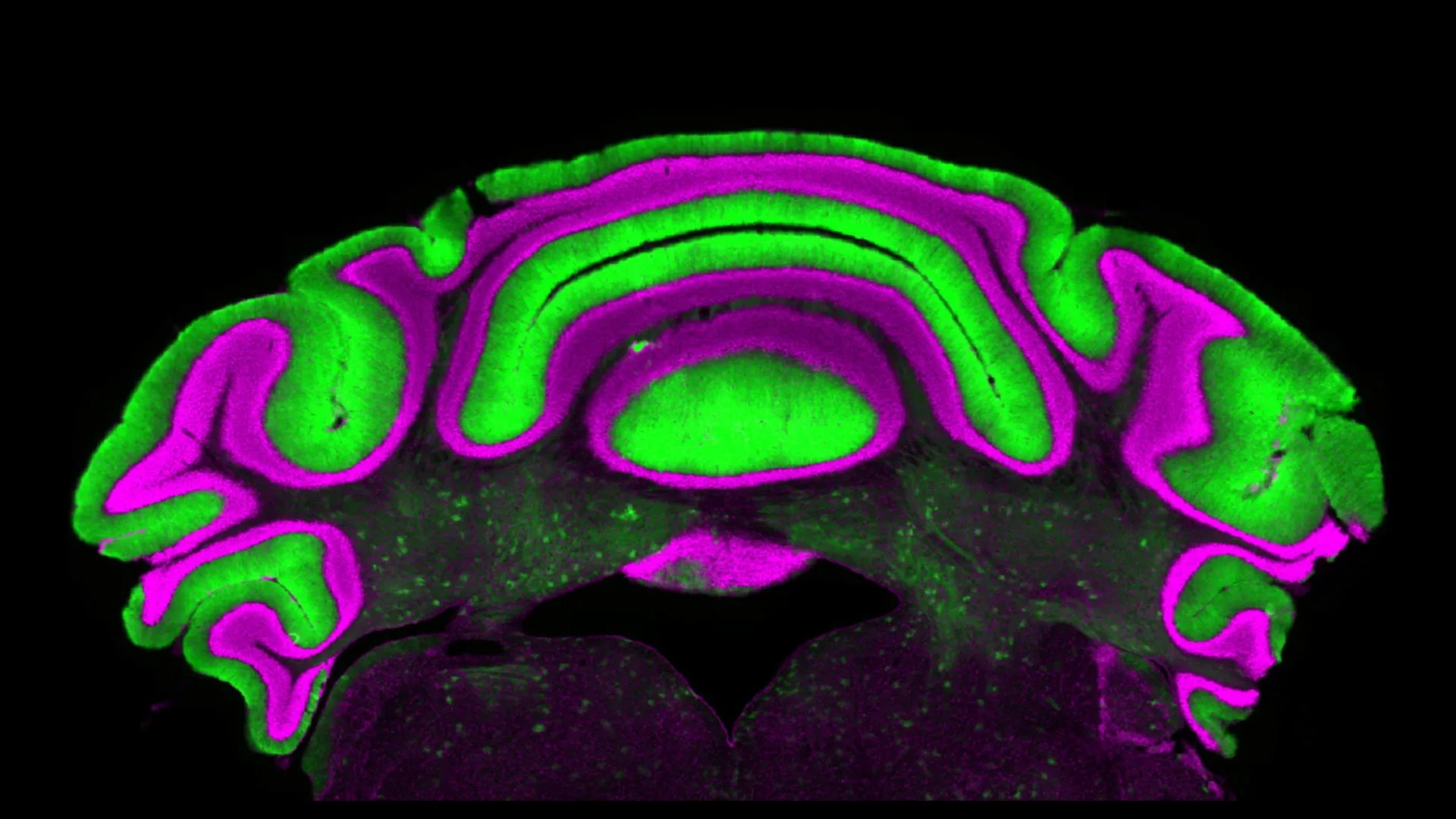
Neuroscientists have discovered that a fundamental assumption about how the cerebellum controls movement is wrong, potentially reshaping how researchers approach movement disorders like dystonia, ataxia, and tremor.
The cerebellum's circuit involves two primary cell types: Purkinje cells and granule cells. Scientists long assumed these cells work in lockstep because granule cells directly synapse onto Purkinje cells. Researchers now report that this relationship is far more complex than previously understood. The two cell types frequently behave independently, even when one directly influences the other.
This finding challenges decades of research that treated the granule-Purkinje interaction as a straightforward, predictable connection. Scientists studying movement disorders relied on this assumption to identify which neural signals were disrupted in conditions like dystonia, characterized by involuntary muscle contractions, and ataxia, which causes loss of coordination.
The discovery carries immediate implications for neuroscientists investigating these disorders. If the granule-Purkinje relationship is not as tightly coupled as assumed, then current models of how cerebellar dysfunction causes movement problems may be incomplete or incorrect. Researchers may have been measuring the wrong neural markers or interpreting them through flawed frameworks.
The study adds to mounting evidence that brain circuits operate with far greater flexibility and heterogeneity than traditional models suggested. Individual neurons and cell types show considerable variation in their activity patterns and responses, even within highly organized structures like the cerebellum.
For patients with movement disorders, this research is still in early stages. Understanding exactly how granule and Purkinje cells coordinate their activity could eventually lead to better diagnostic tools and targeted therapies. However, scientists must first map out these cellular interactions in greater detail before translating these findings into clinical advances.
The work underscores how technological progress in recording neural activity from many cells simultaneously is revealing complexity in brain organization that older