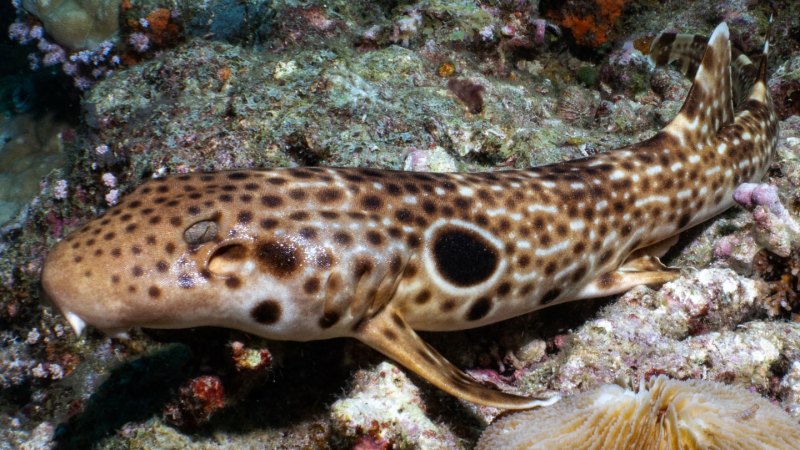
Researchers have identified a tenth species of walking shark in the waters around Papua New Guinea. The newly discovered Dudgeon walking shark joins nine previously known species in a remarkable group of sharks that use their fins to crawl across ocean floors and shallow reef environments rather than swim in the traditional sense.
Walking sharks belong to the genus Hemiscyllium and use their pectoral and pelvic fins as legs to traverse seafloor terrain. This locomotion strategy allows them to explore tide pools and shallow reef areas where traditional swimming would prove inefficient. The animals typically reach lengths under three feet and feed on small crustaceans and mollusks found in reef crevices.
The discovery of the Dudgeon walking shark expands scientific understanding of this unusual shark group. Papua New Guinea's coral reef ecosystems provide ideal habitat for these benthic predators, with abundant food sources and complex terrain suited to their crawling behavior. The region has emerged as a biodiversity hotspot for walking sharks, suggesting more species may remain undiscovered in remote reef systems throughout the Indo-Pacific.
Walking sharks represent an evolutionary puzzle. DNA evidence indicates they diverged from traditional sharks millions of years ago, developing specialized fins adapted for crawling. Some researchers theorize that walking sharks initially evolved in shallow reef habitats where ground-based locomotion offered advantages over swimming in confined spaces.
The identification came through systematic surveys of Papua New Guinea's reef fauna. Scientists likely examined morphological features including fin structure, coloration patterns, and body proportions to distinguish the Dudgeon walking shark from its relatives. Genetic analysis would have confirmed its status as a distinct species.
This discovery underscores the incomplete nature of shark taxonomy in the Indo-Pacific region. Most walking shark species remain poorly studied, with limited information on their ecology, reproduction, and population sizes. Conservation status for many species remains unknown, though habitat loss from coastal development and coral bleaching poses