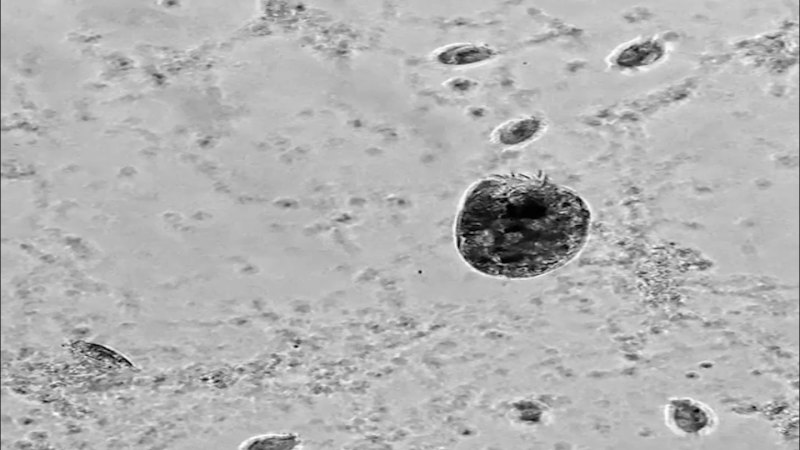
# Cannibalistic Microbe Undergoes Dramatic Transformation
A single-celled ciliate named *Euplotes gigatrox* transforms into a larger, more aggressive form when food becomes scarce, revealing how primitive organisms develop complex behaviors without a brain or nervous system.
Researchers observed that the microbe shifts shape dramatically when it encounters competitors for resources. The transformed version grows substantially larger, develops enhanced sensory structures, and exhibits predatory behavior toward its own species. This phenotypic shift occurs without any change to the organism's DNA, suggesting environmental stress triggers epigenetic responses that alter gene expression.
The discovery offers insight into how early life forms may have evolved sophisticated survival strategies before multicellular organisms existed. Scientists propose that this shape-shifting capacity represents a prototype for the kind of adaptive complexity we see in more advanced animals. The microbe essentially "hulks out" to dominate its ecological niche when resources dwindle.
The transformation appears reversible. When conditions improve and food becomes abundant again, the cannibalistic form reverts to its standard configuration. This flexibility allows the organism to allocate energy efficiently, maintaining a smaller size when resources support a typical lifestyle but enlarging and becoming predatory when competition intensifies.
The research demonstrates that behavioral complexity does not require centralized nervous systems. Instead, unicellular organisms can sense environmental changes through chemical signals and respond with coordinated physiological alterations. These responses involve restructuring of cellular components and changes in metabolic priorities.
Understanding how *Euplotes gigatrox* makes these decisions could illuminate the origins of animal behavior itself. The mechanisms governing this transformation likely reflect ancient biochemical pathways conserved across life. Scientists studying these processes gain perspective on how cellular decision-making evolved and how chemical signals orchestrate complex responses in organisms lacking any form of consciousness.
The findings underscore how nature solved the problem of survival in competitive environments