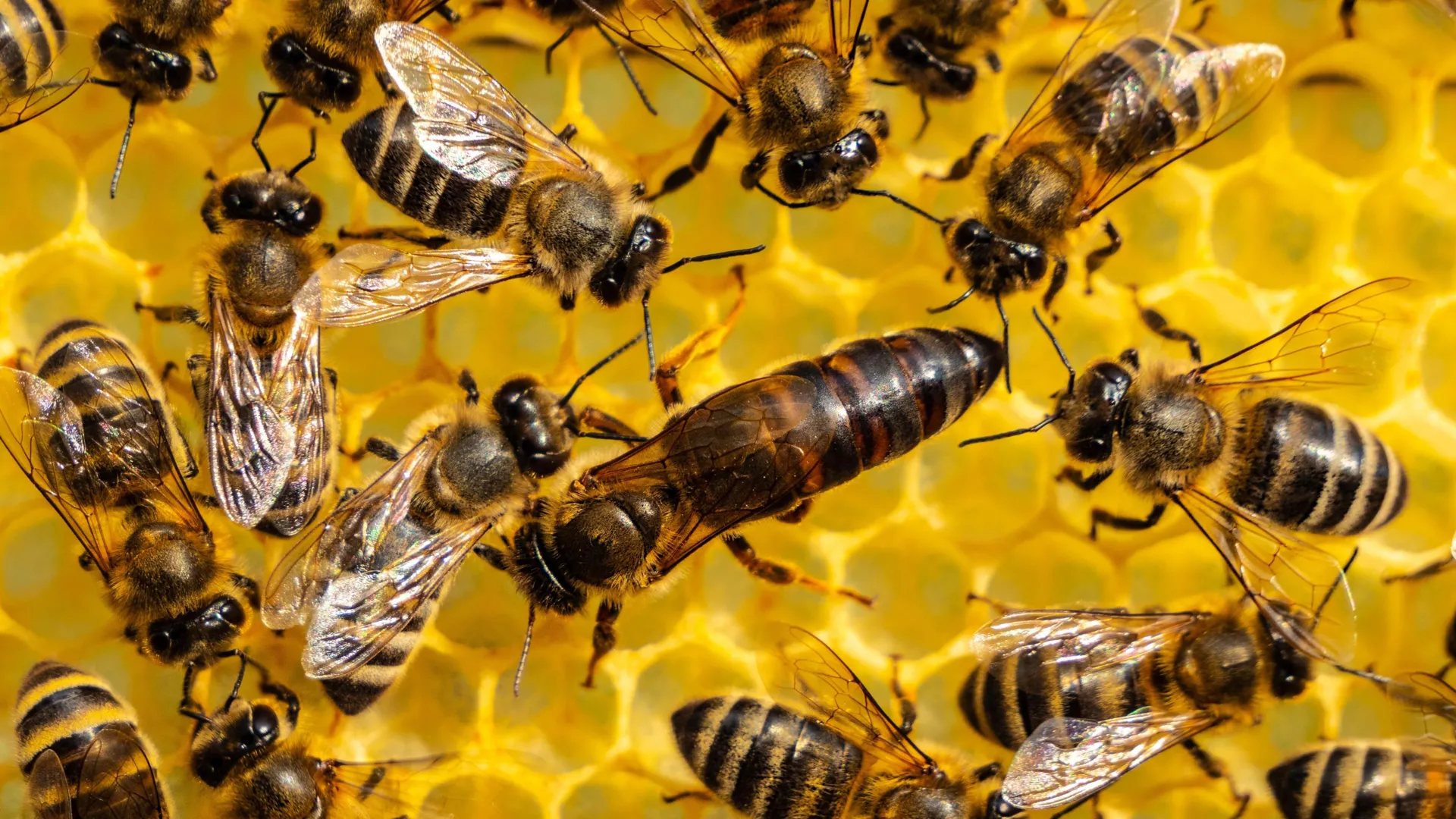
Researchers have fundamentally revised their understanding of how honeybee colonies produce queens, finding that the transformation involves far more than the nutritious royal jelly long credited with the process.
A team of scientists studying honeybee development discovered that worker bees construct specialized chambers called "royal cribs" from wax they modify with particular chemical compounds. These structures differ substantially from standard brood cells. Worker bees then maintain precise environmental conditions within these cribs, controlling temperature and humidity levels with remarkable precision.
The research shows that dedicated teams of attendant bees rotate through caring for larvae destined to become queens. This intensive, coordinated labor represents a collective investment in reproduction that extends well beyond simply feeding larvae a richer diet.
Royal jelly remains part of the equation, but it now appears as one component in a much more complex biological system. The findings challenge the decades-long scientific consensus that attributed queen development primarily to nutrition alone. The specialized architecture and environmental management suggest that colonial organization and collective decision-making play central roles in producing new queens.
This discovery has implications for understanding honeybee behavior, colony dynamics, and perhaps broader principles about how social insects coordinate complex tasks. The research also offers practical insights for beekeepers managing colonies and scientists studying colony collapse disorder.
The specific institutions conducting this research and publication details remain unclear from available information, but the findings represent a significant revision to fundamental bee biology. Future studies will likely explore how worker bees recognize which larvae merit this royal treatment and how the colony coordinates such intricate cooperative behavior across thousands of individual insects.