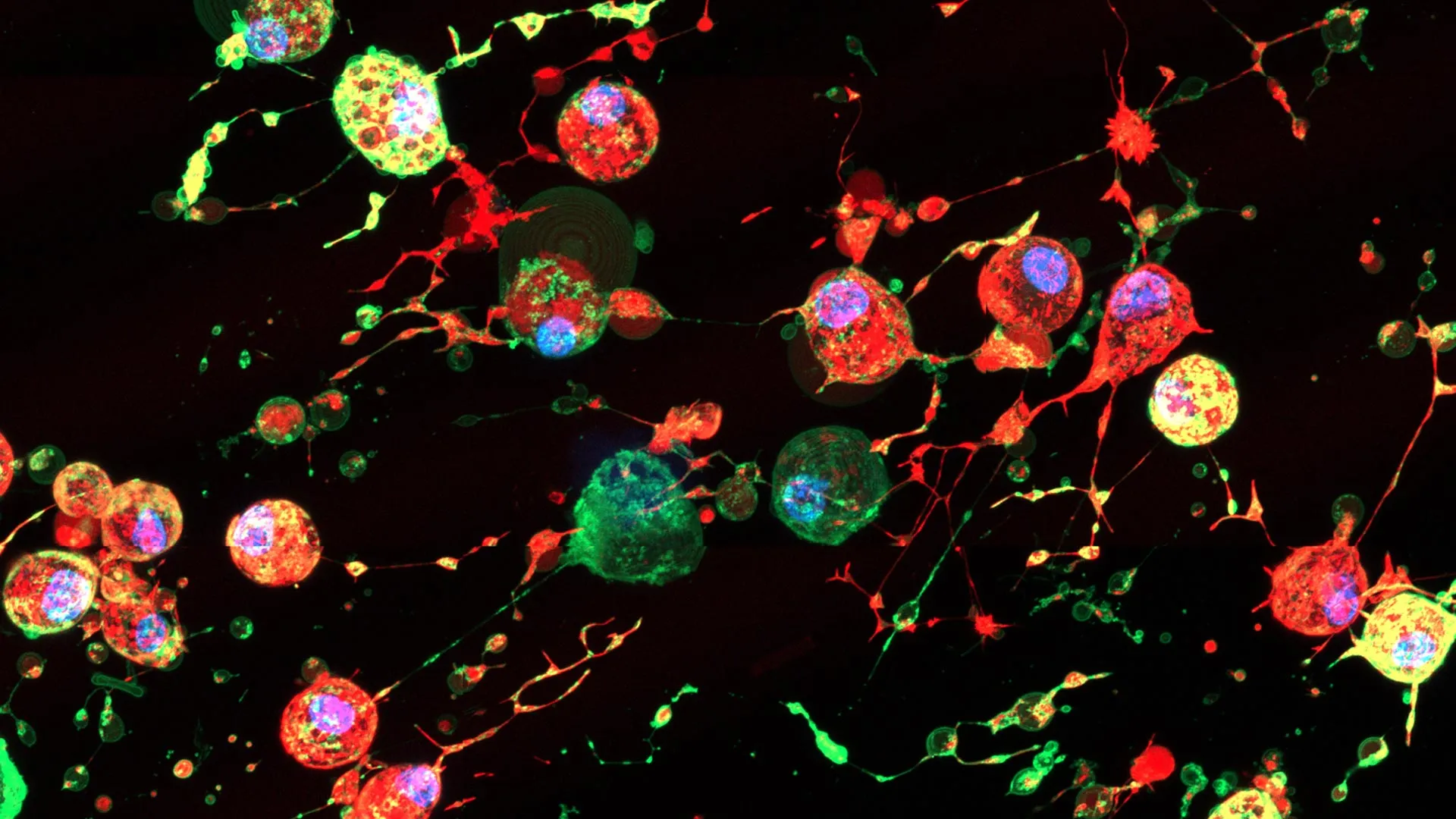
Researchers have discovered that dying cells release microscopic packages containing previously unknown particles that guide immune system cleanup. Influenza viruses exploit this mechanism, researchers report.
When cells die, they fragment into small vesicles that act as signals to alert the immune system. Scientists identified novel particles within these vesicles that function as "footprints of death," marking cellular debris for removal. The immune system normally responds by deploying scavenger cells to eliminate these packages and prevent inflammation.
Influenza viruses hijack this natural cleanup process. The pathogen hides inside the vesicles released by infected cells, using them as transport vehicles to reach neighboring healthy cells. This allows the virus to spread while evading direct immune detection, since the packages appear to be harmless cellular waste rather than infectious agents.
The research reveals an unexpected vulnerability in how cells communicate during death. The vesicles containing "footprints of death" signal the immune system through specific molecular markers. Influenza viruses apparently recognize these markers and use them to their advantage, packaging themselves within vesicles that the immune system treats as routine cellular debris.
This discovery has practical implications for antiviral strategies. Understanding how viruses exploit the cell death process could lead to new therapeutic approaches that block this hijacking mechanism. Treatments targeting the viral packaging or the vesicle transport could prevent spread without triggering excessive inflammation.
The findings also raise questions about whether other respiratory viruses use similar evasion tactics. The mechanism may extend beyond influenza, affecting how pathogens like SARS-CoV-2 or respiratory syncytial virus spread through infected tissue.
Researchers emphasize that the immune system's normal response to dying cells involves rapid recognition and clearance. The viral exploitation represents a sophisticated adaptation where pathogens weaponize the body's own housekeeping systems. Blocking this pathway without disrupting normal immune function presents the key