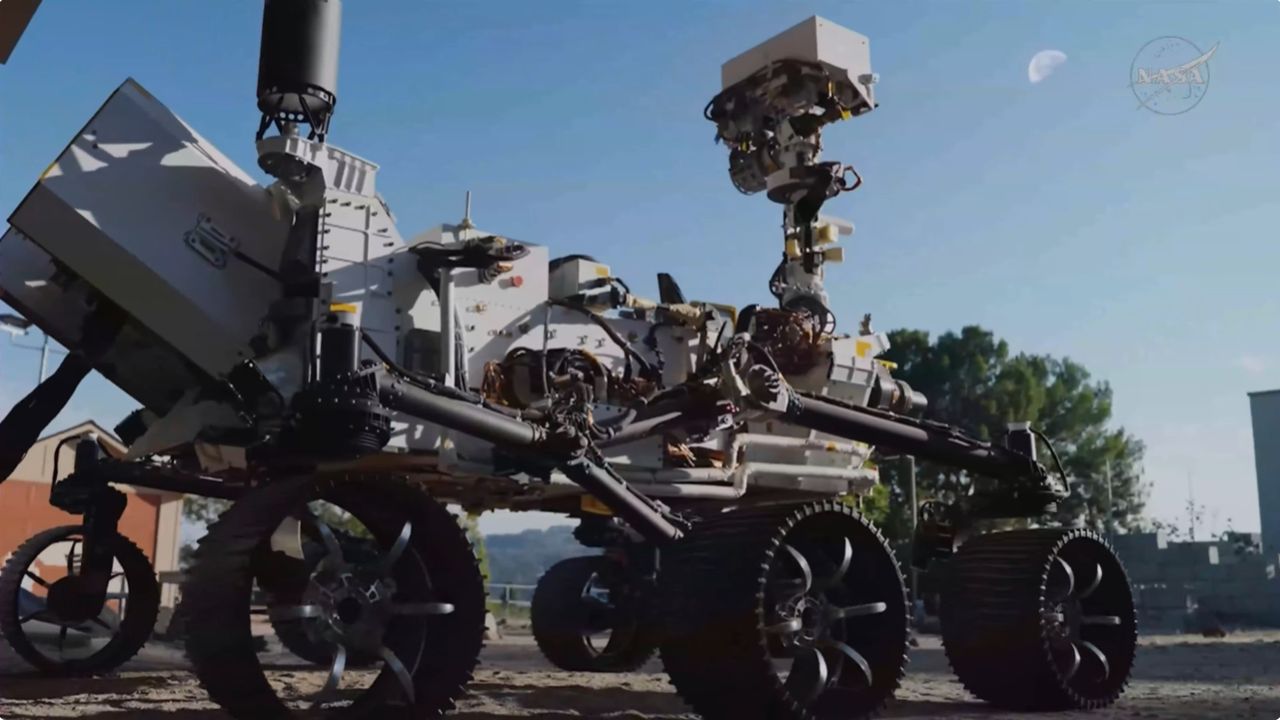
NASA announced new lunar landing contracts for its Artemis Moon Base program and revealed plans for a potential rover mission called PROMISE that would deploy a nuclear-powered Mars rover to the lunar surface.
The agency is advancing its strategy to establish sustained human presence on the Moon through Artemis. The new contracts support landing infrastructure and mobility systems needed for the ambitious program. PROMISE, an acronym not fully detailed in available materials, represents NASA's plan to test and operate existing Mars rover technology in lunar conditions before returning assets to Earth.
Nuclear power systems offer distinct advantages for lunar missions. Unlike solar panels, radioisotope thermoelectric generators (RTGs) and radioisotope heater units function regardless of lunar day-night cycles, which last roughly 14 Earth days. This capability extends rover operational windows and enables missions in permanently shadowed regions where water ice may exist.
Repurposing Mars rover technology accelerates development timelines and reduces costs. NASA has successfully modified existing platforms for new environments before. The approach allows engineers to apply lessons learned from Mars operations to lunar surface challenges while testing hardware reliability in a more accessible location than the Red Planet.
The Artemis program aims to land humans on the Moon within this decade, with lunar bases supporting long-duration stays and eventual Mars exploration preparation. Rover mobility remains essential for base operations, scientific exploration, and resource prospecting.
Specifics about PROMISE's timeline, funding, and which Mars rover design would be adapted remain limited. The announcement signals NASA's commitment to leveraging existing assets and proven technologies to accelerate lunar infrastructure development. This approach reflects broader agency strategy of reducing missions to the Moon's surface while maximizing scientific return and operational capability.
The partnership between Artemis lunar infrastructure and innovative rover deployment demonstrates how space agencies integrate multiple programs to build comprehensive exploration architectures. Success with PROMISE could validate nuclear power systems for future long-duration planetary missions.