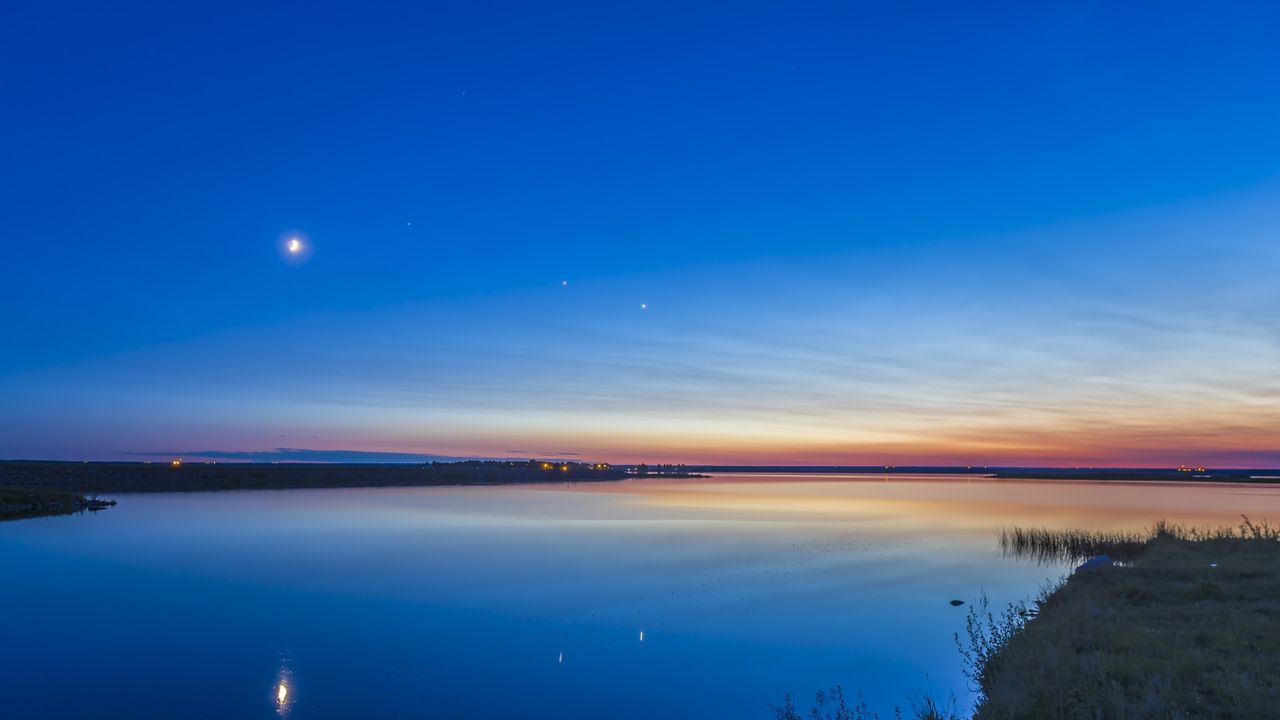
Venus has taken center stage in July's evening sky as other planets shift their positions in the coming weeks. While Venus remains the dominant evening presence, the month offers distinct viewing opportunities for early risers willing to wake before dawn.
Saturn, Mars, and Uranus currently perform for morning sky watchers. These planets appear in the pre-dawn hours, offering a different experience than evening observation. The planetary alignment creates a natural division in the night sky, with evening observers focused on Venus and morning observers tracking the activity in the predawn hours.
The dynamics of planetary visibility change throughout the month as Earth's position relative to other planets in our solar system shifts. Venus's prominence in the evening reflects its current orbital position and brightness, which makes it among the easiest celestial objects to spot without binoculars or telescopes.
For observers without equipment, Venus presents an ideal target. Its proximity to Earth and reflective cloud layers make it brilliantly visible during twilight hours and into the early night. The planet's position makes it accessible from most locations on Earth with clear skies.
The configuration of planets visible in July provides amateur astronomers and casual stargazers with multiple observation opportunities across different times. Observers planning to catch the planetary show should check local weather forecasts and find locations away from light pollution for the best views.
The shift in planetary positions throughout July reflects the ongoing orbital mechanics of our solar system. As Earth continues its yearly journey around the sun, different planets enter and exit optimal viewing windows. This natural cycle ensures that sky-watchers always have new configurations to observe and track across seasons and years.