# Planetary Discovery Reshapes Our Understanding of the Solar System
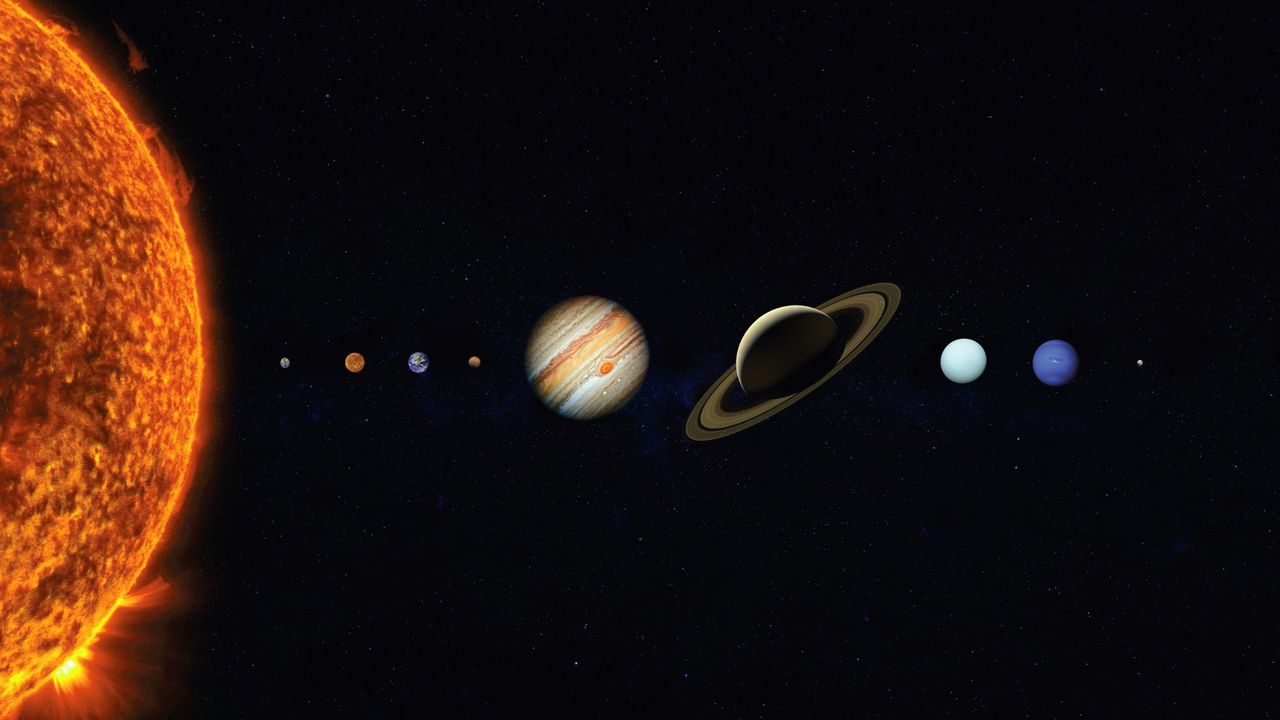
In 1776, when the United States declared independence, astronomers recognized only six planets orbiting the sun. Uranus remained undiscovered. Neptune had not yet been detected. Today, our solar system contains eight planets, a count that reflects two centuries of astronomical advancement and persistent questions about where planetary classification ends.
William Herschel discovered Uranus in 1781, expanding the known solar system beyond what ancient astronomers had mapped. Neptune's discovery followed in 1846, identified through mathematical predictions rather than direct observation. Both discoveries fundamentally altered humanity's conception of planetary arrangement and scale.
The solar system's planetary count has shifted before and may shift again. Pluto, classified as the ninth planet for 76 years following its 1930 discovery by Clyde Tombaugh, lost planetary status in 2006 when the International Astronomical Union established stricter classification criteria. The IAU now requires that planets orbit the sun, possess sufficient mass to achieve hydrostatic equilibrium, and clear their orbital neighborhood of other debris. Pluto failed the third criterion, becoming a "dwarf planet" instead.
This reclassification sparked ongoing debate within the astronomical community. Some researchers argue the criteria were too rigid. Others defend the decision as necessary for consistent classification. The controversy reflects how scientific understanding evolves when new evidence emerges.
Beyond Neptune's orbit, astronomers have detected numerous dwarf planets and trans-Neptunian objects. Some researchers propose that additional undiscovered planets may exist in the outer solar system's distant regions. Future observations using advanced telescopes could reveal celestial bodies massive enough to qualify under current IAU standards.
The history of planetary discovery parallels the history of improved observational technology. Each advancement, from Herschel's telescopes to modern space-based observatories, has