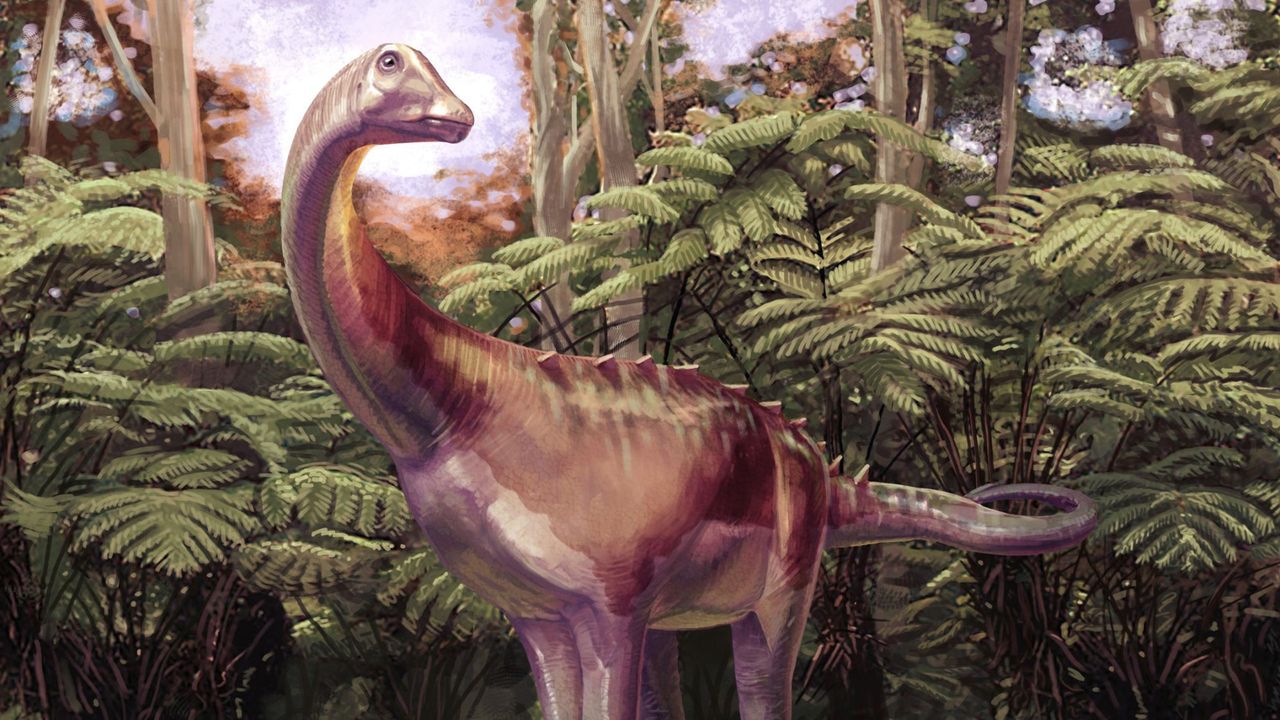
Researchers have identified Antarctica's first dinosaur fossil as a titanosaur, one of the largest land animals to ever exist. The discovery expands our understanding of dinosaur distribution across ancient continents and reveals that these massive sauropods inhabited regions far more polar than previously documented.
Titanosaurs were long-necked, four-legged herbivores that dominated terrestrial ecosystems during the Cretaceous period. Some species exceeded 100 feet in length and weighed over 100 tons, making them among the most enormous creatures to have walked Earth. The Antarctic specimen adds crucial evidence that these giants roamed widely across Gondwana, the supercontinent that included present-day Antarctica, South America, Africa, and Australia.
The fossil's recovery from Antarctica presents unique challenges. The continent's extreme climate and remote location restrict fieldwork to brief summer windows. Fossil preservation in Antarctica occurs primarily in exposed rock formations along coastal areas and mountains, where erosion continuously unearths new specimens.
This finding raises questions about titanosaur adaptation to cooler climates. During the Cretaceous, Antarctica experienced warmer conditions than today, but temperatures still remained cooler than equatorial regions. The presence of titanosaurs there suggests these animals possessed physiological or behavioral mechanisms enabling survival in less tropical environments than their better-studied counterparts in South America and Africa.
The discovery also informs paleontologists about ancient biogeography and climate patterns. Tracking dinosaur species across continents helps reconstruct plate tectonic movements and ocean circulation patterns that shaped global climate millions of years ago.
Future expeditions to Antarctica will likely uncover additional fossils. The continent remains largely unexplored paleontologically compared to other regions. Each new specimen contributes to an increasingly complete picture of how dinosaurs distributed themselves globally and adapted to diverse environmental conditions before the mass extinction event 66 million years ago.