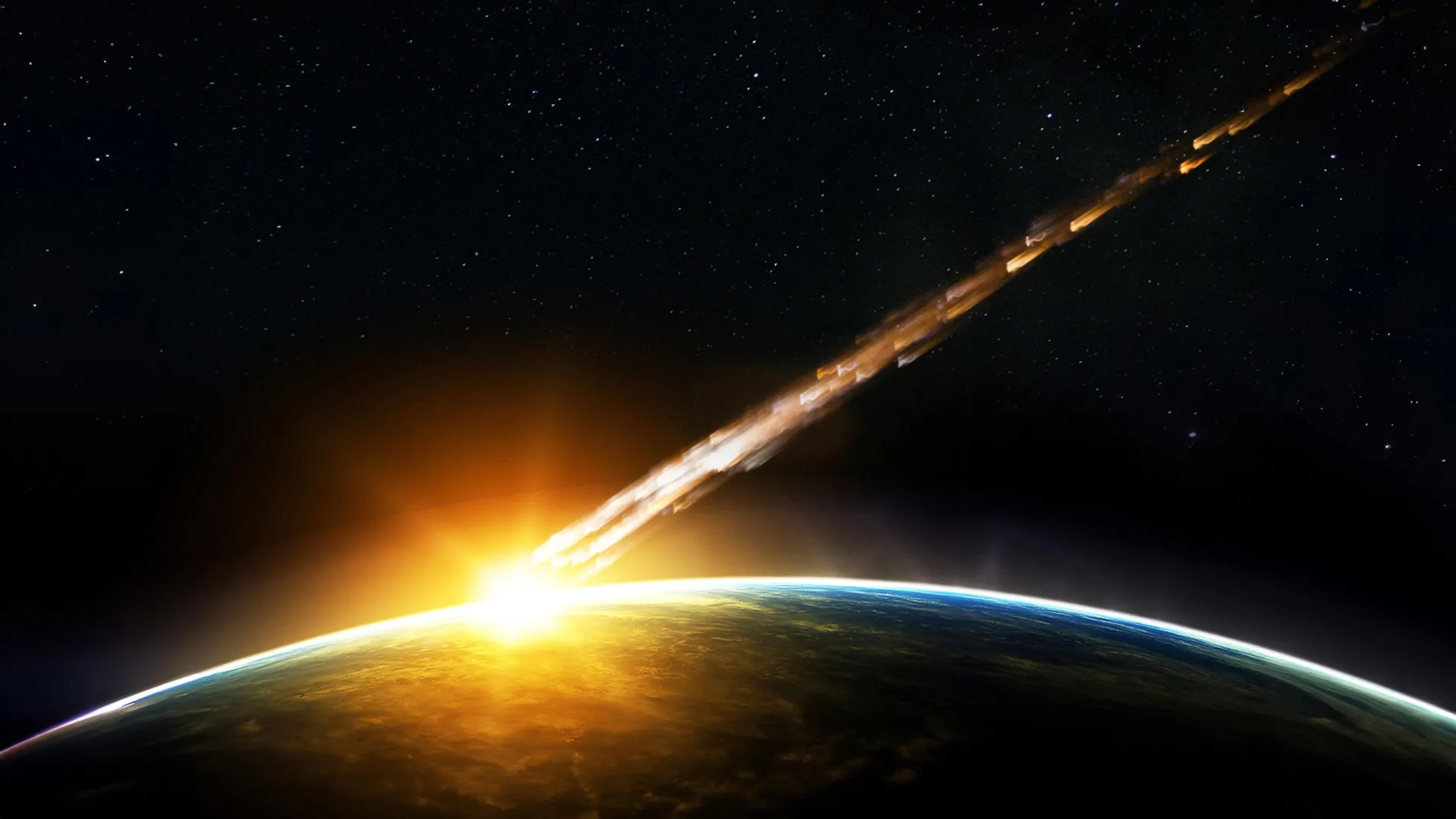
A massive asteroid roughly 160 meters wide struck the North Sea seafloor between 43 and 46 million years ago, generating a tsunami exceeding 100 meters in height. Scientists have now confirmed this long-debated explanation for the Silverpit Crater, a geological formation that puzzled researchers for decades.
The impact crater sits beneath the North Sea, and its origins sparked considerable scientific debate. Some researchers attributed it to volcanic activity or other geological processes. The new evidence definitively links the formation to extraterrestrial impact, resolving questions that had persisted since the crater's initial discovery.
The asteroid strike possessed tremendous force. An object 160 meters in diameter traveling at typical impact velocities would have released energy comparable to thousands of nuclear weapons. The resulting tsunami, towering more than 330 feet, would have devastated coastal regions surrounding the North Sea at that time. The crater itself preserved the signature of this catastrophic event in the seafloor geology.
This discovery adds to the growing catalog of impact craters discovered on Earth and other planetary bodies. The Eocene epoch, when this impact occurred, predates the famous Chicxulub impact that killed the dinosaurs by roughly 20 million years. Yet this North Sea event represents a substantial impact event that left measurable geological evidence.
Modern geological and geochemical analysis techniques enabled scientists to confirm impact-related minerals and structural features characteristic of asteroid collisions. These methods have become more sensitive and precise in recent years, allowing researchers to revisit previously ambiguous geological formations and reach definitive conclusions.
The research underscores how Earth's surface continues revealing records of ancient cosmic events. Impact craters provide windows into planetary history and help scientists understand the frequency and magnitude of asteroid strikes over geological time. The Silverpit discovery also demonstrates the importance of interdisciplinary investigation, combining oceanography, geology, and impact physics to solve long-standing