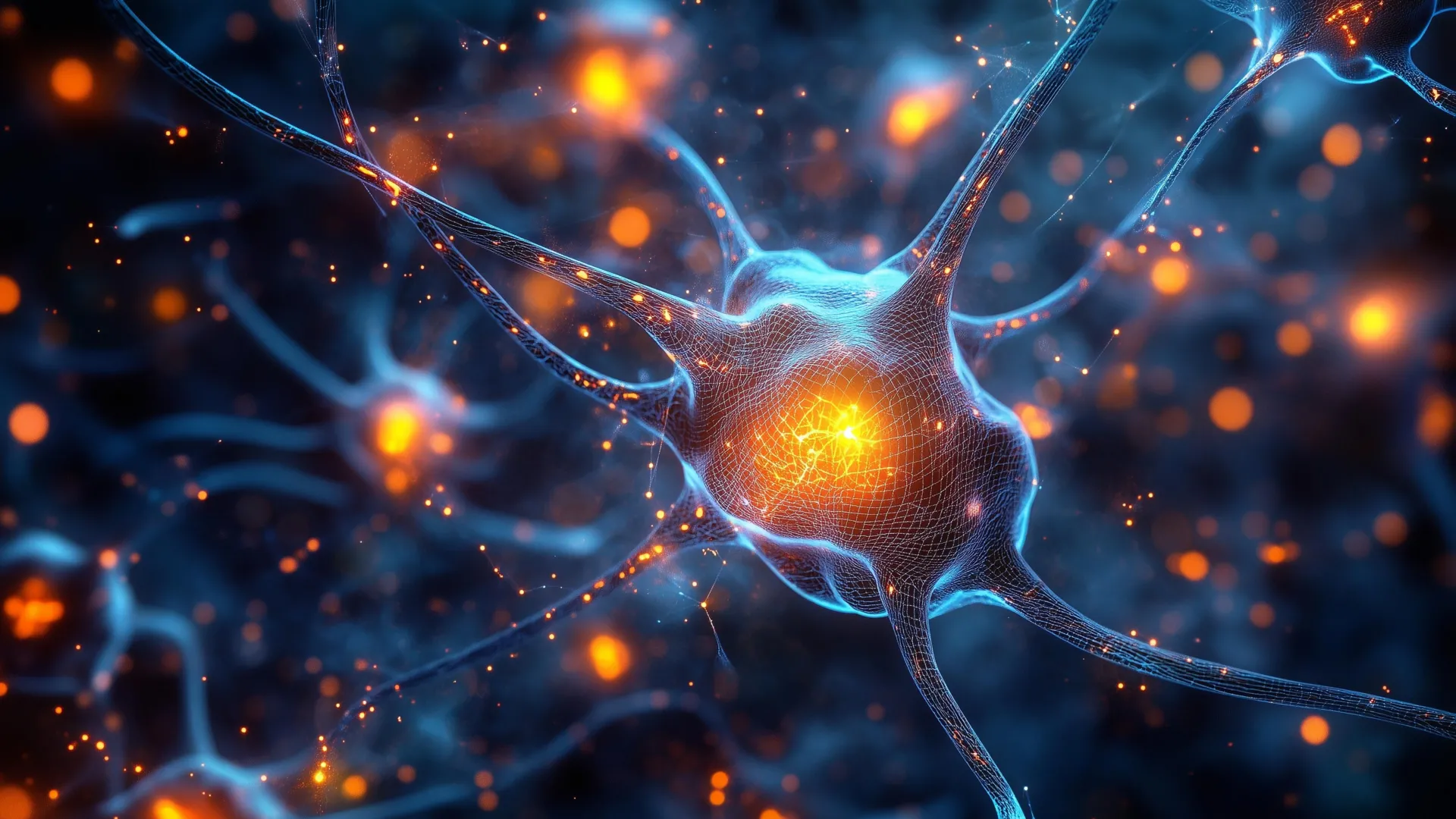
Neuroscientists have identified a specialized population of neurons in an evolutionarily ancient brain region that functions as a biological attention filter, suppressing distractions and maintaining focus on relevant tasks. Researchers found that deactivating these neurons in mice induced marked distractibility resembling attention-deficit/hyperactivity disorder (ADHD), with normal focus returning immediately upon reactivation.
The discovery centers on a specific neuronal circuit that prioritizes sensory information and filters out irrelevant stimuli. This filtering mechanism operates in brain regions conserved across species, suggesting the system's fundamental importance to animal cognition. The researchers demonstrated causal control over attention by using techniques to selectively silence the neurons, observing that mice lost their ability to maintain task focus when the cells were inactive.
The findings establish a direct link between this neuronal population and attentional control. The reversibility of the effect—normal focus returning as soon as the neurons were reactivated—underscores the active role these cells play in filtering distractions rather than simply supporting attention passively. This specificity allows researchers to isolate the neural substrate responsible for a core cognitive function.
The work carries implications for understanding ADHD and other attention disorders. The behavioral phenotype observed in mice with these neurons deactivated mirrors key ADHD symptoms, suggesting the circuit may be disrupted or dysfunctional in affected individuals. Understanding the normal operation of this system could inform development of interventions targeting attention disorders.
The study's use of precise neuronal manipulation in animal models provides mechanistic insight into attention, yet translation to human treatment remains complex. Mice and humans share this ancient brain architecture, but the complete neural architecture underlying human attention involves additional circuits and neuromodulatory systems not fully captured in rodent experiments. Further research must clarify whether therapeutically targeting this pathway proves effective and safe in humans.
This discovery demonstrates how identifying specific neural