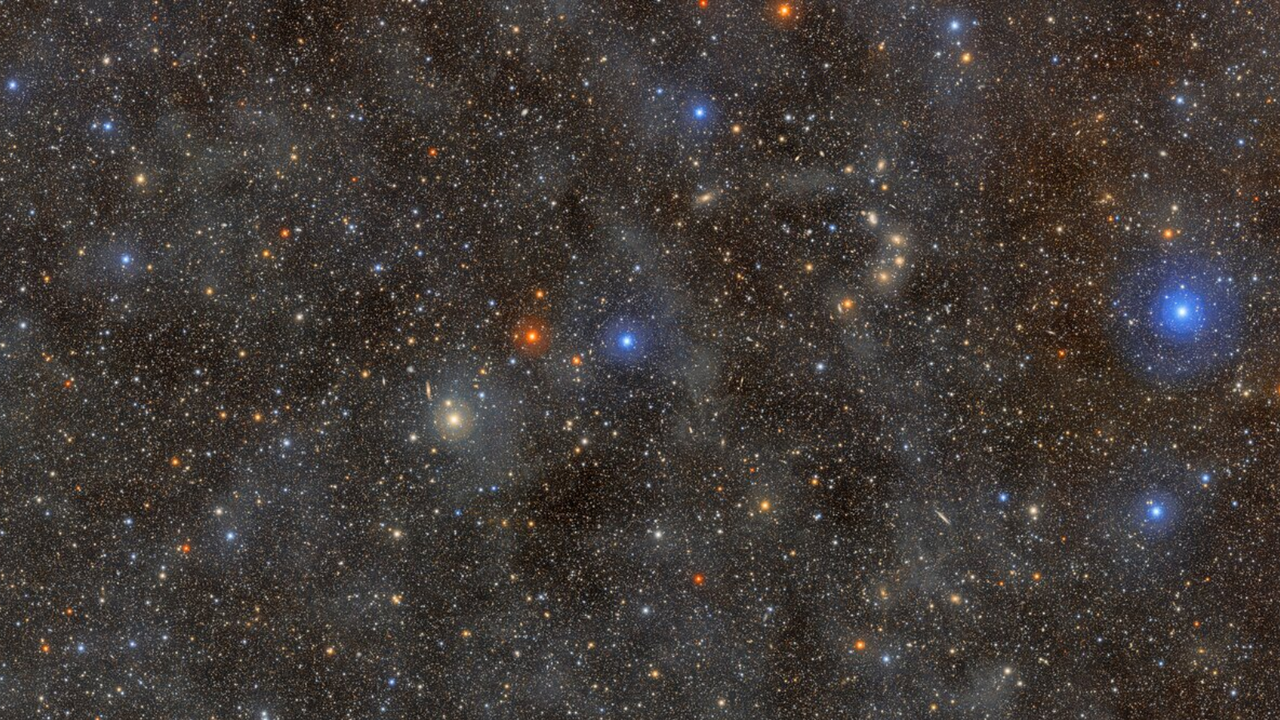
The Vera C. Rubin Observatory has commenced its Legacy Survey of Space and Time, a decade-long imaging campaign that promises to revolutionize how astronomers understand the cosmos. Located in Chile's Atacama Desert, the observatory's 8.4-meter telescope will systematically map the southern sky, capturing what researchers describe as the "greatest cosmic movie ever."
The survey will photograph the entire visible southern sky multiple times throughout the ten-year program, creating a time-lapse record of celestial objects and events. This repeated observation strategy enables astronomers to detect transient phenomena, track moving objects, and monitor long-term changes in stellar and galactic behavior that single snapshots cannot reveal.
The Legacy Survey of Space and Time addresses fundamental questions in astronomy. Researchers will hunt for near-Earth asteroids that pose potential collision risks, track the motion of stars within our galaxy, discover supernovae in distant galaxies, and observe gravitational lensing events that reveal the universe's dark matter distribution. The data will also enable searches for unusual or previously unknown astronomical objects.
The Rubin Observatory represents a collaborative effort involving the National Science Foundation, the Department of Energy, and private funding sources. Its wide-field camera captures images three degrees across, roughly six times the moon's diameter, allowing efficient coverage of vast sky regions during each observation.
This initiative marks a shift toward time-domain astronomy, where changes and events matter as much as static observations. Previous surveys like the Sloan Digital Sky Survey provided snapshots; Rubin will generate continuous monitoring of billions of celestial objects.
The observatory will generate approximately 20 terabytes of data nightly, requiring sophisticated computational infrastructure and data management systems. Scientists have already developed algorithms to process this unprecedented data volume and identify objects worthy of follow-up observation by other telescopes.
The ten-year timeline provides sufficient duration to observe rare events and track gradual