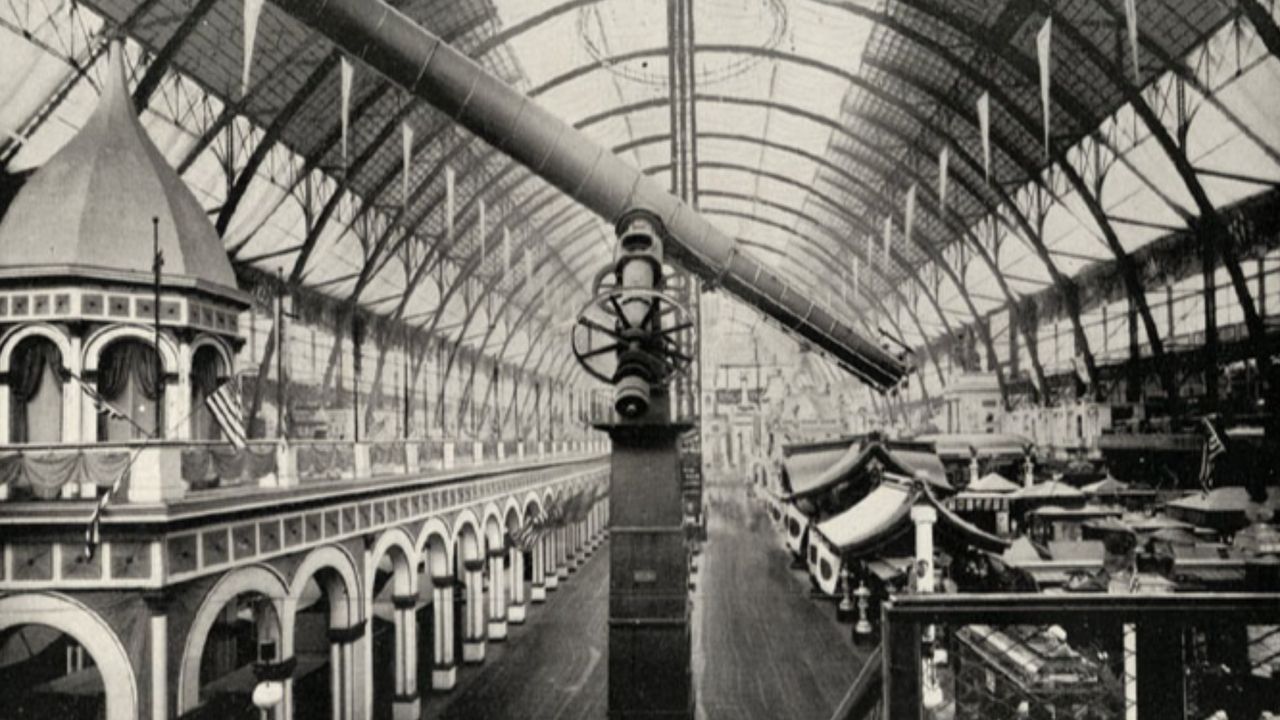
Telescope technology has undergone a dramatic transformation across America's 250-year history, evolving from crude handmade instruments to sophisticated space-based observatories that peer billions of light-years into the universe.
William Herschel's homemade telescope in the late 1700s represented the frontier of optical astronomy. Herschel ground his own mirrors and assembled instruments that allowed him to discover Uranus in 1781, expanding humanity's known solar system. These early telescopes relied on simple glass lenses and mirrors, with severe limitations in light-gathering power and image clarity.
The nineteenth century brought incremental improvements. Larger mirror diameters increased light collection. Better glass production reduced optical distortions. Astronomers built ground-based observatories with increasingly massive instruments, yet Earth's atmosphere remained a fundamental constraint, distorting starlight before it reached the eyepiece.
The twentieth century marked the real revolution. The Hale Telescope at Mount Palomar, completed in 1949, featured a 200-inch mirror and dominated optical astronomy for decades. Digital cameras replaced photographic plates. Computers automated telescope mounts and data collection. Adaptive optics systems compensated for atmospheric turbulence by deforming mirrors in real time.
The Hubble Space Telescope, launched in 1990, escaped the atmosphere entirely. Orbiting 380 miles above Earth, Hubble's 2.4-meter mirror captures ultraviolet, visible, and infrared light with unprecedented clarity. Its images revolutionized cosmology, measuring the universe's expansion rate, discovering exoplanets, and revealing galaxies formed just 100 million years after the Big Bang.
Today's technology includes the James Webb Space Telescope, launched in 2021, which observes primarily in infrared wavelengths with a segmented 6.5-