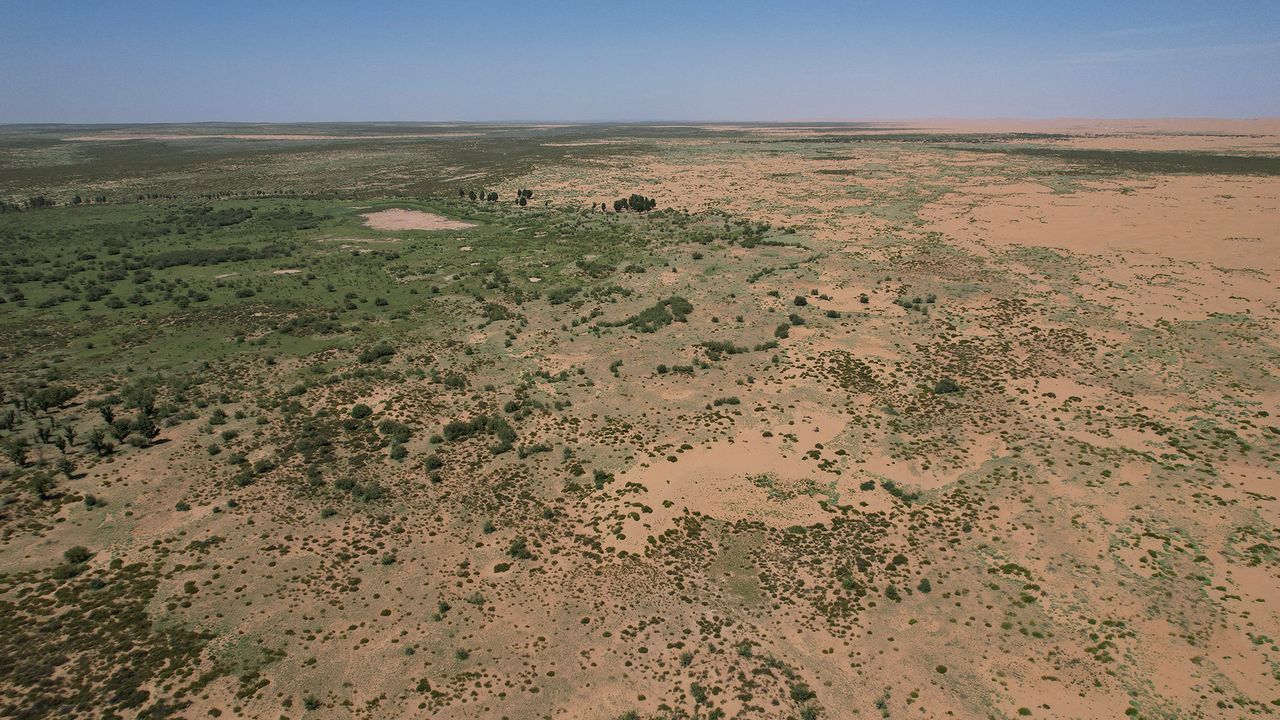
China's massive reforestation initiative has planted 66 billion trees as part of the Great Green Wall project, a decades-long effort to combat desertification and climate change across northern China. New research shows these planted forests are growing faster than natural forests in the same regions, a finding that challenges assumptions about human-managed ecosystems.
The study examined factors that drive growth rates in both planted and natural forests. Researchers identified three key variables: tree age, species composition, and sensitivity to carbon dioxide levels. Younger planted forests, which typically contain mixed species selected for rapid growth, respond more vigorously to increased CO2 in the atmosphere than older, naturally established forests.
The Great Green Wall began in the 1970s as a response to severe dust storms and expanding deserts threatening populated areas. Over decades, it has become the world's largest reforestation project. This research, published in the peer-reviewed literature on forest ecology, provides quantitative evidence that the initiative is delivering measurable carbon sequestration benefits.
The faster growth of planted forests stems partly from deliberate choices in species selection and forest management. These forests often include fast-growing species like poplars and willows chosen specifically for their ability to establish quickly in harsh, arid conditions. Natural forests develop differently, with slower colonization and more variable species composition.
The CO2 sensitivity finding carries broader implications for climate modeling. Young forests with diverse species mixes appear to capture more atmospheric carbon as CO2 concentrations rise, potentially offering a mitigation pathway for climate change. However, researchers caution that these planted forests require ongoing management and maintenance, unlike self-sustaining natural ecosystems.
The study's limitations include reliance on satellite data and regional climate variations that may affect different sections of the Great Green Wall differently. Long-term monitoring remains essential to determine whether these growth advantages persist as planted forests mature and transition to more stable ecosystems.