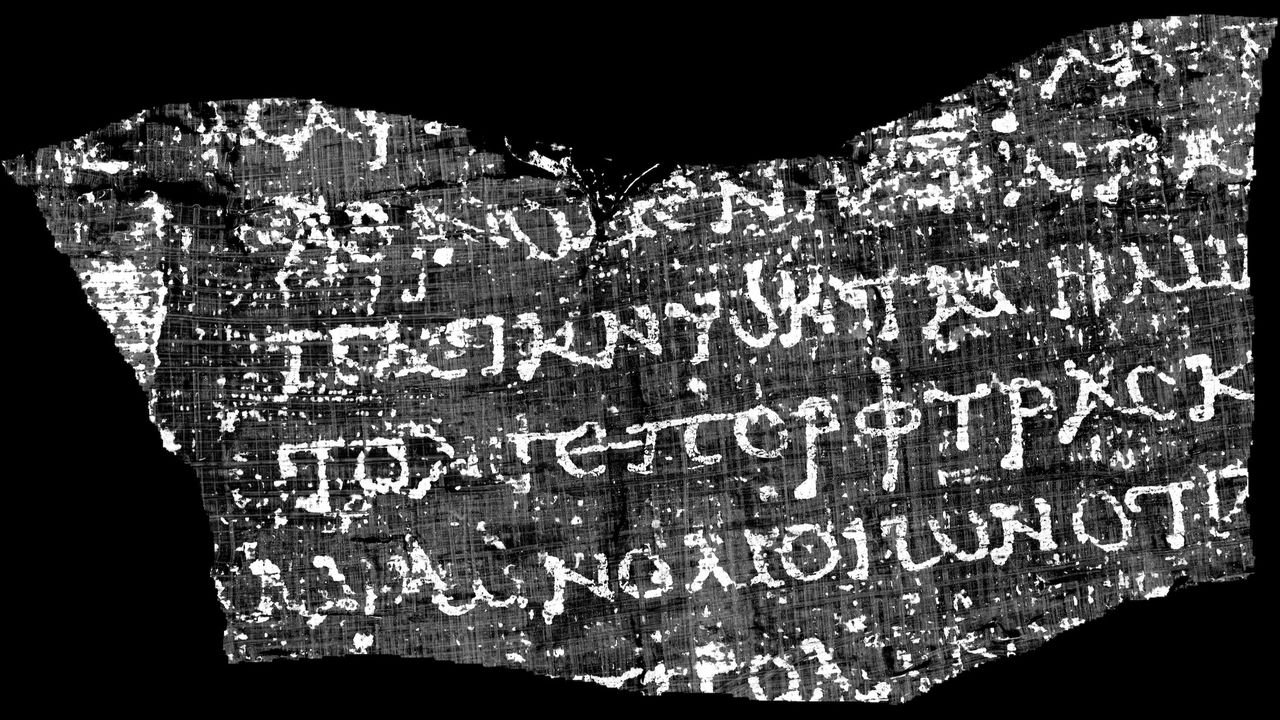
Researchers have used artificial intelligence to decode text from two carbonized scrolls buried during Mount Vesuvius's eruption in 79 AD, revealing substantial passages from what may be a previously undocumented work by a Stoic philosopher. The scrolls were discovered in Herculaneum, a Roman town preserved under volcanic ash near Pompeii.
The scrolls remained sealed and unreadable for two millennia. Traditional methods of physically unrolling them risked destroying the fragile carbonized papyrus. AI technology, paired with advanced imaging techniques, allowed researchers to peer through layers of ash and read the inscribed text without disturbing the artifacts.
The decipherment project represents a breakthrough in digital humanities and archaeological science. Machine learning algorithms analyzed subtle variations in surface texture and ink deposits to distinguish written characters from the surrounding carbonized material. This noninvasive approach has opened access to texts previously inaccessible to scholars.
One scroll appears to contain philosophical writings consistent with Stoic doctrines, potentially representing a work unknown to modern scholarship. Stoicism, a philosophical school founded in ancient Athens, emphasized virtue, reason, and acceptance of fate. If confirmed as a new philosophical text, this discovery could reshape understanding of ancient Stoic thought and its circulation in Roman communities.
The Herculaneum collection, preserved in ash that hardened into stone, contains roughly 800 scrolls. Most remain unread due to their fragile condition. The successful decipherment of these two scrolls demonstrates that AI and computational imaging could eventually unlock hundreds of additional texts, vastly expanding access to ancient Roman literature, philosophy, and daily life records.
Researchers have not yet published formal results in a peer-reviewed journal, and full details of their methodology remain preliminary. Authentication of the newly revealed text and confirmation of its philosophical attribution await further scholarly review. Nevertheless, the technique offers unprecedented potential for