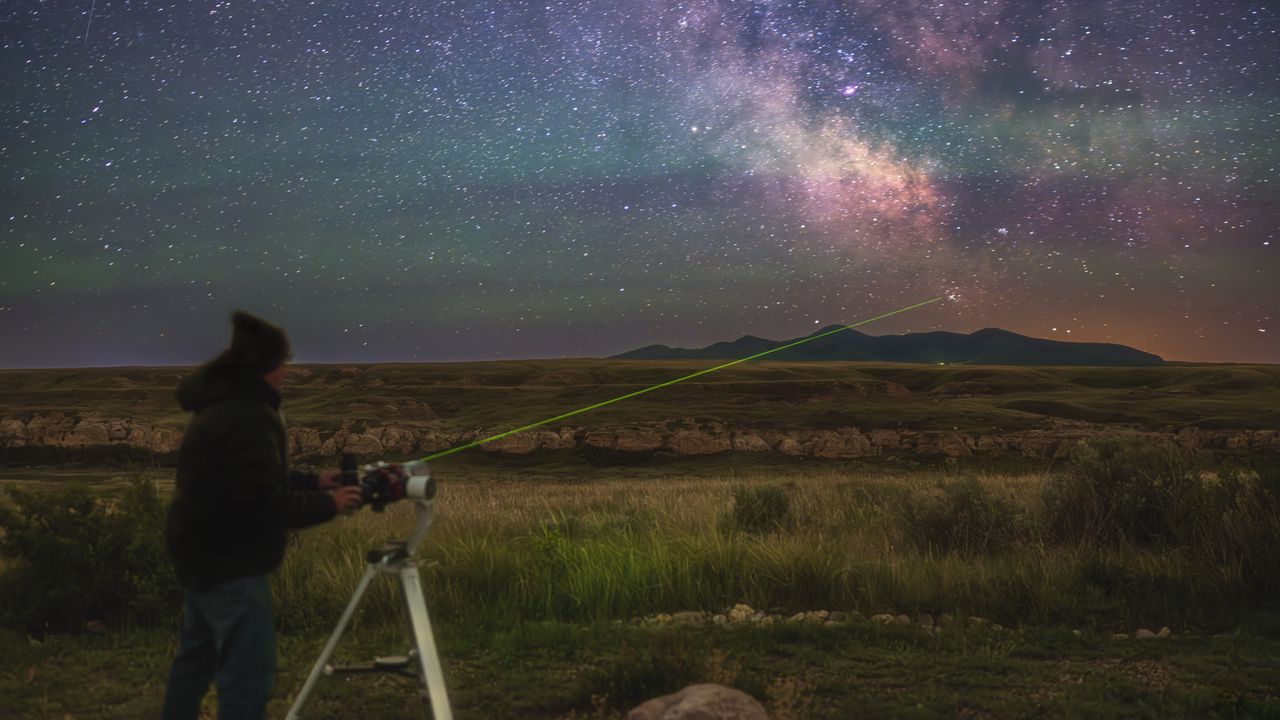
Scorpius stands out among the 88 constellations because its pattern genuinely matches the creature it represents. Unlike Ursa Major or Leo, which require imagination to connect their stars, Scorpius displays a recognizable curved tail and body that astronomers and skywatchers have identified for centuries.
Summer offers optimal viewing conditions for locating this southern constellation. The best time falls between June and August in the Northern Hemisphere, when Scorpius climbs highest in the night sky. Observers should look toward the south after sunset, where the constellation arcs across the lower portion of the celestial sphere.
The brightest star in Scorpius is Antares, a red supergiant marking the creature's heart. Located roughly 600 light-years from Earth, Antares shines with an orange-red color that contrasts sharply with surrounding stars. Its name derives from Greek, meaning "rival of Mars," because its ruddy hue resembles the red planet.
Finding Scorpius requires minimal equipment. The naked eye suffices for identifying its main stars in dark skies away from light pollution. Binoculars or a small telescope reveal additional detail within the constellation, including star clusters and nebulae. The region contains numerous deep-sky objects worth exploring, particularly the Messier 7 open cluster near the scorpion's tail and the Lagoon Nebula.
Ancient astronomers across multiple cultures recognized this constellation's distinctive shape. The scorpion appears in Greek mythology as the creature that fatally stung Orion, explaining why the two constellations never appear simultaneously in the night sky. When Scorpius rises in the east, Orion sets in the west.
Southern Hemisphere observers enjoy an advantage during winter months. The constellation reaches its zenith point during their winter evenings, appearing higher and more prominent than