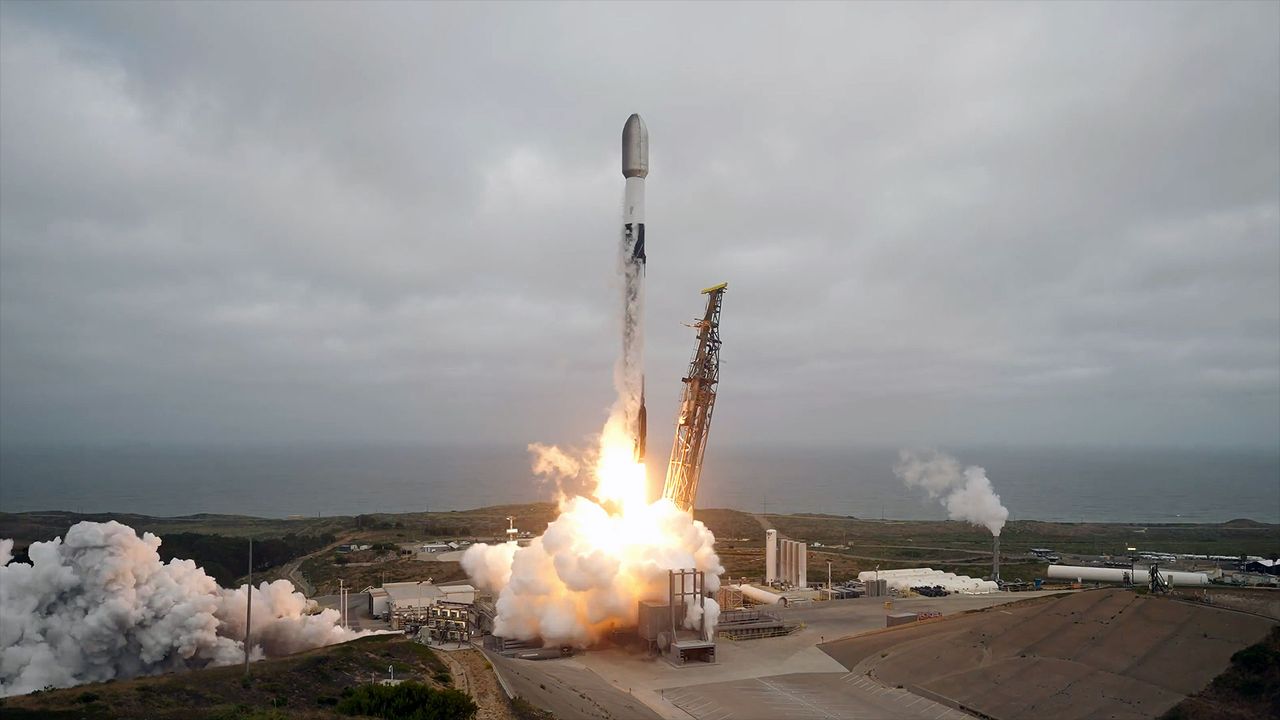
SpaceX successfully launched a Falcon 9 rocket from Vandenberg Space Force Base in California on Sunday, June 28, 2026, deploying 24 Starlink satellites into Earth orbit. The mission continues SpaceX's ongoing effort to expand its constellation of internet-providing satellites.
Starlink represents Elon Musk's ambitious plan to blanket Earth with broadband coverage from low Earth orbit. Each satellite in the constellation operates at roughly 550 kilometers altitude, moving around the planet every 90 minutes. The system aims to deliver high-speed internet to remote areas, ships at sea, and aircraft that previously lacked reliable connectivity.
SpaceX launches these satellites in batches throughout the year. The Falcon 9's reusable first stage has become the workhorse of these missions, with SpaceX recovering boosters for reflight after each launch. This reusability dramatically reduces operational costs compared to expendable rockets.
Vandenberg Space Force Base on California's central coast serves as one of two primary U.S. launch sites for Starlink missions. Its coastal location enables rockets to launch southward over the Pacific Ocean, reaching the polar and near-polar orbits where Starlink satellites operate. This trajectory differs from launches at Kennedy Space Center in Florida, which typically send payloads eastward over the Atlantic.
The Starlink constellation now numbers over 6,000 active satellites in orbit. Each launch adds incrementally to coverage and redundancy. The service has already expanded to over 60 countries and territories, providing internet during natural disasters and humanitarian crises.
SpaceX faces regulatory scrutiny over Starlink's environmental impact. Astronomers have raised concerns about satellite brightness affecting ground-based observations. The company has tested darker satellite designs and is implementing measures to reduce orbital debris risk.
Starlink competes with other mega-