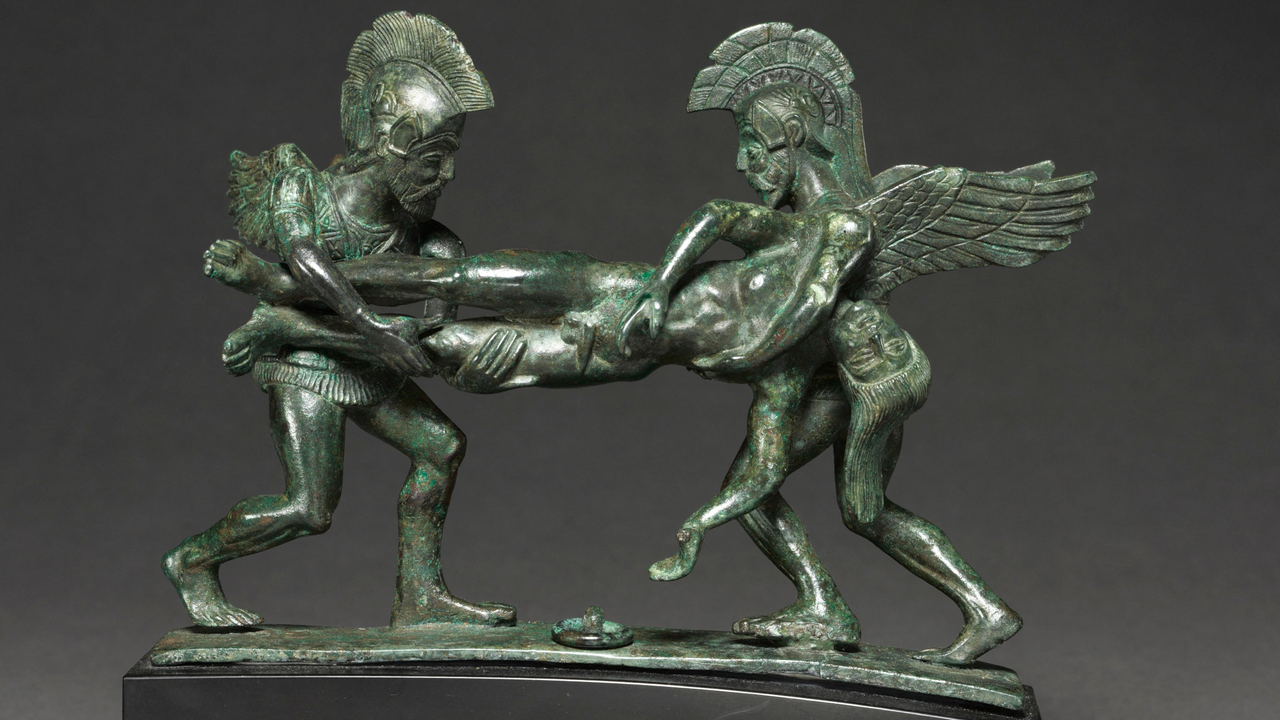
Archaeologists have identified a 2,400-year-old Etruscan bronze sculpture that depicts a mythological death scene from the Trojan War. The small bronze artwork originally adorned a cista, a decorative box used in ancient Italy, and shows two figures transporting the body of Sarpedon, the mortal son of Zeus who died during the conflict.
The sculpture captures a moment from Greek mythology rendered in Etruscan artistic tradition. Sarpedon's death at the hands of Patroclus appears prominently in Homer's Iliad, which describes the god Hypnos (Sleep) and Thanatos (Death) carrying the slain warrior away from the battlefield. The bronze depicts these two deities performing their mythological duty, showcasing how classical Greek narratives circulated and influenced Etruscan culture.
The cista itself represents a form of luxury container common among Etruscan elites. These boxes, often made of bronze and adorned with figurative scenes, served both practical and ceremonial functions in ancient societies. The choice to decorate such an object with a Trojan War scene reflects the cultural prestige associated with Homeric epics in the Mediterranean world during the classical period.
The artistic execution demonstrates sophisticated metalworking techniques characteristic of Etruscan bronzesmiths. The detailed rendering of the figures and their interactions reveals technical skill in depicting complex narrative moments within the constraints of small-scale sculpture.
This artifact provides concrete evidence of cultural exchange across Mediterranean civilizations. Greek mythology, particularly the Trojan War cycle, held enormous appeal for Etruscan patrons and artists. By commissioning and creating works featuring these themes, Etruscans demonstrated both their familiarity with Greek literature and their desire to participate in a broader Mediterranean cultural conversation.
The discovery underscores how objects of daily use could simultaneously function as