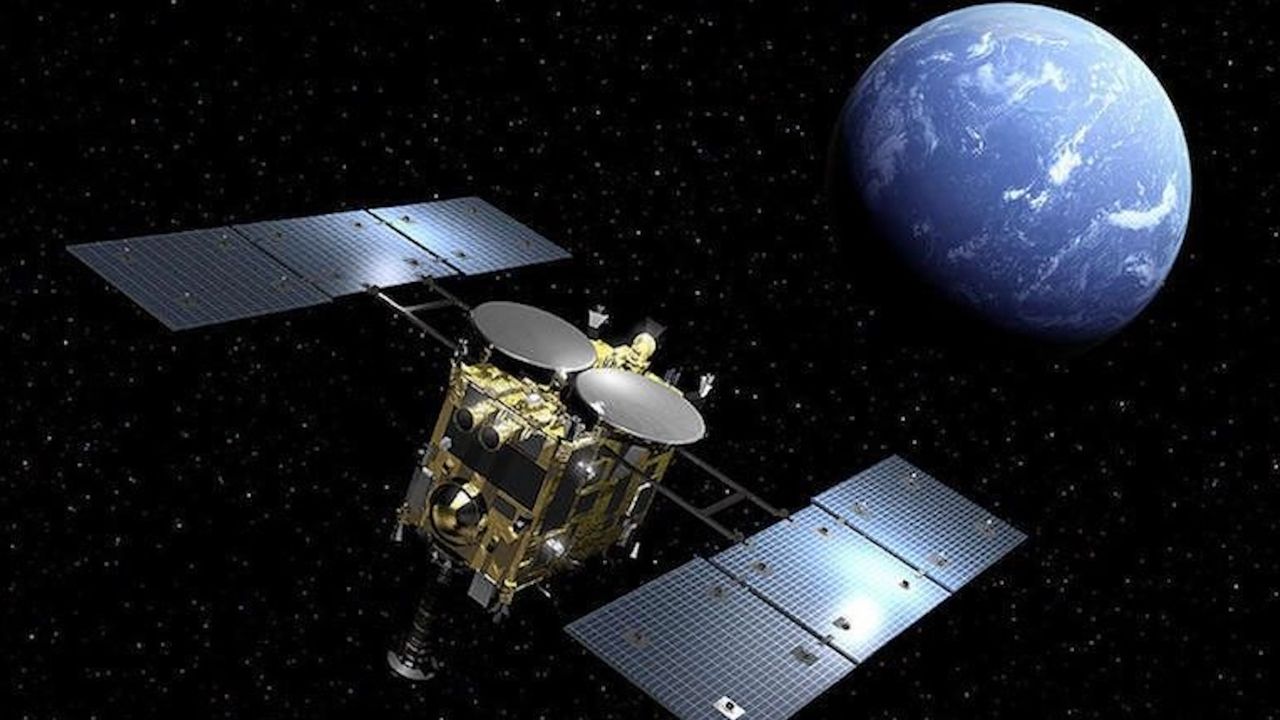
Japan's Hayabusa2 spacecraft will perform an extremely close flyby of an asteroid on July 5, pushing the boundaries of planetary exploration. The probe, which already returned samples from asteroid Ryugu to Earth, will approach its new target at distances that rank among the closest in spaceflight history.
The mission represents a bold continuation of Japan's asteroid exploration program. Hayabusa2 completed its primary objective in 2020 when it successfully collected and returned material from Ryugu, providing scientists with pristine samples from a carbonaceous asteroid. The spacecraft carried enough fuel and operational capability to pursue additional scientific objectives after that landmark achievement.
This upcoming flyby carries substantial risk. Operating a spacecraft at such extreme proximity to an asteroid demands precision navigation and real-time decision-making, as communication delays prevent ground control from intervening in critical moments. Any miscalculation in trajectory or unexpected asteroid characteristics could result in collision and mission loss.
The target asteroid remains unnamed in available reporting, but researchers are clearly enthusiastic about what awaits. The unnamed quote from the mission team captures the exploratory spirit: "We're going to discover another beast to put in the zoo of asteroids." This phrasing reflects the diversity of asteroid types and compositions that scientists continue to catalog and study.
Close asteroid flybys yield valuable data about composition, structure, and gravitational properties that distant observations cannot provide. Hayabusa2's instruments will gather imagery and spectroscopic data during the encounter, adding to humanity's understanding of these ancient solar system remnants.
Japan's success with Hayabusa2 builds on earlier achievements in asteroid science and demonstrates the feasibility of extended missions that accomplish multiple objectives. The spacecraft's longevity and adaptability showcase Japanese engineering excellence in deep-space operations.
This flyby, while riskier than typical operations, reflects how space agencies push technical boundaries after primary mission goals conclude.