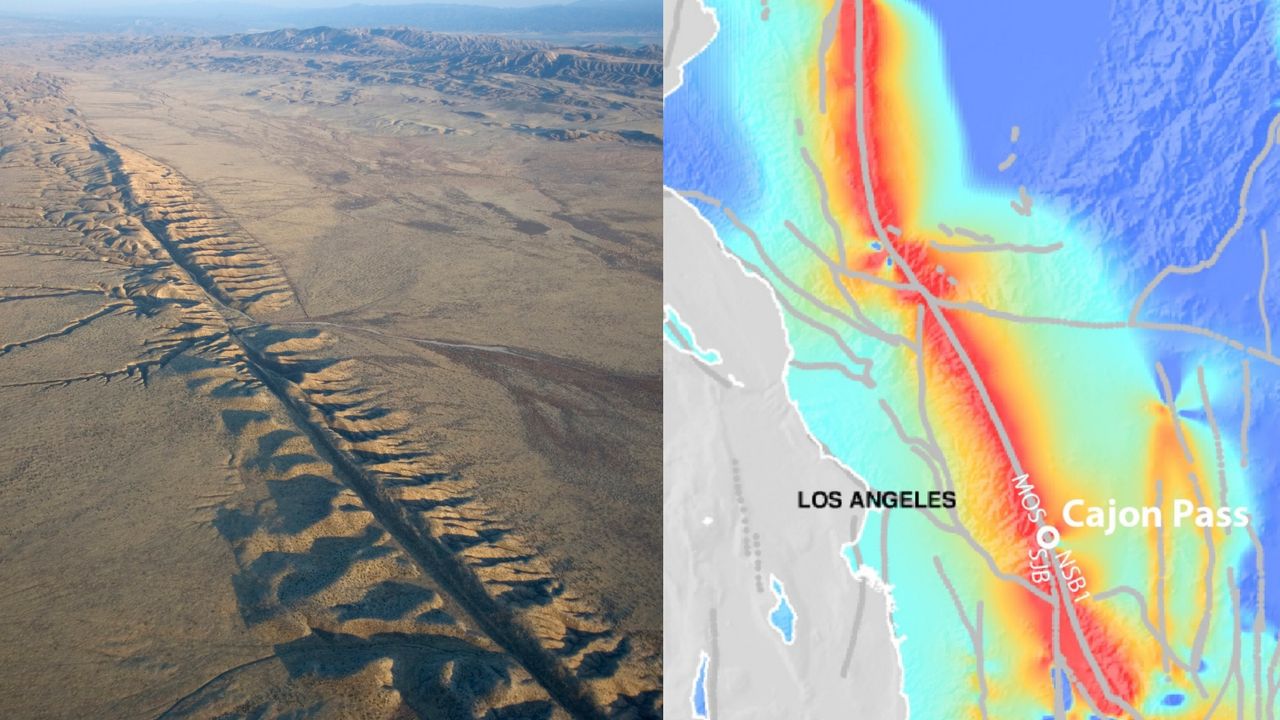
Researchers have determined that the San Andreas fault and the San Jacinto fault in Southern California have accumulated tectonic stress at levels not seen in 1,000 years, raising the risk of a major earthquake in the region.
The study reveals that stress along both faults has built to critical levels, with a rupture in one fault potentially triggering rupture in the other. This cascading effect could produce a significantly larger earthquake than either fault alone. The proximity of these faults and their interconnected stress patterns create what researchers describe as a critically stressed system.
The findings come from tectonic analysis that tracks strain accumulation along major fault lines. When the Pacific and North American tectonic plates move past each other, they build stress in the rock layers. This stress releases periodically through earthquakes. The San Andreas fault, which runs roughly 800 miles through California, historically produces major earthquakes roughly every 100 to 300 years in different segments. The San Jacinto fault runs parallel to the San Andreas in Southern California.
The research suggests that the current stress accumulation along both faults represents an unusual convergence. Scientists monitor stress levels using GPS measurements, geological records of past earthquakes, and computer models that simulate how stress transfers between faults. These tools help establish the probability of future ruptures.
While the study does not predict when an earthquake will occur, the elevated stress levels indicate the system has less "give" than normal. Any additional stress from adjacent fault movements or triggered slip could initiate rupture. The San Francisco Bay Area and Southern California regions remain densely populated, making earthquake risk a public safety priority.
This research underscores why agencies like the U.S. Geological Survey continuously monitor California's faults. Understanding stress accumulation patterns helps scientists refine earthquake probability estimates used for building codes, emergency planning, and insurance assessments. The findings add urgency to earthquake preparedness