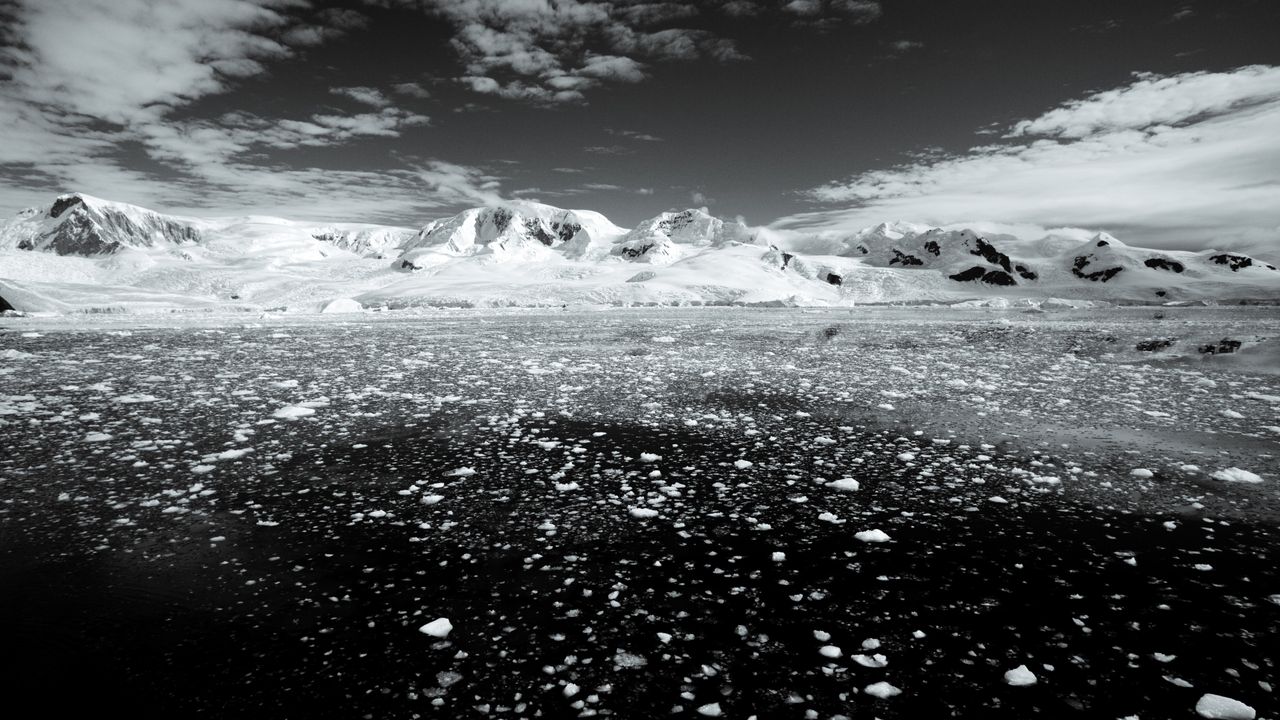
Antarctic winter sea ice has vanished at a scale rarely seen before. An area nearly the size of Texas has failed to form over the Bellingshausen Sea off western Antarctica, leaving researchers scrambling to understand the connection between this ice loss and climate change.
The missing ice represents an unprecedented departure from historical patterns. Antarctica's sea ice typically expands dramatically during winter months, reaching peak extent around September. Instead, this year the Bellingshausen Sea remained largely ice-free even as temperatures should have supported ice formation. Scientists attribute this anomaly to warming ocean temperatures and shifts in atmospheric circulation patterns driven by global warming.
The Bellingshausen Sea region has emerged as particularly vulnerable to climate disruption. Ocean temperatures in this sector have warmed faster than surrounding Antarctic waters, weakening the conditions needed for ice nucleation and growth. Additionally, changing wind patterns have reduced the natural mechanical processes that compact and thicken new ice.
This ice loss carries downstream consequences for Antarctic ecosystems. Sea ice serves as critical habitat for krill, the tiny crustaceans that form the foundation of Southern Ocean food webs. Reduced ice extent limits krill reproduction and leaves them more vulnerable to predation. Penguins, seals, and whales depend on robust krill populations, creating a cascading effect through marine communities.
Researchers emphasize that missing sea ice during winter represents a stark reversal from recent decades. While Antarctic sea ice historically showed slight growth trends, this has shifted dramatically in recent years. The Texas-size anomaly signals that the continent's ice dynamics are changing faster than many models predicted.
The Bellingshausen region mirrors patterns already well-documented in the Arctic, where sea ice loss accelerated throughout the 21st century. Scientists worry Antarctica may follow a similar trajectory, with winter ice extent declining as oceans continue warming from accumulated greenhouse gases.
Monitoring continues through satellite observations and oceanographic