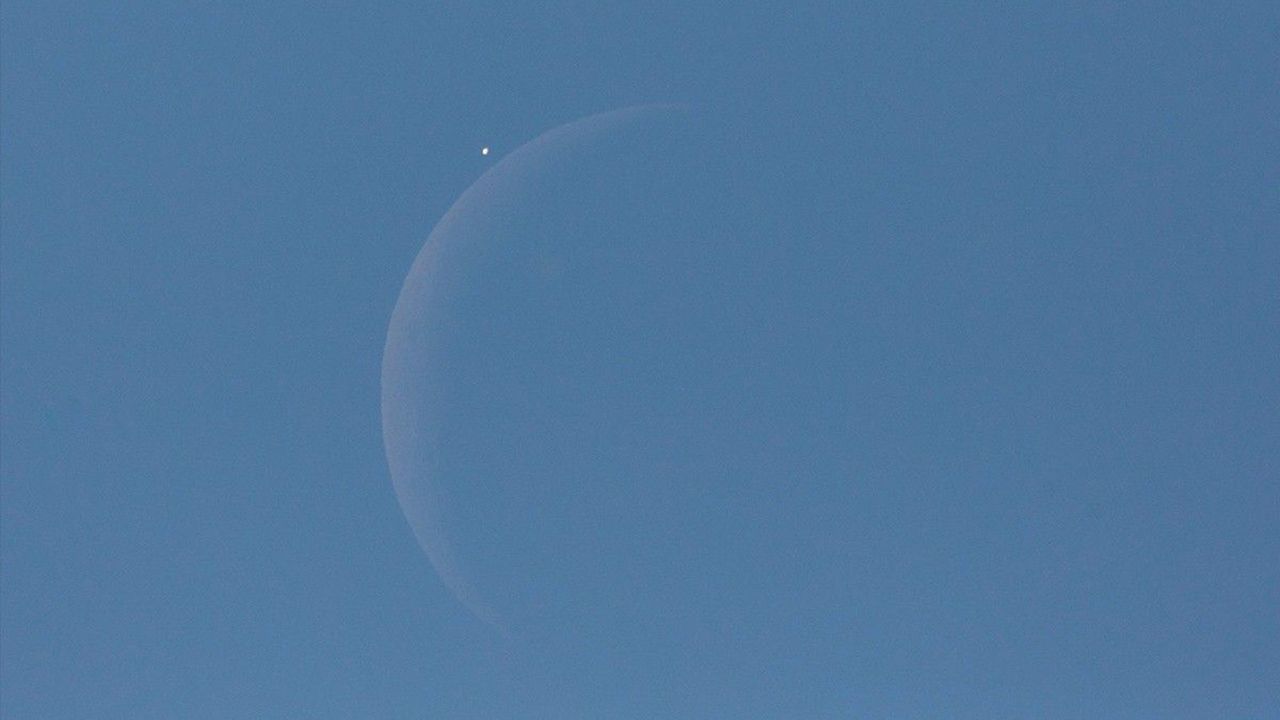
A daytime occultation of Venus by the moon occurs today, June 17, when Earth's satellite passes directly in front of the brightest planet in our sky. The event requires no telescopes or special filters to observe safely, making it accessible to skywatchers across wide regions.
During an occultation, the moon's silhouette blocks Venus from view for roughly an hour, depending on the observer's location. The planet will reappear on the opposite side of the moon as Earth rotates. Venus reaches naked-eye visibility during daylight because it reflects sunlight so efficiently, shining at magnitudes bright enough to see even when the sun dominates the sky.
Viewing this event safely during daytime differs from observing the night sky. Observers can locate the moon's position in the daytime sky with the unaided eye, then use that as a reference point to find Venus nearby. The conjunction happens in broad daylight, so no risk of accidentally staring at the sun exists if proper caution is used. Locating the moon first prevents this hazard entirely.
The exact timing varies by geographic location. Observers in eastern North America, South America, and parts of Europe and Africa will have the best views. Those in other regions may see a near-miss, with Venus passing very close to the moon without being fully occulted.
Occultations like this serve scientific purposes beyond their visual appeal. Astronomers use them to refine measurements of the moon's orbit and improve predictions of future celestial events. The sharp edge of the moon's silhouette also helps researchers study Venus's atmosphere, since starlight grazing the planet's limb gets refracted through its dense, sulfuric-acid-laden clouds.
Such daytime lunar occultations of bright planets remain relatively uncommon viewing opportunities. Venus occultations specifically happen roughly once every eight years on average,